
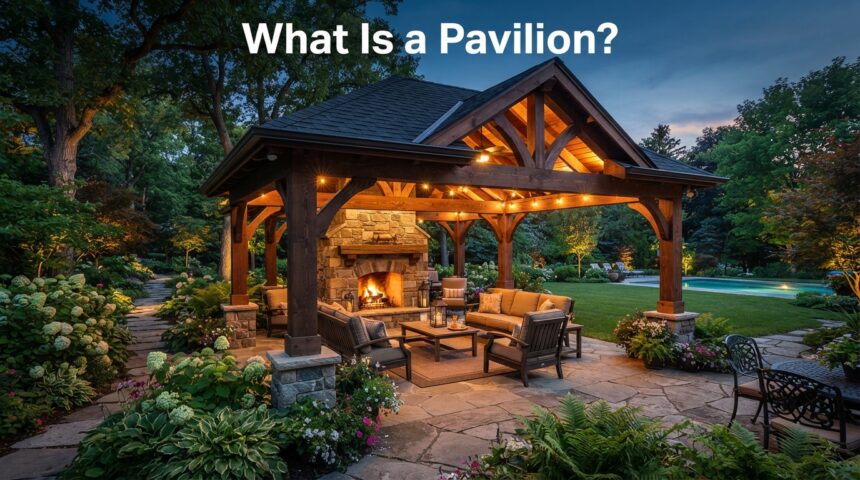
So, what is a pavilion? A pavilion is a freestanding structure with a solid roof, held up by columns or posts, and with sides that are open or only lightly enclosed. It offers shade, shelter, and a comfortable place to gather without the closed walls of a full building.
Pavilions appear in parks, gardens, sports grounds, event venues, and private backyards. They can be permanent or temporary, and small or very large. Most are built from wood, metal, stone, or fabric, depending on their purpose and budget.
Many people hear the word and picture a garden shelter, an exhibition hall, or a sports building, and all three are correct. This guide explains what is a pavilion in plain language, then covers its history, types, uses, materials, costs, and care, so you can decide whether one suits your space.
What Is a Pavilion in Simple Terms?
A pavilion is best understood as a roofed outdoor room. The points below explain its meaning, structure, and name.
Basic Meaning
A pavilion is a roofed shelter that stands on its own and does not depend on another building. Its open sides let air and light pass through freely. This makes it feel like part of the landscape rather than a closed room.
Main Parts
Every pavilion has a roof, vertical supports, and a floor. Some also add railings, screens, curtains, or built-in seating. These extras change the comfort level but not the basic idea.
Word Origin
The word comes from the French pavillon, which traces back to the Latin word for butterfly. Early tents with spread canvas looked like butterfly wings, so the name stuck. Over time it came to describe any light, roofed structure.
A Brief History of Pavilions
Pavilions have served rulers, gardeners, and exhibitors for centuries. Their purpose has shifted, but the basic design has stayed familiar.
Ancient and Eastern Origins
Early pavilions began as royal tents and shaded garden shelters in Persia, India, and China. Mughal gardens, such as Shalimar Gardens in Lahore, feature elegant pavilions built for rest and ceremony. Chinese garden pavilions were placed to frame views of water and trees.
European Garden Pavilions
In the 17th and 18th centuries, European estates added pavilions as decorative retreats. They hosted tea, music, and quiet conversation. Many were built in classical styles with columns and domed roofs.
Exhibition and Modern Pavilions
World’s fairs from the 19th century onward used pavilions to showcase nations and inventions. Modern architects still treat them as creative statements. Today the same idea reaches ordinary parks and backyards.
Key Features of a Pavilion
Certain features separate a pavilion from other outdoor structures. Knowing them helps you recognize one and plan your own.
Solid Roof and Strong Supports
The roof gives real protection from sun and light rain. Posts or columns carry its weight and must be anchored well. Together they decide how long the structure lasts.
Open Sides and Airflow
Open or half-open sides keep the space cool and bright. They also allow views of the garden or landscape. Curtains or screens can be added when privacy or insect control is needed.
Flooring and Optional Extras
Floors are usually concrete, wood, stone, or pavers. Lighting, ceiling fans, and heaters make the space usable at night and in cooler months. Built-in benches or counters turn it into a proper outdoor living area.
Types of Pavilions
Pavilions are grouped by where they stand and what they are used for. Each type below has its own size and style.
Garden and Backyard Pavilions
These are private structures for dining, lounging, and family time. Poolside versions add shade near the water. They are usually built from wood or metal kits.
Park and Picnic Pavilions
Public parks use these sturdy shelters for picnics and community events. They often include tables, grills, and electrical outlets. Durability matters more than decoration here.
Event and Wedding Pavilions
These can be permanent halls or temporary tent-style frames. They provide covered space for ceremonies, parties, and markets. Many are decorated with lights and fabric drapes.
Exhibition and Expo Pavilions
Fairs and trade shows use them to present a country, brand, or idea. Their design is often bold and unusual. Some are removed after the event, while others become landmarks.
Sports Pavilions
Found at cricket, football, and other sports grounds, these buildings shelter spectators and players. They may include seating and changing rooms. Their size is larger than a typical garden pavilion.
Historical and Ornamental Pavilions
These decorative structures sit in palaces, temples, and estate gardens. They are valued for craftsmanship and beauty rather than practical use. Many are now protected heritage sites.
Pavilion vs. Gazebo vs. Pergola
People often confuse these three outdoor structures. The table below shows how they differ.
| Feature | Pavilion | Gazebo | Pergola |
| Roof | Solid | Solid | Open slats |
| Shape | Usually rectangular | Round or octagonal | Rectangular or square |
| Size | Larger | Smaller | Varies |
| Capacity | Bigger groups | Small groups | Flexible |
| Best for | Dining and events | Quiet seating | Vines and filtered light |
Choose a pavilion when you need space and full weather cover. A gazebo suits a cozy retreat, while a pergola works best for filtered sunlight and climbing plants.
Common Uses of Pavilions
A pavilion adapts to many settings, from private homes to public grounds. Its use depends mostly on size and location.
Home Entertaining
Families use pavilions for barbecues, birthday parties, and relaxed evenings. Some include an outdoor kitchen or bar. The roof keeps guests comfortable whatever the weather.
Community and Public Use
Parks and villages rely on pavilions for gatherings, markets, and festivals. They give shelter to groups who would otherwise need an indoor hall. Schools and sports clubs use them in the same way.
Commercial and Event Use
Restaurants, resorts, and wedding venues build pavilions to expand seating and host events. They create an attractive setting without the cost of a full building. Businesses also use them for exhibitions and product displays.
Benefits of a Pavilion
A pavilion turns unused outdoor ground into a space you can enjoy in most seasons. It adds beauty and often raises the appeal of a property. Its main advantages include:
- Reliable shade and protection from light rain
- Extra living and entertaining space
- A natural centerpiece for gatherings
- Added visual and practical value for a home or business
Materials Used to Build a Pavilion
The material you pick affects cost, appearance, and upkeep. Each option below suits a different need.
Wood
Cedar, pine, and redwood give a warm, natural look. They need regular sealing or staining to resist moisture and insects. Wood is easy to customize but requires the most care.
Metal
Steel and aluminum are strong, long-lasting, and resistant to rot. They suit modern designs and windy areas. Steel may rust if the coating is damaged.
Vinyl and Stone
Vinyl is low-maintenance and does not need painting. Stone or brick columns add a solid, traditional look at a higher price. Both hold up well against weather.
Roofing Options
Common roofs include shingles, metal panels, polycarbonate sheets, thatch, and fabric. Metal lasts longest, while polycarbonate lets in more light. Fabric is best for temporary structures.
Popular Pavilion Styles and Design Ideas
Style should match your home and surroundings. Popular directions include:
- Modern and minimalist: clean lines, flat or low roofs, and metal frames
- Rustic: heavy timber beams and natural finishes
- Traditional: columns, pitched roofs, and decorative trim
- Asian-inspired: curved rooflines and dark wood
- Tropical: thatch or bamboo with open, airy sides
Add string lights, ceiling fans, outdoor curtains, planters, or a fire pit to make the space more inviting.
Pavilion Size and Placement Tips
Good planning prevents a pavilion from feeling cramped or out of place. Size and location deserve equal attention.
Choosing the Right Size
Measure your furniture first, then add walking space around it. A small pavilion suits four to six people, while larger ones hold twenty or more. Build slightly bigger than you think you need.
Picking the Best Spot
Choose level, well-drained ground with a good view. Consider sun direction and wind so the space stays comfortable. Keep it clear of fences, trees, and property lines.
Pavilion Cost and Permits
Costs and rules vary by region, so treat the figures below as rough guides. Always confirm local details before you commit.
Typical Costs
Price depends on size, materials, foundation, and labor. Electrical work, lighting, and furniture add to the total.
| Build Type | Approximate Cost |
| DIY wood build | $1,500 to $5,000 |
| Ready-made kit | $3,000 to $15,000 |
| Custom professional build | $10,000 to $40,000+ |
Permit Requirements
Many areas require permits based on size, height, and electrical work. Homeowner associations may also have their own rules. Contact your local building office before you start.
Building and Maintaining a Pavilion
A well-built pavilion lasts for decades with sensible care. Following a clear sequence keeps the project on track.
Basic Build Steps
Most builds follow the same order, though complex designs may need a professional:
- Plan the design and check local rules
- Prepare the ground and pour or set the foundation
- Install the posts and frame
- Fit the roof
- Add flooring and finishing touches
Maintenance Tips
Clean the roof and floor regularly to prevent buildup. Reseal or repaint wood and check metal for rust every season. Tighten loose fittings and inspect the structure after storms or heavy snow.
Famous Pavilions Around the World
Some pavilions have become landmarks in their own right. Studying them can inspire your own design.
- Barcelona Pavilion, Spain: a modernist landmark designed by Ludwig Mies van der Rohe for the 1929 International Exposition
- Chinese garden pavilions: graceful open-sided shelters placed beside ponds and rock gardens
- Mughal garden pavilions: ornate structures in historic gardens across Pakistan and India
How to Choose the Right Pavilion
Start with your purpose, since a family dining space needs different features than an event venue. Then set a budget and compare kit and custom options. Finally, check that the size, material, and style fit your climate and property.
Frequently Asked Questions
What is the difference between a pavilion and a gazebo?
A pavilion is usually larger and rectangular, and it holds more people. A gazebo is smaller and often round or octagonal.
Is a pavilion the same as a pergola?
No. A pavilion has a solid roof, while a pergola has an open, slatted top that lets sunlight through.
Can a pavilion be used all year?
Yes, especially with lighting, heaters, and curtains. The roof gives cover in rain, though heavy snow may need a reinforced design.
Does a pavilion add value to a home?
It can, because it increases usable outdoor space and improves appeal. The gain depends on quality, location, and the local market.
How long does a pavilion last?
With regular care, a quality pavilion can last 20 years or more. Metal and stone versions generally outlast untreated wood.
Conclusion
Now you know what is a pavilion: a roofed, open-sided structure that offers shelter, shade, and a place to gather. It comes in many types, from backyard retreats to grand exhibition halls. Choose the right size, material, and style, and it will serve you well for years.
Related Articles
How to Install a Door Knob: A Simple Step-by-Step Guide
How Wide Is a Door? Standard Door Widths & Sizes
Wood Filler for Hardwood Floors: Your Complete Guide