
Picking between a steel door and a fiberglass door is one of the most common decisions homeowners face when replacing an entry door.
Both materials are popular, both can last for years, and both come with their own strengths depending on your climate, budget, and design preferences. Below is a detailed breakdown to help you understand the real differences before making a final decision.
Quick Comparison Table
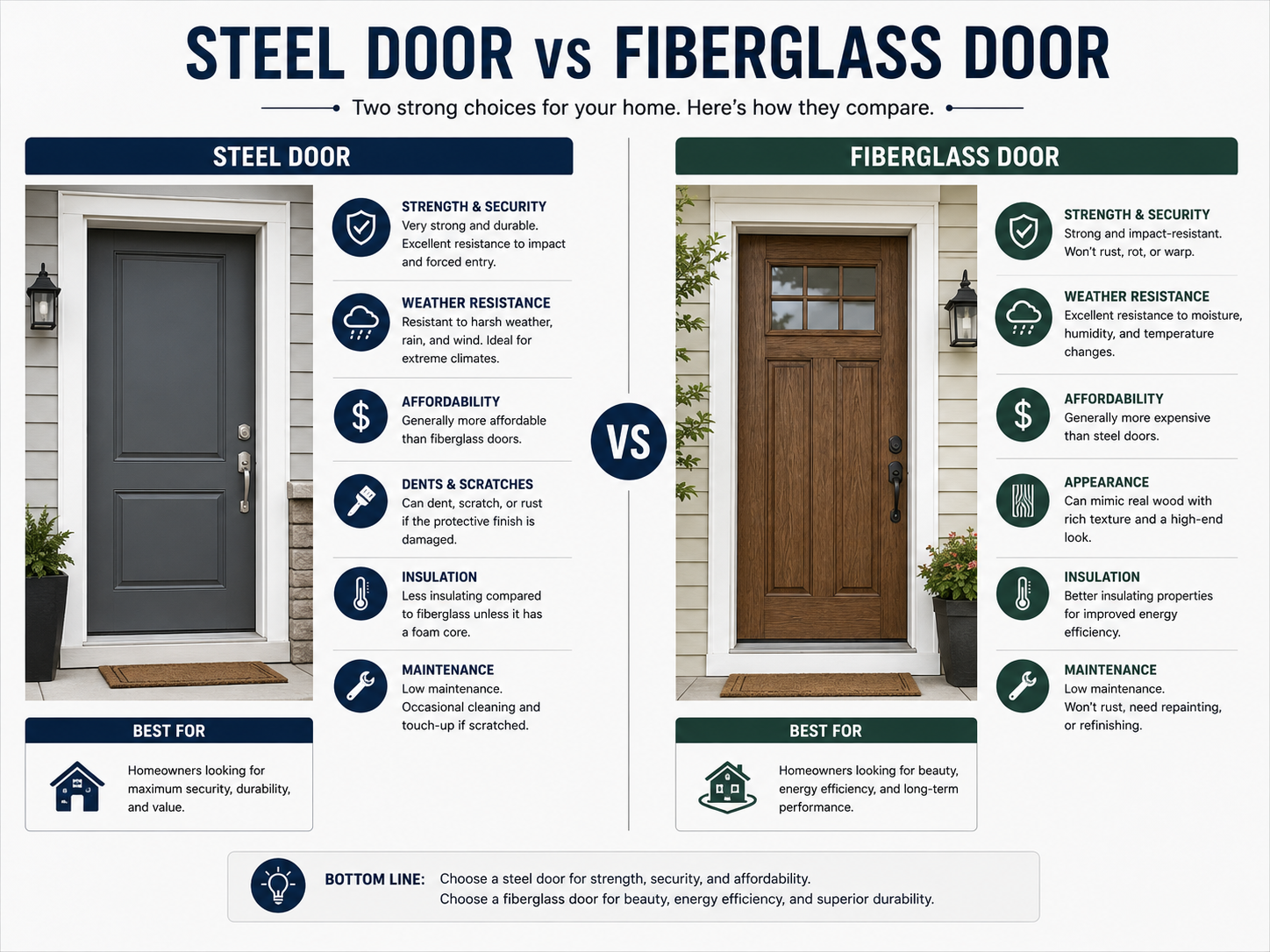
Before going into detail, it helps to see the two materials side by side. This table gives a quick snapshot of how steel and fiberglass doors compare across the factors that matter most to homeowners.
| Feature | Steel Door | Fiberglass Door |
| Upfront Price | Lower | Higher |
| Dent Resistance | Moderate | High |
| Rust Risk | Possible if scratched | None |
| Insulation | Good with foam core | Excellent |
| Design Variety | Mostly painted finishes | Painted, stained, woodgrain |
| Maintenance | Occasional touch-ups | Minimal |
| Best Use | Side doors, budget projects | Main entrances, premium look |
This comparison gives a starting point, but the right choice depends on where the door will be installed and what you expect from it over the next ten to fifteen years.
Steel Doors: Strengths and Weaknesses
Steel doors are known for being tough, affordable, and widely available, which is why they remain a popular pick for many homes. They work especially well when the priority is security and a lower starting price rather than a custom decorative look.
Affordability and Lower Initial Cost
One of the biggest reasons people choose steel is the price. A steel door typically costs less than a comparable fiberglass model, which makes it appealing for homeowners working with a tighter renovation budget.
This lower cost does not mean the door is weak; it simply reflects the manufacturing process and material cost of steel compared to fiberglass.
Strong Security and Structural Toughness
Steel is naturally rigid and difficult to break through, which makes it a solid option for homeowners focused on security. When paired with a reinforced frame, a quality deadbolt, and properly installed hinges, a steel door can offer some of the highest break-in resistance available.
This makes it a frequent choice for entrances where safety is the top concern.
Maintenance and Long-Term Care
Steel doors need a bit more attention over time compared to fiberglass. If the paint chips or the surface gets scratched, the exposed metal underneath can begin to rust if it is not repainted quickly.
Homeowners who choose steel should be prepared to inspect the door occasionally and touch up the finish when needed, especially near the bottom edge where moisture tends to collect.
Performance in Harsh Weather
Steel can hold up well in many climates, but it has some limitations. In areas with heavy snow, salt exposure, or high humidity, the risk of rust increases if the protective coating gets damaged. Steel also tends to feel colder to the touch in winter compared to fiberglass, even when the core is insulated, because metal conducts temperature more easily.
Fiberglass Doors: Strengths and Weaknesses
Fiberglass doors have grown in popularity because they combine durability with a more refined appearance.
They tend to perform especially well for homeowners who want a long-lasting front entrance that does not require constant upkeep.
Resistance to Dents and Daily Wear
Fiberglass holds up extremely well against everyday bumps, knocks, and impacts. Unlike steel, it does not dent easily when hit by something like a backpack, a delivery box, or an accidental bump from furniture.
This makes it a practical choice for busy households where the front door gets a lot of daily use.
Moisture, Rot, and Rust Resistance
Because fiberglass does not contain metal on the surface, it is not vulnerable to rust at all. It also resists moisture absorption, swelling, and warping far better than many alternative materials.
This makes it a strong option for climates that experience heavy rain, snow, humidity, or large temperature swings throughout the year.
Design Options and Appearance
Fiberglass offers more flexibility when it comes to style. Many fiberglass doors are designed with a textured woodgrain finish that can be stained to look like real wood, while still being painted in a solid colour if preferred.
This gives homeowners the appearance of a high-end wood door without the maintenance that real wood requires.
Long-Term Maintenance Needs
Fiberglass doors generally need very little upkeep beyond occasional cleaning with mild soap and water. They do not require repainting as often as steel, and they are less likely to develop surface issues over time.
This lower maintenance requirement is one of the main reasons fiberglass is often described as a better long-term investment, even though it costs more initially.
Energy Efficiency Comparison
Both steel and fiberglass doors can be energy efficient, but the way each material handles temperature is different. Understanding this difference can help you decide which option will keep your entryway more comfortable.
How Steel Doors Handle Insulation
Most modern steel doors include a foam-filled core, which helps reduce heat loss and improve energy performance.
However, because the outer skin is metal, it can still transfer outdoor temperatures to the interior surface more noticeably. On very cold days, this can make the inside of the door feel cooler near the entryway.
How Fiberglass Doors Handle Insulation
Fiberglass naturally resists temperature transfer better than steel, which means the interior surface tends to stay closer to room temperature even during extreme weather.
Combined with an insulated core, this gives fiberglass doors a slight edge in maintaining a consistent indoor feel near the entrance, particularly in colder months.
Cost Considerations Over Time
Price is often the deciding factor for many homeowners, but it is important to look beyond the sticker price and consider how each door performs over the years it will be in use.
Initial Purchase Price
Steel doors are almost always less expensive at the time of purchase. This makes them appealing for budget-conscious projects, rental properties, or secondary entrances where a premium appearance is less important than function.
Long-Term Value and Replacement Costs
Fiberglass doors cost more upfront, but they often require fewer repairs and less frequent replacement due to their resistance to dents, rust, and weather damage.
Over a span of ten or more years, the reduced need for repainting or repairs can help offset the higher initial price, making fiberglass a strong choice for homeowners planning to stay in their home long-term.
Which Door Is Right for Your Home?
The right choice ultimately depends on where the door is being installed, how much maintenance you are willing to do, and what kind of look you want for your home.
When Steel Makes More Sense
Steel doors work well for side entrances, garage access doors, basement doors, or any situation where budget and security are the main priorities. If you are comfortable with occasional touch-ups and do not need a decorative wood-look finish, steel can be a practical and dependable option.
When Fiberglass Makes More Sense
Fiberglass is often the better fit for a main front entrance, especially if you want strong curb appeal, low maintenance, and better resistance to dents and weather over time. If your door is exposed to direct sun, heavy rain, or snow throughout the year, fiberglass tends to hold up with fewer issues.
Frequently Asked Questions (FAQs)
1. Which is better for a front door: steel or fiberglass?
Fiberglass is often considered the better choice for a main front door because it offers excellent durability, energy efficiency, weather resistance, and attractive design options. Steel is a strong alternative if security and affordability are your main priorities.
2. Do fiberglass doors last longer than steel doors?
In many cases, yes. Fiberglass doors are resistant to rust, dents, warping, and moisture damage, which can help them maintain their appearance and performance for many years with minimal maintenance.
3. Are steel doors more secure than fiberglass doors?
Steel doors are generally known for their strength and rigidity. However, both steel and fiberglass doors can provide excellent security when paired with a strong frame, quality locks, and professional installation.
Final Thoughts
Both steel and fiberglass doors can serve a home well, but they shine in different situations. Steel offers affordability and strong security, making it a sensible pick for secondary doors or budget-driven projects.
Fiberglass offers better resistance to dents, moisture, and temperature changes, along with more design flexibility, which makes it a strong option for a main entrance where appearance and durability matter most. Considering your climate, how the door will be used daily, and how much long-term maintenance you want to take on will help guide you toward the option that fits your home best.
Related Articles
How Long Does It Take to Do a Bathroom Renovation? Timelines, Phases & What to Expect
How to Get Urine Smell Out of Bathroom: Complete Guide
How Long Do Vinyl Windows Last? A Complete Guide
How to Make Saltillo Floors Shine Again Expert Tips & Professional Solution
How Long Does It Take to Do a Bathroom Renovation? Timelines, Phases & What to Expect