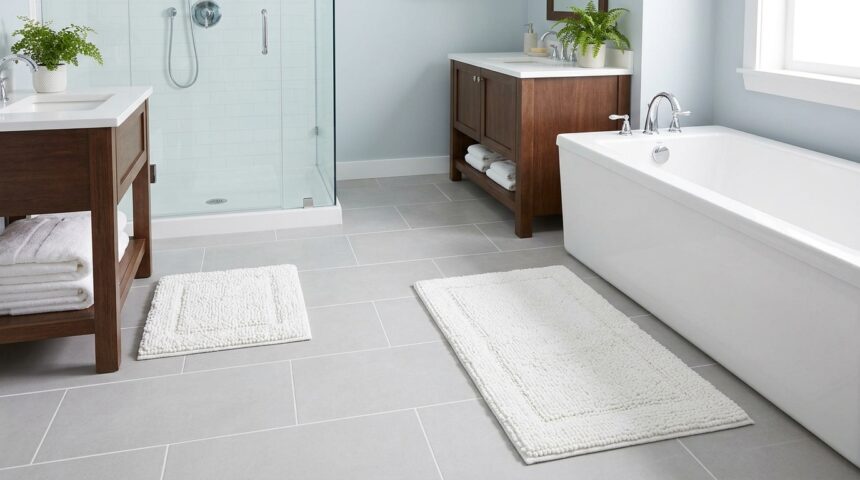
Bathroom mats absorb constant moisture, foot traffic, and soap residue, which makes them a common breeding ground for bacteria and mildew if left uncleaned. Cleaning them properly requires understanding the mat’s material, choosing the right washing method, and drying them thoroughly afterward.
Why Regular Bathroom Mat Cleaning Matters
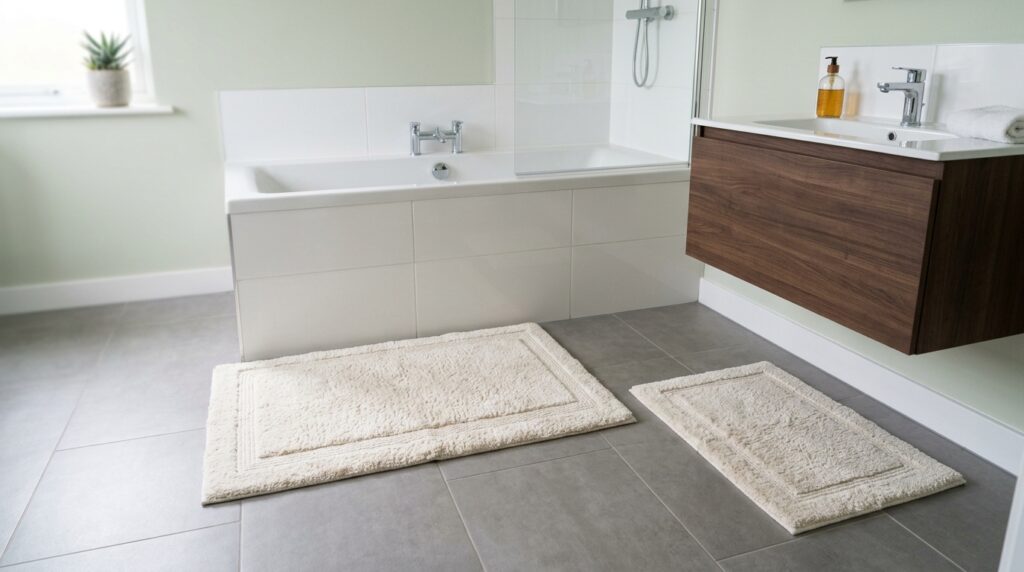
Bathroom mats stay damp for long periods after each shower or bath, creating an ideal environment for bacteria and mold to develop. Cleaning them regularly prevents unpleasant odors and protects household members from unnecessary exposure to germs.
The Hidden Buildup of Bacteria
Every time someone steps out of the shower, moisture, skin cells, and soap residue transfer onto the mat and settle deep into its fibers. Over time, this buildup creates a damp environment where bacteria multiply quickly, even if the mat looks visibly clean. Regular washing removes this hidden buildup before it becomes a noticeable odor or health concern.
How Often Mats Should Be Washed
Most bathroom mats should be washed at least once a week, though households with heavy daily use may need to wash them more frequently. Mats that stay damp longer, such as those in poorly ventilated bathrooms, may require even more frequent cleaning to prevent mildew. Sticking to a consistent washing schedule helps maintain both hygiene and the mat’s overall lifespan.
Cleaning Different Types of Bathroom Mats
Bathroom mats come in several materials, each requiring a slightly different cleaning approach to avoid damage while still removing dirt and bacteria effectively.
Cleaning Cotton Bathroom Mats
Cotton mats are typically machine washable and can handle regular detergent along with warm water for effective cleaning. Adding a small amount of white vinegar to the wash cycle helps eliminate lingering odors and softens the fibers naturally. These mats should be washed on a gentle cycle to prevent excessive fraying over repeated washes.
Cleaning Memory Foam Bathroom Mats
Memory foam mats require gentler handling since aggressive washing can break down their supportive foam structure over time. Hand washing with mild soap and lukewarm water is often recommended instead of placing them in a washing machine. These mats should never be wrung out forcefully, as this can permanently damage their shape and cushioning.
Cleaning Rubber-Backed Bathroom Mats
Rubber-backed mats need careful washing since hot water or high heat can cause the rubber backing to crack or peel away from the fabric. Washing these mats in cold or lukewarm water on a gentle cycle helps preserve the rubber backing’s integrity. Air drying is strongly recommended for this mat type instead of using a machine dryer.
Step-by-Step Machine Washing Process
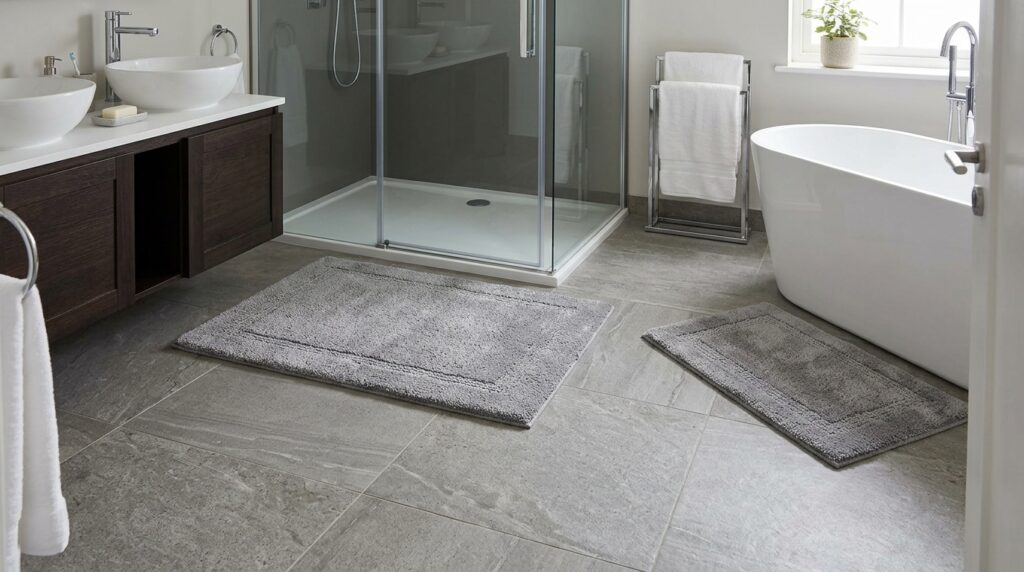
For most fabric-based bathroom mats, machine washing remains the most efficient and thorough cleaning method when done correctly.
Preparing the Mat Before Washing
Before placing a mat in the washing machine, it helps to shake off loose debris and check the care label for specific washing instructions. Removing any hair or lint buildup beforehand prevents it from clogging the washing machine drain during the cycle. This preparation step ensures a more effective and thorough clean overall.
Selecting the Right Wash Settings
A gentle or delicate cycle with cold or lukewarm water is generally safest for most bathroom mat materials, especially those with rubber backing. Using a mild detergent, rather than harsh chemical cleaners, helps protect the mat’s fibers while still removing dirt and bacteria effectively. Avoiding fabric softener is also recommended, since it can reduce the mat’s natural absorbency over time.
Table Comparing Cleaning Methods by Mat Type
| Mat Type | Recommended Wash Method | Water Temperature | Drying Method |
| Cotton | Machine wash | Warm | Machine or air dry |
| Memory Foam | Hand wash | Lukewarm | Air dry only |
| Rubber-Backed | Machine wash gentle cycle | Cold | Air dry only |
| Microfiber | Machine wash | Warm | Low heat or air dry |
Removing Stains and Odors From Bathroom Mats
Beyond regular washing, certain stains and lingering odors may require additional treatment to fully restore a bathroom mat’s freshness.
Treating Soap Scum Buildup
Soap scum can build up on mats over time, leaving a dull, slightly sticky residue that regular washing alone may not fully remove. Soaking the mat in a mixture of warm water and baking soda before washing can help break down this stubborn residue. This pre-treatment step is especially useful for mats that have not been washed in several weeks.
Eliminating Musty Odors
Musty odors usually indicate trapped moisture within the mat’s fibers, which basic washing may not completely eliminate on its own. Adding vinegar to the wash cycle or allowing the mat to sun-dry can help neutralize these persistent smells. Ensuring the mat is completely dry before returning it to the bathroom also prevents the odor from quickly returning.
Proper Drying Techniques to Prevent Mold
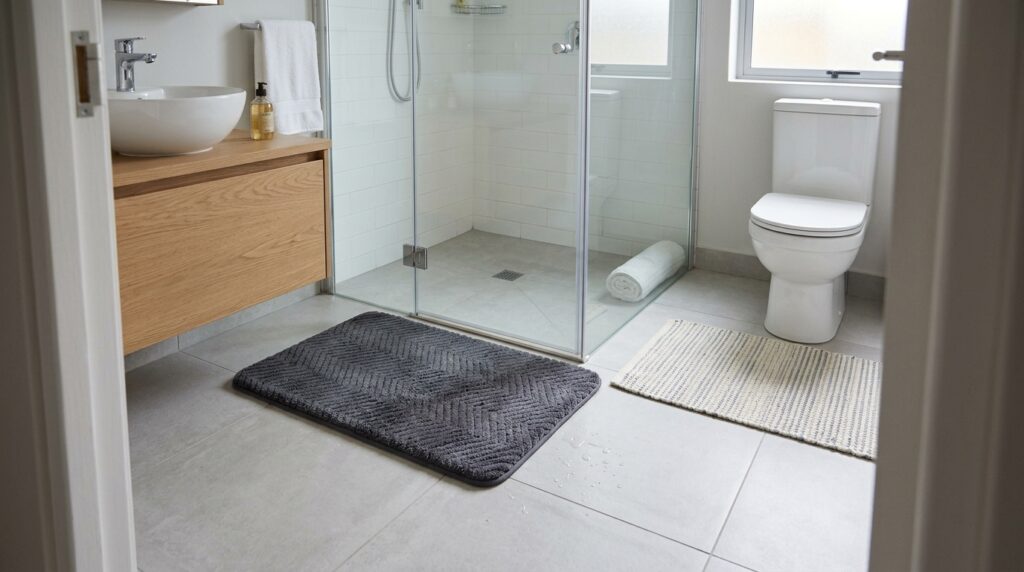
Drying is just as important as washing, since a mat that remains damp afterward can quickly develop mold or mildew again.
Air Drying Outdoors
Hanging mats outdoors in direct sunlight allows natural UV rays to help kill bacteria while thoroughly drying the fabric. This method works especially well for rubber-backed and memory foam mats that cannot handle machine drying. Outdoor drying also helps eliminate lingering odors more effectively than indoor drying alone.
Using Low Heat in a Dryer
For mats that are safe for machine drying, using a low heat setting helps prevent damage to fibers or rubber backing. Adding a few dry towels to the load can help absorb excess moisture and speed up the drying process. It is important to check the care label first, since not all bathroom mats are dryer-safe.
Common Mistakes to Avoid When Cleaning Bathroom Mats
Using excessively hot water on rubber-backed mats is a common mistake that leads to premature cracking and peeling of the backing material. Skipping regular washing until the mat looks visibly dirty is another frequent oversight, since bacteria build up long before visible stains appear. Leaving mats damp on the bathroom floor after washing also encourages mold to form quickly, undoing the benefits of a thorough cleaning.
Final Thoughts
Cleaning bathroom mats properly involves understanding their specific material, using appropriate washing settings, and ensuring they are completely dry before reuse. Regular maintenance not only keeps mats looking fresh but also significantly reduces the buildup of bacteria and unpleasant odors over time. With a consistent cleaning routine tailored to the mat’s material, bathroom mats can stay hygienic and long-lasting for months or even years.
Frequently Asked Questions
Can all bathroom mats be machine washed?
No, some materials like memory foam or delicate rubber-backed mats require hand washing instead of machine washing.
How often should bathroom mats be replaced?
Bathroom mats generally last one to two years, but frequent use or visible wear may require earlier replacement.
Is vinegar safe to use on all bathroom mat types?
Yes, vinegar is generally safe and effective for most mat materials, particularly for removing odors and soap residue.
Why do bathroom mats develop a musty smell so quickly?
Musty smells develop from trapped moisture within the fibers, especially when mats are not dried thoroughly after each wash.
Related Articles
How to Hang a Rug on the Wall: Step-by-Step Methods for Every Rug Type
How Long Do Vinyl Windows Last? A Complete Guide
Are Toilet Seats Universal? Complete Guide