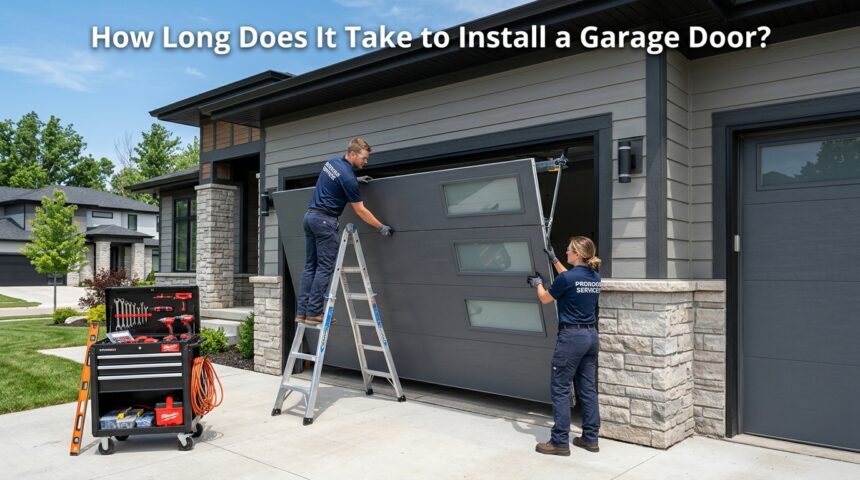
Installing a garage door is a job that most homeowners only do once or twice in their lifetime, so it is completely normal to wonder how much of your day it will actually take. On average, a professional team can install a single garage door in about four to eight hours, while a double-wide door usually needs six to ten hours to finish properly.
If you decide to handle the job yourself, the timeline stretches out significantly, often taking a full day or even spreading across two days for first-time installers. The exact number of hours always depends on the type of door, whether an old door needs to be removed first, and whether an automatic opener is being installed at the same time. This guide breaks every part of that timeline down in detail so you know exactly what to expect before the work begins.
Average Garage Door Installation Time (Quick Overview)
Before getting into the smaller details, it helps to see the general time range for the two most common door types. The table below gives a simple side-by-side comparison so you can quickly estimate how long your own project might take.
| Door Type | Professional Installation | DIY Installation |
|---|---|---|
| Single garage door | 4 to 8 hours | 8 to 12 hours |
| Double/double-wide garage door | 6 to 10 hours | 10 to 16 hours |
| Door with new opener installation | Add 1 to 2 hours | Add 2 to 3 hours |
These numbers assume a fairly standard garage opening with no major structural problems. As you will see in the next section, several smaller factors can push these numbers higher or lower depending on your specific situation.
Factors That Affect Installation Time
Not every garage door installation looks the same, and the total time can shift quite a bit based on a handful of practical details. Below are the main factors that installers and homeowners should keep in mind before scheduling the job.
Type of Garage Door
Sectional doors, roll-up doors, tilt-up doors, sliding doors, and custom-built doors all have different assembly processes. Sectional doors are the most common and generally the fastest to install because the panels are designed for straightforward stacking and track alignment. Custom or sliding doors usually take longer since they often require extra measuring and hardware adjustments.
Door Material
The material of the door changes how much time is needed for handling and fitting each panel. Lightweight steel or aluminum doors are quicker to lift and secure into place, while heavier wood or fiberglass doors require more careful handling to avoid damage or misalignment. Glass-paneled doors also add time because of the extra care needed during installation.
New Installation vs. Replacement
Installing a garage door in a brand-new opening is usually faster than replacing an existing one. When an old door is being replaced, installers first need to remove the previous door, take out old tracks and hardware, and inspect the opening for damage, which adds anywhere from thirty minutes to an hour and a half to the overall job.
Manual vs. Motorized Opener Installation
A manual garage door only needs the door panels, tracks, and springs installed, which keeps the project relatively short. Adding a motorized opener introduces extra wiring, motor mounting, and safety sensor calibration, which typically adds one to two more hours to the total installation time.
Number of Installers on the Job
A two-person professional crew works noticeably faster than a single installer because garage doors involve heavy lifting and precise alignment that benefit from an extra set of hands. Most professional teams use two workers specifically to keep the job within the four-to-eight-hour range.
Condition of the Existing Frame or Opening
If the garage opening has warped wood, rust, or uneven framing, installers need to make repairs before the new door can be properly fitted. This kind of unexpected repair work can add anywhere from thirty minutes to a couple of hours depending on the severity of the issue.
Custom Sizing or Non-Standard Openings
Standard-sized doors are manufactured to fit common opening dimensions, which makes installation quicker and more predictable. Custom-sized openings often require on-site adjustments, additional cutting, or specially ordered hardware, all of which extend the timeline.
Weather and Working Conditions
Extreme heat, rain, or cold can slow down outdoor installation work, especially since garage door springs and tracks need to be handled carefully. Poor lighting or a cluttered garage space can also add extra time as installers work around obstacles.
Step-by-Step Installation Timeline
Understanding the individual steps involved in a garage door installation makes it much easier to see where the hours actually go. The breakdown below follows the typical order that professional installers use.
Preparation and Measuring (30 to 60 Minutes)
The first step involves confirming the exact measurements of the opening and laying out all the parts and tools needed for the job. Installers also check the level of the floor and the squareness of the frame during this stage. This groundwork prevents costly mistakes later in the process.
Removing the Old Door (30 to 90 Minutes)
If an old door is being replaced, it must be safely detached and removed along with its tracks, springs, and cables. This step requires extra caution because old springs can still hold tension, so professional installers often prefer to handle this part themselves rather than leaving it to inexperienced DIYers.
Installing Tracks and Frame (1 to 2 Hours)
Once the opening is clear, the vertical and horizontal tracks are mounted and aligned. Precise alignment here is critical since a poorly set track can cause the door to jam or move unevenly once it is operational.
Installing Door Panels or Sections (1 to 2 Hours)
The individual panels are lifted, connected with hinges, and slid into the tracks one at a time. This is usually the most labor-intensive part of the process, especially for double doors, since each panel needs to be checked for alignment before moving to the next one.
Spring and Cable Installation (30 to 60 Minutes)
Torsion or extension springs are installed to balance the weight of the door, along with the lifting cables that connect to the opener system. This step carries the highest safety risk in the entire installation, which is why many homeowners choose to leave it to trained professionals.
Installing the Opener or Motor (1 to 2 Hours, If Included)
When a new opener is part of the project, installers mount the motor unit, connect the drive system, and wire the safety sensors near the floor. Smart openers that connect to a mobile app may need a bit of extra time for Wi-Fi pairing and initial setup.
Testing, Balancing, and Safety Checks (30 to 45 Minutes)
Before the job is considered complete, the door is tested for smooth operation, proper balance, and correct sensor response. Installers also check that the auto-reverse safety feature works correctly if an opener has been installed.
Cleanup and Final Walkthrough (15 to 30 Minutes)
The last step involves clearing away packaging, leftover hardware, and any debris from the work area. Installers typically walk the homeowner through basic operation and maintenance tips before finishing the job.
Professional Installation vs. DIY Installation
Choosing between hiring a professional and doing the installation yourself has a direct impact on how long the entire project takes, along with how much effort and risk is involved.
Professional crews complete the job faster because they work in teams, use specialized lifting tools, and have handled the process many times before. Their familiarity with spring tension and alignment issues means fewer delays and a much lower chance of mistakes.
On the other hand, DIY installation gives homeowners more control over pacing and can save on labor costs, but it usually takes considerably longer since most people are learning the process for the first time and working alone or with just one helper.
The table below highlights the main differences between the two approaches.
| Factor | Professional Installation | DIY Installation |
|---|---|---|
| Average time | 4 to 10 hours | 8 to 16+ hours |
| Tools required | Professional-grade, already available | Must be purchased or rented |
| Safety risk | Lower, due to trained handling | Higher, especially with springs |
| Cost | Higher due to labor | Lower, but time cost is higher |
DIY installation can work well for confident, mechanically inclined homeowners, but the spring and cable stage in particular carries real safety risks that can extend the timeline if something goes wrong or needs to be redone.
Single vs. Double Garage Door Installation Time
A single garage door typically takes less time simply because there are fewer panels to lift, align, and secure. A double-wide door, by comparison, involves a wider track system, heavier overall weight, and more panels that each need individual alignment checks.
This is why double doors generally take two to four additional hours compared to single doors, even when the same crew and tools are used for both jobs.
Garage Door Opener Installation Time (Separate Breakdown)
Installing just the door itself, without any opener, keeps the project on the shorter end of the time range since there is no wiring or motor setup involved.
Once an opener is added to the job, installers need extra time to mount the motor, connect the drive chain or belt, and test the safety sensors near the floor. Smart, app-connected openers extend this even further because they require network pairing, app configuration, and a test run through the connected mobile application before the installer considers the job complete.
Common Delays That Extend Installation Time
Even with careful planning, certain issues can unexpectedly stretch out how long does it take to install a garage door in practice. Structural problems with the frame, such as rot or uneven surfaces, often require on-the-spot repairs before installation can continue. Incorrect measurements taken before the door was ordered can lead to a poor fit that needs adjusting on-site.
Missing parts or hardware from the manufacturer can pause the job entirely until replacements arrive. In some areas, permit requirements for structural or electrical changes can also add administrative delays before work even begins. Finally, complications during old door removal, such as stuck bolts or damaged tracks, can slow down the early stages of the project.
How to Prepare Beforehand to Save Time
A little preparation goes a long way toward keeping the installation on schedule. Clearing out the garage space ahead of time gives installers room to work without obstacles slowing them down. Confirming the exact door dimensions in advance helps avoid on-site measuring surprises.
Having all parts, tools, and hardware ready before the crew arrives prevents unnecessary pauses. Scheduling the installation during mild weather also helps, since extreme temperatures can slow down certain steps like spring handling. Lastly, hiring a licensed and experienced installer significantly reduces the chances of delays caused by inexperience or improper technique.
Cost vs. Time Trade-Off
Faster professional installation generally comes with a higher labor cost, while a slower DIY approach can save money but demands a much bigger time investment along with added safety risk.
Garage door installation costs vary depending on the door type and material, and this cost is closely tied to the amount of labor and time the job requires. Homeowners who value speed and safety over saving a bit of money usually find that hiring professionals is the more practical choice, especially for double doors or projects that include a new opener.
Frequently Asked Questions
How long does a single garage door take to install?
A single garage door usually takes between four and eight hours when installed by a professional crew, though DIY installation can take considerably longer for first-time installers.
Can I install a garage door in one day?
Yes, most standard garage door installations, including double doors, can realistically be completed within a single working day by an experienced team.
Does opener installation add extra time?
Yes, adding a motorized opener typically adds one to two extra hours to the project, and smart openers may need a bit more time for app setup.
How long does DIY garage door installation take for beginners?
Beginners should expect anywhere from eight to sixteen hours or more, especially if they are unfamiliar with spring tensioning and track alignment.
Do I need a permit, and does that delay installation?
Permit requirements vary by location and mainly apply to structural or electrical changes, and if one is needed, it can add extra time before the installation itself begins.
Conclusion
So, how long does it take to install a garage door? In most cases, professional installers can finish the job in four to ten hours depending on the door size and whether an opener is included, while DIY installation often takes a full day or more.
The safest and most time-efficient route for most homeowners is hiring an experienced team, particularly for the spring and cable stages where mistakes can be costly. Understanding the full timeline ahead of time helps you plan your day, prepare the garage space properly, and know exactly what to expect once the installers arrive.
Related Articles
How to Reset MyQ Garage Door Opener
How Long Do Garage Door Springs Last? Full Lifespan Guide
How Much Is a Plumber Per Hour? Full Pricing Guide 2026
Does Plumbing Use Electricity? A Complete Guide for Homeowners
Why Is My Basement Flooding? Causes, Fixes & Prevention Tips