

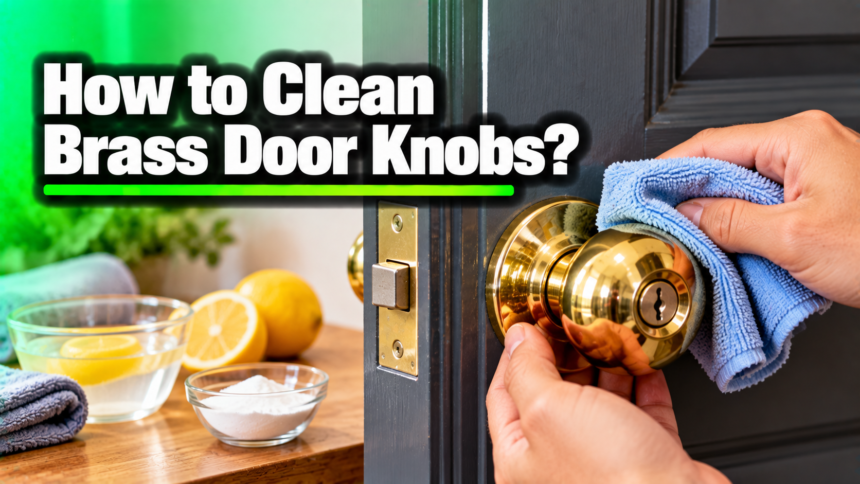
Cleaning brass door knobs starts with one quick check: are they lacquered or bare metal? Lacquered knobs only need mild soap and warm water. Bare brass can be brought back to a shine with a mild acid like lemon and baking soda, or a brass polish, then rinsed and dried. Get that one detail wrong and you can cloud a finish or waste an afternoon, so it pays to look before you reach for the polish.
This guide walks through the whole job: telling what your knobs are made of, cleaning each type the right way, dealing with heavy tarnish, and keeping the shine once you have it.
What makes brass door knobs go dull?
Knowing what you are looking at tells you how to clean it. A greasy, cloudy film is usually just dirt and skin oil from years of hands on the knob, and that wipes off with soap and water. A brown or dark, almost mottled color is tarnish, which is the brass reacting slowly with air and moisture, and that needs an acid or a polish to lift.
On a coated knob, a milky or peeling look is the lacquer breaking down rather than the metal itself. Sorting dirt from tarnish from a failing finish in the first minute saves you from scrubbing at a problem the wrong way.
First, figure out what your knobs are made of
Two things decide how you clean brass: whether the knob is solid brass or only brass-plated, and whether it is lacquered or bare. Both are easy to check in a minute, and both change what you should put on the metal.
For solid versus plated, hold a fridge magnet to the knob. If it grabs and sticks, there is steel or iron underneath and the brass is a thin plated layer on top.
If the magnet barely reacts, you most likely have solid brass. Solid brass also feels heavier than it looks. This matters because plated brass has a coating only a few microns thick. Acids and abrasives cut straight through it and expose the dull grey metal below, and that damage does not come back.
For lacquered versus bare, look closely and run a finger over the surface. Lacquered brass has a clear coat put on at the factory. It looks glassy and even, stays bright for years, and shrugs off fingerprints.
Bare brass tarnishes, so brown or dark patches, uneven color, or a dull film all point to exposed metal. If you are still unsure, dab a hidden spot with a little lemon juice or polish. If tarnish lifts onto the cloth, the brass is bare. If nothing changes, a coating is protecting it.
What you will need?
Most of this is already in your kitchen. Gather it before you start so you are not hunting for a cloth with polish drying on the knob.
- Mild dish soap and warm water
- A few soft cloths, microfiber if you have it
- A soft toothbrush for the grooves and edges
- A lemon and baking soda, or white vinegar with salt and flour, for bare brass
- Or a ready-made brass polish
- Rubber gloves, and take off any rings so you do not scratch the metal
How to clean lacquered brass door knobs?
Lacquered knobs need soap and water and nothing stronger. Dampen a soft cloth, add a drop of dish soap, and wipe the knob down. Work grime out of the crevices with a soft toothbrush, wipe away the residue with a clean damp cloth, then dry the knob fully so it does not spot.
Keep polish, vinegar, and anything gritty well away from lacquer. They cloud and scratch the clear coat, and once you break that seal the brass underneath starts to tarnish in patches.
If the lacquer is already flaking or the metal beneath it is turning dark, cleaning will not fix that. The old coating has to be stripped off and the knob repolished and resealed, which is a bigger job than a wipe-down.
How to clean and polish bare brass door knobs?
Bare brass is where the real shine work happens, since the metal is exposed and will respond to a polish. Take it in order and it goes quickly. The aim is to lift the tarnish with the mildest thing that works, then get every trace of the cleaner off before it can etch the surface.
- Take the knobs off if you can. Two screws usually hold the plate to the door. Working at a table is easier and keeps cleaners off your paint and wood. If the knobs will not come off, tape around the edges to protect the door.
- Wash them first. Use warm water with a drop of dish soap and a soft toothbrush for the crevices. This clears away dust and hand oil so the polish can reach the metal. Dry the knob before you move on.
- Reach for a mild acid. Cut a lemon in half, dip the cut face in baking soda, and rub it over the brass. The acid loosens the tarnish while the baking soda adds gentle grit. Re-dip as it wears down. For more control, mix equal parts white vinegar, salt, and flour into a paste, spread it over the knob, and leave it about ten minutes. Ketchup works in a pinch too, since the tomato and vinegar are acidic enough to lift light tarnish.
- Rub, do not scrub. Work a soft cloth over the surface in small circles. The tarnish comes away onto the rag, so turn to a clean patch as it darkens. Let the acid do the work rather than forcing it with pressure.
- Rinse straight away. Acid left sitting on brass will start to etch it, so rinse the knob under warm water or wipe it with a clean damp cloth until every trace of paste is gone.
- Dry it completely. Slow drying and leftover water are what cause fresh spots, so buff the knob with a dry microfiber cloth until it feels squeaky. For an intricate knob, a soft dry toothbrush gets the last damp specks out of the detailing before they dry into marks.
Tip: finish one knob before you start the next. Acid pastes keep working while they sit, and a batch left too long can dull the metal instead of brightening it.
If you would rather skip the kitchen chemistry, a dedicated brass polish is faster on heavy tarnish. A powdered or liquid cleanser such as Bar Keeper’s Friend works well on solid brass: wet the surface, apply a little, give it about a minute, then rinse and buff dry. Whatever polish you choose, keep it off any painted or lacquered parts and test a hidden spot first.
Here is how the common methods stack up, so you can match one to the job in front of you.
| Method | Best for | How it works |
| Lemon and baking soda | Light to medium tarnish, quick jobs | Mild citric acid plus a little gentle grit |
| Vinegar, salt, and flour paste | Even coverage on detailed knobs | An acid paste that clings while it sits |
| Ketchup | A fast fix with what is on hand | Tomato and vinegar acid lift light tarnish |
| Brass polish | Heavy tarnish and faster results | A formulated cleaner made for the metal |
Cleaning brass-plated knobs
Plated brass needs a gentle hand. Skip the acids and polishes, because the coating is too thin to survive them. Warm soapy water and a soft cloth is as far as you should go, with a toothbrush for the tight spots.
For a bit more shine you can use a polish made for plated metal, but sparingly, and stop the moment color starts coming off on the rag. That color is the brass layer wearing away. Once plating wears through, no amount of cleaning brings it back, and the knob has to be re-plated or replaced.
Getting rid of heavy tarnish and green spots
Green crust on brass is verdigris, a corrosion that forms where moisture sits, often near the base of a knob or around the screws.
On solid or bare brass, the vinegar, salt, and flour paste handles most of it. For stubborn spots, soak the knob in warm white vinegar for fifteen to thirty minutes, then work the softened crust loose with a toothbrush and rinse and dry well. Deep pitting under the green may not fully clear, and that is normal on older hardware.
On plated brass, do not soak and do not scrub hard. Wipe gently with soapy water and accept a few marks rather than cutting through the thin plating to the metal below.
How to protect brass door knobs after cleaning?
Bare brass begins to tarnish again within days, because the oils on your hands and the air itself go straight back to work on the exposed metal. To hold the shine, rub on a thin coat of wax once the knob is clean and completely dry.
A microcrystalline wax like Renaissance Wax is made for metal and leaves an invisible barrier. A little paste car wax, or even a wipe of mineral oil, also slows tarnish, though not for as long. Buff off the haze, reinstall the knob, and reapply every few months on knobs that get handled daily.
You can also decide you like the patina. Plenty of people let bare brass age on purpose, and the warm brown tone that builds up is a look, not a flaw. If that suits you, just wash the knobs with soap and water now and then and leave the polishing alone. Lacquered knobs need no wax at all, since the clear coat is already doing the protecting.
One habit makes the biggest difference on knobs you actually use: dry them after they get wet. Splashes from cleaning nearby, damp hands, or steam in a bathroom all speed up tarnish and verdigris, so a quick wipe with a dry cloth after any contact with water keeps a freshly cleaned knob looking good far longer than another round of polish would.
How often should you clean them?
It depends on the finish and how much the knob gets used. Lacquered knobs only need a wipe when they look dirty, a few times a year.
Bare brass that you have waxed can go about six months between full polishes, with a quick soapy wipe in between. Bare brass that is handled every day and left unwaxed will dull within weeks, so a light polish every month or two keeps it bright, unless you are happy to let it patina instead.
Conclusion
Cleaning brass door knobs comes down to one question: coated or bare. Wash lacquered knobs with mild soap and water and leave the polish alone.
For bare brass, wash first, lift the tarnish with lemon and baking soda or a brass polish, rinse off every trace of acid, and dry it hard.
A thin coat of wax makes the shine last longer. Do that and dull, spotty knobs come back to a warm, even glow, with the finish still intact.
Frequently asked questions
Can I clean brass door knobs without removing them?
Yes. Tape off the paint and wood around each knob, then clean and polish it in place. Taking the knobs off is easier and safer for the door, but it is not required for a quick job.
Will vinegar damage brass door knobs?
Not if you rinse it off. Vinegar is a mild acid that lifts tarnish from bare brass, but left on too long it can etch the surface. Rinse and dry right after using it, and keep it off lacquered or plated knobs.
How do I know if my brass is real or just plated?
Hold a magnet to it. A magnet sticks to plated brass because of the steel underneath, and barely reacts to solid brass. Solid brass also feels noticeably heavier than it looks.
Why do my brass knobs tarnish again so fast?
Bare brass reacts with the air and the oils on your hands, so knobs in daily use dull within days. A thin coat of wax after polishing slows it down. Lacquered knobs stay bright because a clear coat blocks that reaction.
What should I never use on brass door knobs?
Skip steel wool, scouring pads, and harsh abrasive cleaners, which all leave scratches. Keep acids and polishes off lacquered and plated brass, and on bare brass never let an acid sit without rinsing it away.
Related Articles
Can a Nest Thermostat Replace Heating and AC?
Can You Use a Propane Heater Indoors? Safety Guide