

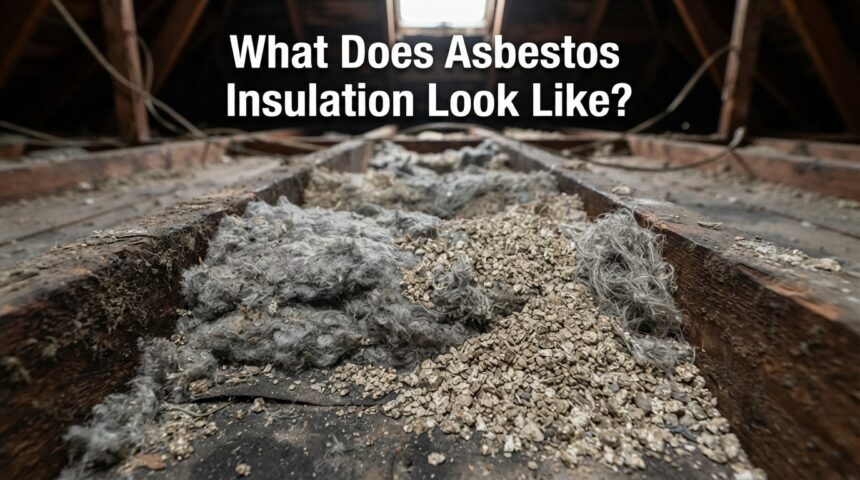
Many homeowners ask what does asbestos insulation look like when they notice unfamiliar material in their attic, basement, or around old pipes. Asbestos insulation can appear in several forms, including corrugated pipe wrap, loose granular fill, fluffy spray-applied coatings, or rigid boards. Its color usually ranges from white and gray to brownish or silvery tones.
However, visual appearance alone is never enough to confirm asbestos, since many safe materials look similar. This guide walks through every common type, where it is typically found, and how to safely determine what you’re dealing with.
What Is Asbestos Insulation?
Asbestos insulation is a building material made from naturally occurring mineral fibers that were once prized for their heat resistance and durability. It was widely used in homes and industrial buildings due to its low cost and effective insulating properties.
A Brief History of Its Use
Asbestos insulation became popular in construction between the 1930s and the 1980s. Builders valued it because it was fireproof, lightweight, and inexpensive compared to other insulating materials available at the time.
Many homes built during this era still contain some form of asbestos insulation today, especially around heating systems.
Why It Was Eventually Banned in Many Products
As health research advanced, scientists discovered that asbestos fibers could cause severe respiratory illnesses when inhaled.
This led to strict regulations and bans on many asbestos-containing products in numerous countries. Despite these bans, older homes may still contain asbestos insulation that was never removed.
Common Types of Asbestos Insulation and Their Appearance
Understanding what does asbestos insulation look like becomes easier once you know the different physical forms it can take. Each type has a distinct texture, color, and typical location within a home.
Pipe and Duct Insulation
This type often appears as a white, gray, or off-white wrapping around pipes and ductwork. It commonly has a corrugated or plaster-like texture that can crumble easily when disturbed. It is most frequently found around boiler pipes, steam lines, and HVAC ducts in older basements.
Loose-Fill Vermiculite Attic Insulation
Vermiculite-based asbestos insulation looks like small, lightweight pebbles or granules scattered across an attic floor.
The color typically ranges from gray-brown to silvery-gold, sometimes with a shiny, flaky appearance. This form is especially common in attics of homes built before insulation regulations tightened.
Blown-In or Spray-Applied Insulation
Spray-applied asbestos insulation has a fluffy, cotton-like texture that can resemble fiberglass at first glance. Its color is usually white, gray, or a soft blue-gray tone. This material was frequently sprayed directly onto ceilings, structural beams, and interior walls for fireproofing.
Batt or Blanket-Style Insulation
Though less common, some homes contain asbestos in a batt or blanket form similar to modern fiberglass insulation. It tends to be denser and more gray in color compared to standard batts. This type is more frequently found in older commercial buildings than residential homes.
Block and Board Insulation
Asbestos block and board insulation is rigid, thick, and typically white or gray in appearance. It was primarily used to insulate furnaces, boilers, and other industrial-grade heating equipment. Because of its dense structure, it can be mistaken for plain drywall or cement board.
Where Asbestos Insulation Is Typically Found
Knowing common locations helps narrow down where to look if you suspect asbestos insulation in your home. It tends to appear in areas associated with heating, plumbing, and older construction techniques.
| Location | Common Asbestos Insulation Type |
| Basements and utility rooms | Pipe wrap, block insulation |
| Attics | Vermiculite loose-fill |
| Around pipes and ductwork | Corrugated pipe insulation |
| Furnaces and boilers | Rigid board insulation |
| Walls and ceilings | Spray-applied insulation |
Basements and Utility Areas
Basements are one of the most common places to find asbestos insulation because they house heating systems and plumbing. Pipe wrapping and block insulation around boilers are especially prevalent in older basements. If your home was built before 1980, this is often the first place worth inspecting.
Attics and Ceiling Spaces
Attics frequently contain vermiculite insulation, which can be mistaken for ordinary loose-fill material. Since it looks similar to some non-asbestos insulation types, professional testing is the only reliable way to confirm it. Disturbing attic insulation without proper precautions can release harmful fibers into the air.
Visual Clues vs. Reliable Identification
While certain signs may suggest the presence of asbestos, appearance alone should never be used as final confirmation. Understanding the difference between visual clues and verified identification helps prevent unnecessary risk.
Age of the Home as a Warning Sign
Homes constructed before 1980 are more likely to contain asbestos insulation somewhere in their structure. If your home falls within this time frame, it’s reasonable to treat older insulation materials with caution. This is often the first clue that prompts further investigation.
Deterioration and Physical Condition
Asbestos insulation becomes more dangerous when it is damaged, crumbling, or frayed, since this increases the chance of fiber release. Material that looks brittle, powdery, or falling apart should not be touched or moved. Intact material generally poses a lower risk than deteriorated material.
How to Safely Confirm Asbestos Insulation
Since appearance can be misleading, safe and accurate confirmation requires professional involvement rather than guesswork. This section explains the proper steps to take.
Hiring a Certified Asbestos Inspector
A certified inspector can collect a small sample of the suspected material and send it for laboratory analysis. This is the only reliable way to confirm whether a material contains asbestos. Professionals also follow safety protocols to avoid releasing fibers during sample collection.
Why DIY Testing Is Discouraged
Attempting to test asbestos insulation yourself can be dangerous, since disturbing the material may release microscopic fibers into the air. Even careful handling carries risk without proper protective equipment. Professional testing eliminates this danger while providing accurate results.
What to Do If You Suspect Asbestos Insulation
If you believe your home contains asbestos insulation, taking the right precautions immediately can reduce health risks significantly. Avoiding disturbance is the most important first step.
Avoid Disturbing the Material
Never cut, drill, sand, or move suspected asbestos insulation, as this can release fibers into the air. Even minor disturbances can create long-term exposure risks. Leaving the material undisturbed until it’s tested is the safest approach.
Contacting a Licensed Abatement Professional
If asbestos is confirmed, a licensed abatement contractor should handle removal or containment. These professionals use specialized equipment and follow legal safety standards to prevent contamination. Attempting removal without licensing can violate local regulations and endanger your household.
Health Risks of Asbestos Exposure
Understanding why asbestos identification matters requires a brief look at its associated health risks. Exposure to airborne fibers is the primary danger linked to this material.
Long-Term Exposure Concerns
Prolonged exposure to asbestos fibers has been linked to serious illnesses such as asbestosis, lung cancer, and mesothelioma.
These conditions often develop slowly over many years, making early identification and avoidance essential. This is why professional handling is strongly recommended over personal inspection or removal.
FAQs
What does asbestos insulation look like in an attic?
It typically appears as gray-brown or silvery pebble-like granules known as vermiculite.
Can asbestos insulation be white?
Yes, many types, including pipe wrap and board insulation, are commonly white or off-white.
Is it safe to touch asbestos insulation to check its texture?
No, touching or disturbing it can release harmful fibers into the air.
How can I be sure if insulation contains asbestos?
Only a certified inspector using laboratory testing can confirm asbestos presence.
Conclusion
Knowing what does asbestos insulation look like can help homeowners recognize potential risks, but visual identification should never replace professional testing.
From corrugated pipe wrap to fluffy spray coatings and pebble-like attic fill, asbestos insulation can take many forms. If you suspect its presence, avoid disturbing the material and consult a certified professional for safe testing and removal guidance.
Related Articles
How to Add Crown Molding to Kitchen Cabinets: A Complete DIY Guide
How Deep Is a Base Kitchen Cabinet? Complete Depth Guide
How to Make Saltillo Floors Shine Again Expert Tips & Professional Solution