

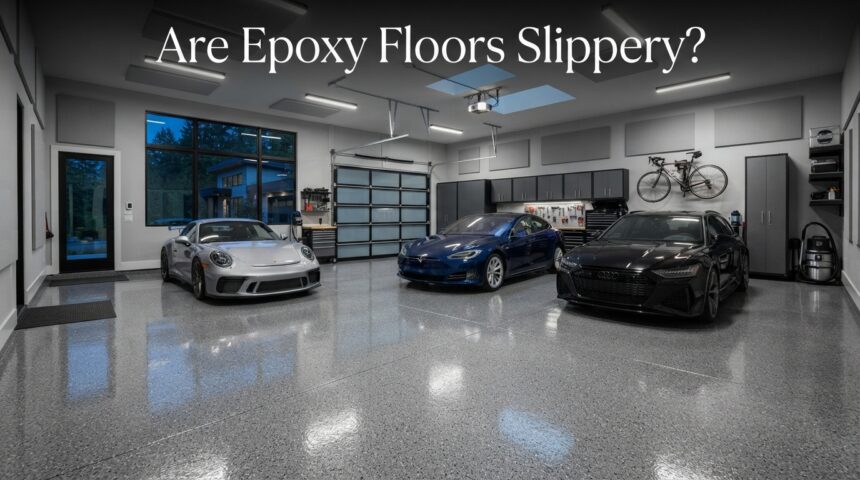
Yes, epoxy floors can be slippery, but only under certain conditions, and this depends heavily on the type of finish used. A high-gloss epoxy coating looks great, but it becomes noticeably slick when it comes into contact with water, oil, or dust.
On the other hand, a textured or matte epoxy finish offers much better grip and is considered safe for most homes and workplaces. The real answer to “are epoxy floors slippery” is not a simple yes or no, it depends on the finish, the environment, and how the floor is maintained. This guide breaks down everything you need to know before choosing or upgrading an epoxy floor.
Understanding Epoxy Flooring
Epoxy flooring is a resin-based coating applied over concrete to create a smooth, durable, and chemical-resistant surface. It has become a popular choice for garages, basements, and commercial spaces because of its strength and long lifespan.
What Epoxy Coating Is Made Of
Epoxy coating is created by mixing resin with a hardening agent, which chemically bonds together to form a rigid plastic-like layer on top of concrete. This layer is extremely tough and resists cracking, staining, and moisture damage far better than plain concrete. Once cured, it forms a seamless surface that is easy to clean and maintain for years.
Common Uses Of Epoxy Flooring
Epoxy is widely used in garages, workshops, warehouses, and industrial facilities because it can handle heavy loads and constant foot or vehicle traffic.
It is also gaining popularity in home kitchens, basements, and even some retail spaces due to its clean, polished appearance. Businesses often choose it because it reduces long-term maintenance costs compared to tile or plain concrete.
Types Of Epoxy Finishes
Epoxy finishes generally fall into a few categories: high-gloss, matte, metallic, and flake finishes, each offering a different look and feel underfoot. High-gloss finishes reflect light beautifully but tend to be the most slippery when wet. Matte and flake finishes trade some shine for significantly better traction, making them a smarter choice for safety-focused spaces.
Are Epoxy Floors Slippery? The Real Answer
The slipperiness of an epoxy floor changes dramatically between dry and wet conditions, which is the core reason this question keeps coming up. Understanding the science behind traction helps explain why some epoxy floors feel dangerous while others feel completely stable.
Dry Conditions Vs Wet Conditions
In dry conditions, most epoxy floors provide decent grip and feel similar to walking on a smooth painted surface. The real risk appears when the floor gets wet, since water reduces friction between shoes and the glossy resin layer, making slips far more likely. This is why garages and kitchens, where spills are common, need extra attention when choosing an epoxy finish.
Why Glossy Epoxy Feels More Slippery
Glossy epoxy has an extremely smooth molecular surface, and smoothness is directly linked to reduced friction.
When any liquid sits on top of this smooth layer, it creates a thin film that prevents shoes from gripping the floor properly. This is the same reason polished marble or glass feels slick when wet, even though it feels stable when completely dry.
Science Behind Traction And Coefficient Of Friction
Flooring safety is often measured using something called the coefficient of friction, which indicates how much resistance a surface offers against sliding.
A higher coefficient means better grip, while a lower one signals higher slip risk, especially in wet or oily environments. Textured epoxy coatings are specifically designed to raise this friction value, making them measurably safer than smooth, glossy versions.
Factors That Affect Slipperiness
Several everyday factors influence how slippery an epoxy floor actually feels, beyond just the finish type itself. Recognizing these factors helps you predict and prevent slip risks before they become a problem.
Finish Type: High-Gloss Vs Matte Or Textured
The single biggest factor in slip risk is the finish chosen during installation, since high-gloss coatings are inherently smoother than matte or textured ones.
Textured finishes contain tiny grit particles that break up the smooth surface and give shoes something to grip onto. If safety is a priority, choosing a textured or satin finish over high-gloss is usually the smarter decision.
Presence Of Water, Oil, Or Dust
Any contaminant on the floor surface, whether it is water, oil, grease, or fine dust, reduces the natural grip of epoxy and increases slip risk.
Garages are particularly vulnerable since oil leaks and water tracked in from vehicles are common. Keeping the floor clean and dry as much as possible significantly reduces the chance of slipping.
Footwear Type
The type of shoes worn on an epoxy floor plays a bigger role than most people realize, since soft rubber soles grip far better than hard leather or smooth-soled shoes.
Socks or bare feet on a wet glossy epoxy floor carry the highest slip risk of all. Workplaces with epoxy flooring often recommend rubber-soled safety shoes for this exact reason.
Floor Age And Wear
As epoxy floors age, the surface can either become smoother from constant foot traffic or slightly rougher from minor surface wear, depending on the original finish.
In some cases, older floors lose their anti-slip additive effectiveness over time, requiring a fresh topcoat. Regular inspection helps catch this gradual change before it becomes a safety issue.
Lighting And Floor Color
While lighting and color do not physically change friction, they affect how well people perceive wet spots or hazards on the floor.
Darker or metallic epoxy finishes can hide water spills more easily than lighter colors, indirectly increasing accident risk. Good lighting combined with a slightly lighter floor tone helps people spot spills before stepping on them.
Where Slipperiness Becomes A Real Concern
Some locations naturally carry higher slip risk with epoxy flooring due to moisture, chemicals, or heavy activity. Knowing which spaces need extra caution helps guide better finish selection.
Garages
Garages are one of the most common places where epoxy slip risk shows up, mainly due to water dripping from vehicles and occasional oil spills. A textured or medium-gloss finish with anti-slip additives is strongly recommended for this space. Without it, wet winter days or washing your car can turn the floor into a hazard.
Bathrooms And Kitchens
Bathrooms and kitchens deal with constant water exposure, making slip resistance a top priority when installing epoxy in these areas.
A matte or textured epoxy finish is far safer here than a glossy one, especially near sinks, showers, or stoves. Adding rugs near high-splash zones offers an extra layer of protection.
Commercial And Industrial Spaces
Warehouses, factories, and commercial kitchens often deal with oil, grease, or chemical spills on a regular basis, making slip-resistant epoxy essential rather than optional.
Many industrial facilities are required to meet specific safety standards for floor traction. Choosing a heavy-duty anti-slip epoxy system helps meet these standards while maintaining durability.
Outdoor Or Covered Patio Areas
Outdoor and covered patio spaces face constant exposure to rain, dew, and temperature changes, which increases slip risk significantly compared to indoor floors.
Epoxy used outdoors should always include a textured or aggregate finish designed specifically for wet weather conditions. Without this precaution, outdoor epoxy can become dangerously slick after just light rainfall.
How To Make Epoxy Floors Slip-Resistant
Fortunately, slip risk with epoxy flooring can be reduced significantly through the right additives, finishes, and accessories. These solutions work whether you are installing a new floor or upgrading an existing one.
Anti-Slip Additives
Anti-slip additives like aluminum oxide, silica sand, or polymer grit can be mixed directly into the epoxy coating during installation to boost traction.
These particles create a slightly rough texture that dramatically improves grip without affecting the floor’s durability. Most professional installers offer this as a standard upgrade option for safety-conscious spaces.
Textured Or Matte Topcoats
Choosing a textured or matte topcoat instead of high-gloss is one of the simplest ways to reduce slip risk from the very beginning.
These finishes sacrifice a small amount of shine in exchange for noticeably better underfoot traction. Many homeowners find the trade-off worthwhile once they consider the added safety benefit.
Anti-Slip Mats And Rugs
Placing anti-slip mats or rugs in high-risk zones, such as near sinks, entryways, or workstations, adds an immediate layer of protection without altering the floor itself.
These mats are especially useful in spaces where water or oil spills happen frequently. They are also a low-cost solution for existing glossy epoxy floors that already feel risky.
Non-Slip Treatments For Existing Floors
If an epoxy floor is already installed and feels too slippery, non-slip treatments and sealants can be applied on top to improve grip without a full redo. These products typically add a light texture or etching effect to the existing surface. This is a practical option for anyone who wants to fix an existing floor rather than replace it entirely.
Epoxy Vs Other Flooring Options
Comparing epoxy to other common flooring materials helps put its slip risk into proper context. Each material has its own strengths and weaknesses when it comes to traction and safety.
| Flooring Type | Slip Risk When Wet | Durability | Best Suited For |
| Glossy Epoxy | High | Very High | Dry indoor spaces |
| Textured Epoxy | Low to Moderate | Very High | Garages, kitchens, industrial areas |
| Ceramic Tile | High | Moderate | Decorative indoor flooring |
| Polished Concrete | High | Very High | Dry commercial interiors |
| Rubber Flooring | Low | High | Gyms, wet-prone workspaces |
This comparison shows that textured epoxy actually performs quite competitively against dedicated anti-slip flooring options like rubber, while still offering the strength and appearance advantages epoxy is known for.
Maintenance Tips To Reduce Slip Risk
Regular maintenance plays a major role in keeping an epoxy floor safe over the long term, not just at the time of installation.
Regular Cleaning Routines
Wiping up spills quickly and sweeping away dust or debris on a regular basis prevents contaminants from building up on the epoxy surface. A simple mop-and-dry routine after wet activities, like washing a car in the garage, goes a long way. Consistent cleaning keeps the floor’s natural traction intact for longer.
Avoiding Wax-Based Cleaners
Wax-based or oil-based cleaning products can leave a thin residue on epoxy floors that actually increases slipperiness over time.
Using pH-neutral, epoxy-safe cleaners is a much better choice for both safety and floor longevity. Always check product labels before applying any new cleaning solution to an epoxy surface.
Reapplying Anti-Slip Topcoat Over Time
Anti-slip additives can wear down gradually with heavy foot or vehicle traffic, reducing their effectiveness after several years. Reapplying a fresh anti-slip topcoat every few years helps restore the original grip level. This small maintenance step is far more affordable than a full floor replacement.
Pros And Cons Of Epoxy Flooring
Weighing the benefits against the slip-related concerns gives a clearer picture of whether epoxy is the right choice for a given space.
Epoxy flooring offers excellent durability, resistance to stains and chemicals, and a wide range of attractive finishes, making it a strong long-term investment for many spaces. However, the slip risk with glossy finishes in wet areas is a genuine drawback that needs to be addressed through proper finish selection or additives. When installed with safety in mind, epoxy can match or even exceed the practicality of many alternative flooring materials.
Frequently Asked Questions
Is epoxy flooring safe for bathrooms?
Yes, as long as a matte or textured finish with anti-slip additives is used instead of a high-gloss coating.
Can you add grip to existing epoxy floors?
Yes, non-slip sealants and treatments can be applied on top of existing epoxy to improve traction without a full reinstall.
Does epoxy get more slippery over time?
It can, especially if anti-slip additives wear down from heavy traffic, which is why periodic topcoat renewal matters.
Is matte epoxy less durable than glossy?
No, matte and glossy epoxy offer similar durability, the main difference lies in appearance and surface traction, not strength.
Conclusion
So, are epoxy floors slippery? The honest answer is that they can be, particularly glossy finishes exposed to water, oil, or dust, but this risk is largely preventable.
By choosing textured or matte finishes, adding anti-slip additives, and maintaining the floor properly, epoxy can be just as safe as any other popular flooring option. The right choice ultimately depends on the specific space, expected exposure to moisture, and how much priority is placed on safety versus shine.
Related Articles
How Long Does It Take to Do a Bathroom Renovation? Timelines, Phases & What to Expect
Bathroom Vanity Cabinet Sizes: Complete Guide 2026
How Do You Remove Tile From a Bathroom Wall? Step-by-Step Guide