
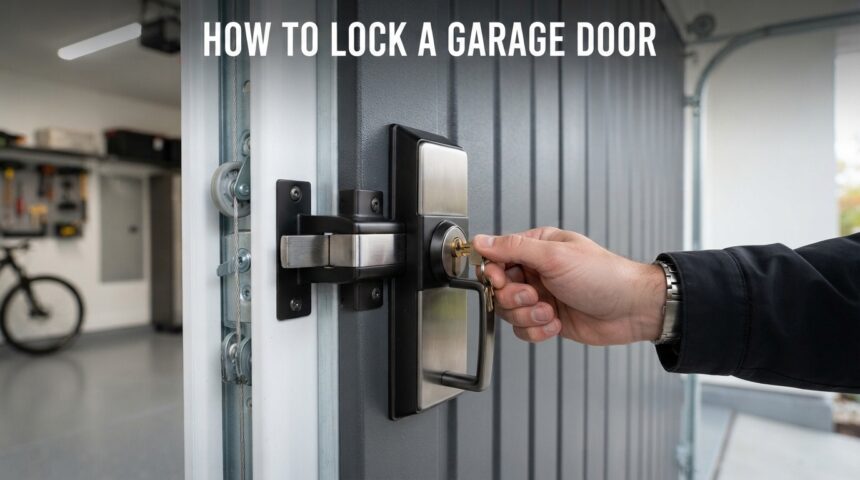
A garage door is often the largest entry point into a home, yet many people overlook proper locking methods, leaving their property vulnerable. Learning how to lock a garage door correctly is essential whether you have a manual door, an automatic opener, or a modern smart system.
Each door type comes with its own locking mechanism, and understanding these differences helps you choose the right method for your situation. This guide walks through every door type, lock style, and safety step in simple language so anyone can follow along without technical confusion.
By the end, you will know exactly how to secure your garage door and avoid common mistakes that leave homes exposed. Whether you are a new homeowner or simply want to double-check your current setup, this article covers everything you need.
Types of Garage Doors and Their Locking Mechanisms
Garage doors come in several designs, and each one requires a slightly different approach when it comes to locking. Knowing which type you have is the first step toward securing it properly.
Manual Doors
Manual garage doors are opened and closed by hand, without any motor assistance. They typically rely on a T-handle or slide lock bar positioned on the inside surface of the door. These mechanisms are simple but effective when used consistently every time the door is closed.
Roll-Up Doors
Roll-up doors coil upward into a drum above the opening and are common in both residential and commercial spaces. Locking usually involves a side-mounted slide bolt that inserts into the track, physically preventing the door from rolling up even if someone tries to force it.
Automatic Opener Doors
These doors use an electric motor to open and close, and the motor itself often holds the door shut once lowered. However, this is not a true mechanical lock, so homeowners should still use additional locking features such as vacation mode for real security.
Side-Hinged Doors
Side-hinged garage doors swing open like regular doors rather than lifting upward. They typically use a hasp and padlock or a built-in deadbolt, making them similar to securing a standard exterior door.
Understanding Different Garage Door Lock Types
Before locking any garage door, it helps to understand the actual hardware involved. Different locks offer different levels of protection and ease of use.
T-Handle Locks
A T-handle lock is a rotating handle on the inside of manual doors that, when turned, pushes a metal bar into the door track. This simple design has been used for decades and remains reliable for basic security needs.
Slide Bolt Locks
Slide bolt locks work by manually sliding a bar into a fixed slot near the bottom or side of the door. They are inexpensive, easy to install, and provide a strong physical barrier against forced entry attempts.
Deadbolts and Padlocks
Deadbolts and padlocks are most common on side-hinged doors and offer a familiar, dependable locking method. A quality padlock combined with a sturdy hasp can significantly slow down anyone attempting a break-in.
Smart Locks
Smart locks connect to a mobile app or home automation system, allowing remote locking and unlocking. These are increasingly popular because they let homeowners check and control garage security from anywhere.
Step-by-Step: How to Lock a Manual Garage Door
Manual doors require a hands-on approach, but the process is straightforward once you know where to look and what to do.
Locate the T-Handle
Start by finding the T-handle, usually positioned at the center or side of the door on the interior. This handle connects directly to the locking bar mechanism hidden within the door frame.
Engage the Slide Bar
Turn the T-handle so the attached metal bar slides fully into the track opening built into the door frame. Make sure the bar is inserted completely, as a partial engagement can be easily bypassed.
Test the Lock
After locking, gently try to lift the door from the outside to confirm it will not budge. This quick test ensures the mechanism is properly engaged before you leave the area unattended.
How to Lock a Garage Door with an Automatic Opener
Automatic openers add convenience, but understanding how their locking actually works is key to keeping your garage genuinely secure.
Electronic Locking Explained
When the opener lowers the door, the motor gear typically prevents manual lifting from outside, which many people mistake for true security. This electronic hold can sometimes be bypassed using specific tools, so it should not be relied upon alone.
Using Vacation/Lock Mode
Most modern openers include a lock or vacation button on the wall control panel that disables remote signals entirely. Activating this feature prevents anyone from opening the door using a garage remote, even if they have one.
Manual Slide Bolt for Extra Security
For added protection, many opener-equipped doors still include a manual slide bolt near the base. Engaging this bolt alongside the electronic lock creates a stronger, layered security approach.
Locking a Side-Hinged Garage Door
Side-hinged doors function more like traditional doors, so their locking process feels familiar to most homeowners.
Using a Hasp and Padlock
Attach a metal hasp across the door seam and secure it with a durable padlock rated for outdoor use. This method is affordable and widely available at most hardware stores.
Installing a Deadbolt
For stronger protection, a deadbolt can be installed directly into the door and frame, similar to a house entry door. This option is more permanent but offers significantly better resistance against forced entry.
How to Lock a Smart Garage Door
Smart garage systems have changed how people think about home security, offering control that goes beyond a simple physical lock.
Locking via Mobile App
Most smart garage systems allow you to lock or check the door status directly through a smartphone app. This is especially useful for confirming security while away from home.
Auto-Lock Schedules
Many smart systems let users set automatic locking schedules, such as locking the door every night at a specific time. This removes the risk of human error caused by forgetting to lock up manually.
Status Notifications
Smart locks often send push notifications whenever the door is opened, closed, or left unlocked for too long. These alerts help homeowners respond quickly to unexpected activity.
Extra Security Measures for Your Garage
Beyond the primary lock, several additional steps can strengthen overall garage security and reduce vulnerability.
Secondary Locks
Installing a second lock, such as a padlock alongside the main mechanism, adds an extra barrier that intruders must overcome. This layered approach discourages casual break-in attempts.
Security Bars
A horizontal security bar placed across the inside of the door track can physically block it from being forced open. These bars are especially useful for older doors lacking modern locking hardware.
Motion-Sensor Lights and Alarms
Motion-activated lighting and door alarms deter potential intruders by drawing attention to any activity near the garage. Combining these with a solid lock creates a well-rounded security setup.
Common Mistakes to Avoid When Locking a Garage Door
Even with the right hardware, small oversights can leave a garage door far less secure than intended.
Forgetting the Slide Bolt
Many homeowners rely solely on the automatic opener and forget to engage the manual slide bolt. Skipping this step leaves the door vulnerable to certain bypass techniques used by intruders.
Relying Only on the Opener
Treating the opener’s electronic hold as a complete security solution is a common misconception. Pairing it with a physical lock is always the safer choice.
Skipping Regular Testing
Locks can wear down or shift over time, so failing to test them periodically may leave you unaware of a failure. A quick monthly check helps catch issues before they become a problem.
Maintenance Tips for Garage Door Locks
Regular upkeep keeps locking mechanisms functioning smoothly and extends their overall lifespan.
Lubrication
Applying a small amount of lubricant to moving lock parts prevents stiffness and reduces wear over time. This simple step should be done every few months for best results.
Rust Prevention
Metal components exposed to moisture can develop rust, which weakens the lock and makes it harder to operate. Wiping down hardware and applying protective coatings helps prevent this issue.
Replacing Worn Parts
If a lock feels loose, sticky, or difficult to engage, replacing the worn component promptly prevents complete failure. Waiting too long can result in a lock that no longer functions at all.
Troubleshooting Common Locking Issues
Even well-maintained garage doors occasionally run into locking problems that need quick solutions.
Stuck Lock
A stuck lock is often caused by debris, rust, or misalignment within the track. Cleaning the area and applying lubricant usually resolves the issue without needing professional help.
Opener Not Locking
If the automatic opener fails to hold the door shut, check the motor gear and remote settings for errors. Resetting the opener or replacing a worn gear often fixes this problem.
Lost Key Solutions
Losing a key to a padlock or deadbolt can be resolved by contacting a locksmith or replacing the lock entirely. Keeping a spare key in a secure location can prevent this inconvenience in the future.
FAQs
Can a garage door be locked from outside?
Yes, most manual and side-hinged doors include external lock access through a T-handle or padlock, allowing you to secure the door from outside.
Is a garage door opener enough security on its own?
No, an opener alone is not sufficient, since it can sometimes be bypassed; pairing it with a manual lock offers much stronger protection.
How to lock a garage door without a key?
Slide bolts, vacation mode on openers, and smart app-based locks all allow secure locking without needing a traditional key.
Conclusion
Securing your garage properly comes down to understanding your specific door type and using the right combination of locks. Compared to many generic guides that only mention one locking method, this article covers manual, automatic, smart, and side-hinged doors together for a complete picture.
Regular maintenance, testing, and layered security measures make a significant difference in keeping your home safe. By applying the steps outlined above, you can confidently lock your garage door and reduce the risk of unwanted entry.
Related Articles
How to Hang String Lights from Ceiling
How to Install Shiplap Ceiling: A Complete Step-by-Step Guide
How to Insulate a Vaulted Ceiling: Complete Step-by-Step Guide