
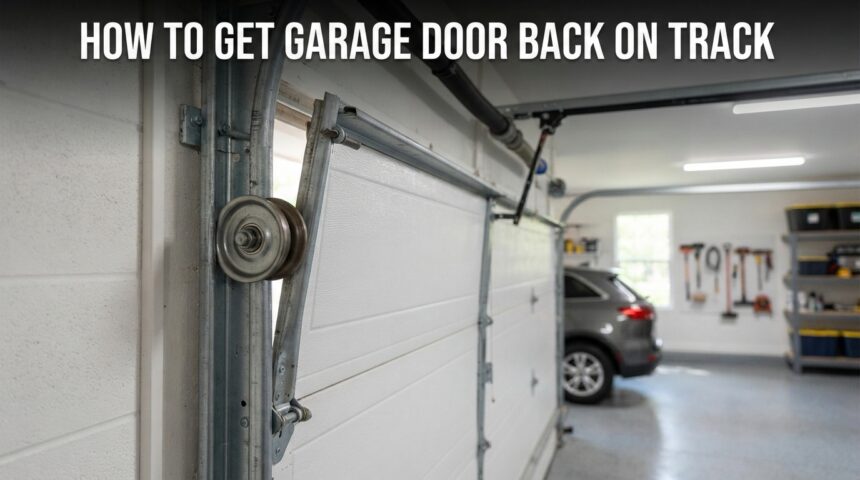
A garage door that jumps off its track can be stressful, but in most cases you can fix it safely at home with the right steps. Knowing how to get garage door back on track starts with understanding why it slipped in the first place, whether it is a loose bracket, a bent rail, or a worn roller.
This guide walks you through the entire process in simple language, from safety precautions to the exact tools you need. You will also learn when a small home fix is enough and when it is smarter to call a professional. By the end, you will have a clear, repeatable process to handle this problem confidently and keep it from happening again.
Understanding Your Garage Door System
Before attempting any repair, it helps to know the basic parts working together to move your door. This section breaks down the mechanical components so the later repair steps make more sense.
Basic Parts of a Garage Door
The main components include the tracks, rollers, hinges, springs, and lift cables, each playing a specific role in smooth operation.
The tracks guide the rollers, the springs counterbalance the door’s weight, and the cables connect the door to the spring system. Hinges allow the door panels to bend as they travel along the curved section of the track.
How the Track System Works
The vertical track holds the door in place while it is closed, and the horizontal track guides it along the ceiling when open.
Rollers attached to the door edges sit inside these tracks and slide smoothly when everything is aligned correctly. Any bend, gap, or obstruction in this path can cause the door to pop out of alignment.
Types of Garage Door Tracks
Steel tracks are heavier, more durable, and common in older or commercial-grade doors, while aluminum tracks are lighter and used in many modern residential doors.
Steel resists bending better but is harder to repair once damaged, whereas aluminum is easier to reshape but dents more easily. Knowing your track type helps you choose the right repair approach.
Torsion Springs vs Extension Springs
Torsion springs sit above the door and twist to create lifting force, while extension springs stretch along the horizontal tracks on either side.
Torsion springs hold significantly more tension and are more dangerous to handle without proper training. This distinction matters because any track repair near these springs requires extra caution.
Common Causes of a Garage Door Going Off Track
Most track problems trace back to a handful of repeated causes, and identifying yours helps prevent the issue from returning. Below is a closer look at each common trigger.
Worn-Out or Broken Rollers
Rollers naturally wear down after years of friction and weight, eventually cracking or becoming loose in their housing. Once a roller is damaged, it can no longer sit properly in the track, causing the door to shift or jump out of alignment.
Loose or Damaged Track Brackets
Brackets hold the track firmly to the wall or ceiling frame, and over time their bolts can loosen from constant vibration. A loose bracket allows the track to shift slightly with every use, gradually pulling it out of proper position.
Obstructions or Debris in the Track
Dirt, leaves, small toys, or hardened grease can build up inside the track and block smooth roller movement. This forces the roller to jump the track edge instead of sliding through it cleanly.
Bent or Dented Tracks
A dent, even a small one, changes the internal width of the track and interrupts the roller’s path. This is one of the most common reasons doors suddenly refuse to move smoothly.
Broken Cables or Springs
When a cable snaps or a spring loses tension, the door’s weight becomes unbalanced, pulling it unevenly and forcing rollers out of the track. This is a serious issue that usually requires professional repair.
Impact Damage
Vehicles, storage equipment, or strong wind gusts can strike the door directly, bending the track instantly. This type of damage is often visible immediately after the incident.
Lack of Regular Maintenance
Skipping lubrication and hardware checks allows small issues to compound over time until the door finally slips off track. Routine care is the simplest way to avoid most of these problems.
Safety Precautions Before You Start
Garage doors are heavy and often connected to spring systems under tension, so safety comes first in every repair. This section covers what to check and prepare before touching the track.
Disconnecting the Garage Door Opener
Always unplug the opener or pull the manual release cord before working on the track, since an accidental automatic movement can cause serious injury. This single step prevents most repair-related accidents.
Wearing Protective Gloves and Eyewear
Sharp metal edges on tracks and rollers can easily cut unprotected hands, so thick work gloves are essential. Safety glasses protect your eyes from dust, rust flakes, or metal shavings during the repair.
Never Touching Torsion Springs
Torsion springs store enough force to cause severe injury if mishandled, so they should never be adjusted or removed without professional training. If your issue is spring-related, stop and call a technician immediately.
Securing the Door in Place
Use locking pliers or a clamp on the track below the bottom roller to prevent the door from sliding down unexpectedly while you work. This keeps the door stable throughout the repair process.
Tools and Materials Checklist
Having everything ready before starting saves time and reduces the risk of leaving the door partially disassembled.
| Tool/Material | Purpose |
| Adjustable wrench | Loosening and tightening bracket bolts |
| Pliers | Repositioning rollers into the track |
| Rubber mallet | Gently realigning bent track sections |
| Work gloves | Hand protection from sharp edges |
| Safety glasses | Eye protection from debris |
| Locking clamp | Securing the door during repair |
| Lubricant spray | Smoothing roller and hinge movement after repair |
Step-by-Step Guide: How to Fix a Garage Door Off Track
This is the core process for how to get garage door back on track using basic household tools. Each step builds on the last, so follow them in order for the best results.
Step 1 – Unplug the Opener
Disconnect power to the opener and pull the emergency release handle so the door can be moved manually. This prevents the motor from engaging accidentally while your hands are near the track.
Step 2 – Inspect the Tracks and Rollers
Walk the full length of both tracks, checking for dents, gaps, or rollers sitting outside their channel. This inspection tells you exactly where the misalignment is happening.
Step 3 – Clear Obstructions and Clean the Tracks
Remove any dirt, debris, or hardened residue using a cloth or soft brush before attempting realignment. A clean track allows the rollers to slide back into position much more easily.
Step 4 – Loosen the Track Bracket Bolts
Using your wrench, slightly loosen the bolts holding the track to the wall or ceiling frame, without removing them completely. This gives the track enough flexibility to be adjusted back into place.
Step 5 – Realign the Track with a Rubber Mallet
Gently tap the track back into its original straight position, checking alignment against the door frame as you go. Avoid using excessive force, since too much pressure can create new dents.
Step 6 – Reposition Rollers into the Track
Using pliers, carefully guide any displaced roller back into the track channel while slowly moving the door by hand. It should slide in smoothly once the track is properly aligned.
Step 7 – Tighten Bolts and Secure Brackets
Once everything looks straight, tighten all bracket bolts firmly to lock the track back into its correct position. Double-check each bracket along the length of the track.
Step 8 – Test the Door Manually
Slowly raise and lower the door by hand several times to confirm smooth movement without grinding or resistance. This step reveals whether the repair was fully successful.
Step 9 – Reconnect the Opener and Test Again
Plug the opener back in and run the door through a few full cycles using the remote or wall switch. If it operates quietly and evenly, your repair is complete.
How to Fix a Severely Off-Track or Bent Track
Not every case is a simple realignment, and some situations call for a different approach entirely. This section explains when the standard steps are not enough.
Identifying Bent vs Misaligned Tracks
A misaligned track can usually be tapped back into place, while a bent track shows a visible kink or crimp that changes its shape permanently. Running your hand carefully along the track helps you feel the difference.
When Bending Back the Track Works
Minor bends in aluminum tracks can often be corrected with a mallet and steady pressure, especially if caught early. This works best when the damage is limited to a small section.
When You Need to Replace the Track Completely
Severe bends, cracks, or repeated misalignment in the same spot usually mean the track has weakened structurally and should be replaced. Continuing to force a damaged track can lead to further roller and cable damage.
DIY vs Professional Repair for Severe Damage
Replacing an entire track section involves precise measurements and disconnecting cables safely, which is best handled by a professional if you are not experienced. Attempting this without proper knowledge risks both injury and further damage.
Fixing Common Related Issues
Sometimes the track is not the only problem, and related symptoms can appear alongside it. Here is how to recognize and address them.
Garage Door Won’t Move at All
This usually points to a jammed track, disconnected opener arm, or broken spring rather than a simple track slip. Check the track first, then inspect the spring system before assuming motor failure.
Door Makes Grinding or Squeaking Noises
Dry or dirty rollers are the most common cause of these sounds, and a simple lubrication often solves the issue. If the noise continues after lubrication, the rollers themselves may need replacement.
Door Is Uneven or Crooked When Closing
This typically signals uneven tension between the two tracks, often caused by one side being slightly more misaligned than the other. Comparing both tracks side by side usually reveals the imbalance.
Rollers Keep Popping Out Repeatedly
Recurring roller issues usually mean the rollers themselves are worn out and need replacement rather than repeated repositioning. Continuing to push a worn roller back in only offers a temporary fix.
When to Call a Professional
While many track issues are fixable at home, some situations clearly call for expert help. Knowing where that line sits protects both you and your garage door system.
Signs the Problem Is Beyond DIY Repair
Snapped cables, broken springs, structurally bent tracks, or a door that will not budge even after basic troubleshooting all indicate the need for professional intervention. Attempting these repairs without proper tools can worsen the damage.
Risks of DIY Torsion Spring Repair
Torsion springs can cause serious injury if released improperly, making them one of the few garage door components homeowners should never attempt to fix alone. Professional technicians use specialized bars and training for this exact reason.
Cost Comparison DIY vs Professional Service
Basic track realignment done at home costs little beyond your existing tools, while professional service typically covers labor and any replacement parts needed. For minor slips, DIY saves money, but for spring or cable issues, professional service is worth the added cost for safety alone.
How to Choose a Reliable Garage Door Repair Company
Look for licensed technicians with verified reviews, upfront pricing, and clear warranties on both labor and parts. A trustworthy company will also explain the cause of the problem rather than just fixing the symptom.
Preventive Maintenance Tips
Regular upkeep is the best way to avoid needing this guide again in the future. These habits keep your garage door running smoothly year-round.
Regular Lubrication Schedule
Apply a silicone-based lubricant to rollers, hinges, and tracks every three to six months to reduce friction and wear. This simple habit significantly extends the life of moving parts.
Monthly Visual Inspection Checklist
Set aside a few minutes each month to check for loose bolts, worn rollers, or early signs of track misalignment. Catching small issues early prevents them from becoming major repairs.
Cleaning Tracks and Rollers
Wipe down tracks with a damp cloth periodically to remove dust and debris buildup before it interferes with roller movement. A clean system runs quieter and lasts longer.
Tightening Hardware Periodically
Vibration from daily use gradually loosens bolts and screws, so a periodic tightening check keeps everything secure. This is one of the simplest ways to prevent future track slips.
Balancing the Door Correctly
An unbalanced door puts extra strain on tracks and rollers, so periodically testing balance by disconnecting the opener and checking if the door stays in place when half open is worthwhile. If it drifts, the spring tension likely needs professional adjustment.
Weather-Proofing Tips
Extreme temperatures can cause metal tracks to expand or contract slightly, so sealing gaps and keeping the area dry helps maintain consistent alignment. This is especially useful in regions with harsh weather swings.
Frequently Asked Questions
Can I fix a garage door off track myself?
Yes, minor misalignments and popped rollers are generally safe to fix at home using basic tools, as long as springs and cables are not involved.
How much does it cost to fix a garage door track?
DIY repairs cost little beyond tools you likely already own, while professional service typically ranges based on labor and any replacement parts needed.
How long does the repair take?
A simple track realignment usually takes between thirty minutes and an hour, depending on the severity of the misalignment.
Can a garage door be damaged beyond repair?
Severely bent tracks, cracked panels, or damaged spring systems can sometimes make full replacement more practical than repeated repair.
How often should I maintain my garage door?
A basic inspection and lubrication routine every three to six months is generally enough to prevent most track-related issues.
Conclusion
Learning how to get garage door back on track does not have to be complicated once you understand the system and follow safe, structured steps.
Most minor slips can be fixed at home with a wrench, pliers, and a bit of patience, while more serious issues involving springs or cables are best left to trained professionals. Regular maintenance remains the most effective way to prevent this problem from returning, keeping your garage door running smoothly for years to come.
Related Articles
Why Does My Bathroom Smell Like Sewage? Causes, Fixes & Prevention Tips
Why Does My Ceiling Fan Click? Causes & Fixes
How Long Do Garage Door Springs Last? Full Lifespan Guide
How Much Is a Plumber Per Hour? Full Pricing Guide 2026
Does Plumbing Use Electricity? A Complete Guide for Homeowners