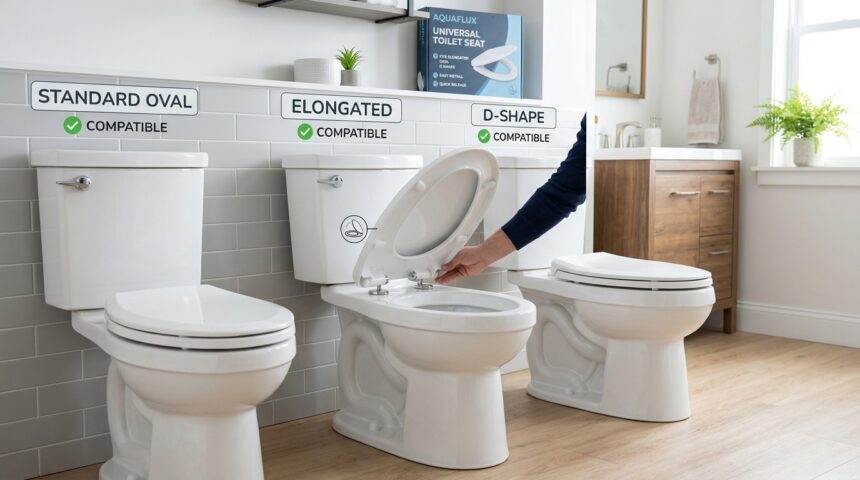
Toilet seats are not truly universal because bowl shapes, mounting hole spacing, and seat dimensions differ across manufacturers and regions. Below we look at why this misconception exists and what actually determines a proper fit.
Why People Assume One Size Fits All
Many shoppers assume toilet seats are universal because most seats look similar at first glance and are sold in generic packaging labeled simply as round or elongated. In reality, even seats within the same shape category can differ slightly in length, width, or hinge post spacing between brands.
This is why a seat that looks correct in a photo can still fail to fit properly once installed.
What Actually Determines Compatibility
Compatibility depends on three main factors: bowl shape, the distance between mounting holes, and the overall seat dimensions relative to the bowl rim.
Even a millimeter difference in hinge spacing can cause a seat to sit unevenly or wobble after installation. Understanding these factors is essential before assuming any seat will work on any toilet.
Common Toilet Bowl Shapes Explained
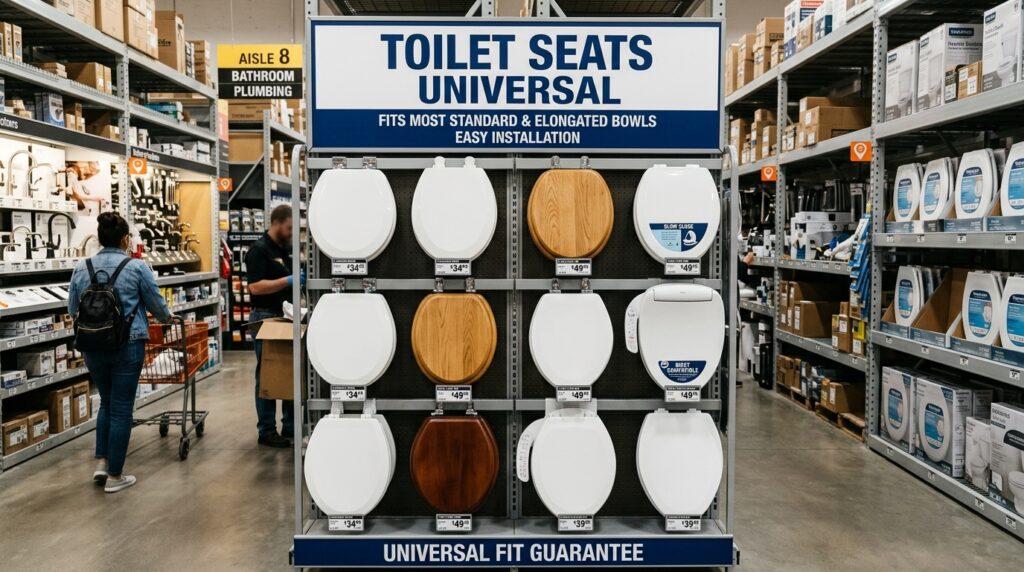
Toilet bowls generally fall into a few standard shapes, and each shape requires a matching seat style. The subsections below explain the two most common shapes found in homes.
Round Bowl Toilets
Round bowl toilets have a shorter, more compact shape and are commonly found in smaller bathrooms or older homes.
The seat length for round bowls is typically around 16.5 inches, measured from the mounting holes to the front edge. These toilets are often chosen for space efficiency rather than seating comfort.
Elongated Bowl Toilets
Elongated bowl toilets are oval-shaped and extend about two inches further than round bowls, offering more seating comfort. Most seat lengths for elongated bowls measure close to 18.5 inches from hinge to front tip.
This shape has become the more popular standard in newer homes and commercial buildings.
Measuring Your Toilet for the Correct Seat
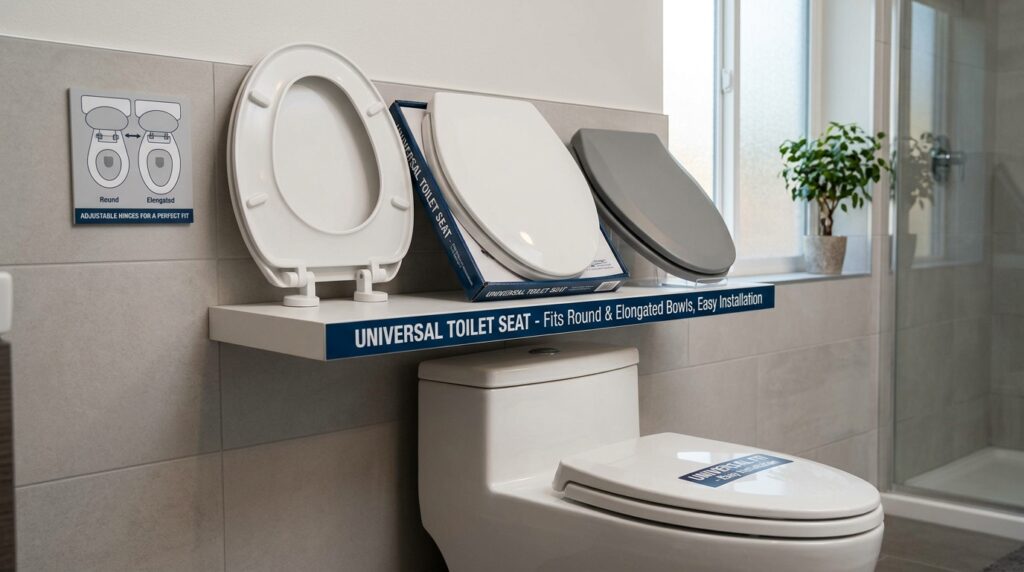
Accurate measurement prevents mistakes and ensures a secure, wobble-free fit. The subsections below explain the specific measurements needed before buying a replacement seat.
Measuring Bowl Length and Width
To measure length, place a tape measure at the center of the mounting holes and extend it straight to the front edge of the bowl rim. Width is measured across the widest point of the bowl, usually near the back where it is broadest.
These two numbers determine whether the bowl matches a round or elongated seat category.
Measuring Mounting Hole Spacing
Mounting hole spacing is measured from the center of one hinge hole to the center of the other, and most standard toilets fall between 5.5 to 6 inches apart. Some seats include adjustable hinges that accommodate slight variations in this spacing. Checking this measurement is especially important for older or imported toilet models.
Types of Toilet Seat Mounting Systems
Mounting systems affect how easily a seat installs and how securely it stays in place. The subsections below cover the two most widely used mounting styles.
Standard Bolt-Down Mounting
Standard mounting uses two bolts that pass through the bowl’s mounting holes and secure with nuts underneath the rim. This is the most common and widely compatible system found on the majority of residential toilets. It works reliably across most round and elongated bowl types as long as hole spacing matches.
Quick-Release and Adjustable Mounting
Quick-release seats use a hinge mechanism that allows the seat to be lifted off without tools, making cleaning easier and installation faster. Adjustable mounting systems include sliding or expandable hinge posts designed to fit a wider range of hole spacing. These systems offer more flexibility for households unsure about exact toilet specifications.
Special Toilet Seat Categories
Beyond standard shapes, some toilets require specialized seats due to unique design features. The subsections below explain two categories that often confuse buyers.
Wall-Hung and European Toilets
Wall-hung toilets and many European models often use different hole spacing standards compared to typical residential toilets, sometimes requiring seats specifically labeled for these systems.
Buyers should always check manufacturer specifications rather than assuming a standard seat will fit. This category is a common source of return requests due to mismatched mounting holes.
Smart and Bidet Toilet Seats
Smart toilet seats with built-in bidet functions often require specific bowl shapes and sometimes electrical access near the mounting area.
These seats are generally less interchangeable than standard seats due to their added mechanical components. Checking both shape compatibility and installation space is necessary before purchasing this seat type.
Comparison Table of Toilet Seat Types
The table below summarizes key differences between common toilet seat categories to simplify the buying decision.
| Seat Type | Typical Length | Best For | Fit Flexibility |
| Round Standard | 16.5 inches | Small bathrooms, older homes | Moderate |
| Elongated Standard | 18.5 inches | Modern homes, comfort seating | Moderate |
| Adjustable Universal | Varies | Uncertain bowl measurements | High |
| Smart/Bidet Seat | Varies by model | Tech-integrated bathrooms | Low |
Steps to Choose the Right Replacement Seat
Selecting the correct seat involves a logical sequence of checks before purchase. The subsections below outline the buying process step by step.
Step One: Identify Bowl Shape and Measurements
Start by measuring bowl length, width, and mounting hole spacing as explained earlier, then compare these numbers to manufacturer size charts. Taking a photo of the bowl alongside a tape measure can help when shopping online or asking store staff for assistance. This step eliminates most guesswork from the buying process.
Step Two: Match Mounting Style and Material
Once shape is confirmed, decide between standard bolt-down or quick-release mounting based on convenience preferences. Material choice, such as plastic, wood composite, or cushioned vinyl, should also match durability and comfort expectations. Selecting both mounting style and material together ensures long-term satisfaction with the purchase.
Why Choosing the Wrong Seat Causes Problems
An incorrectly sized seat leads to both functional and comfort issues over time. The subsections below explain the most common problems buyers encounter.
Wobbling and Instability Issues
A seat that does not match hinge spacing correctly often wobbles side to side, creating discomfort and potential hardware damage over repeated use. This instability can also loosen mounting bolts faster than normal wear. Proper measurement before purchase is the most effective way to avoid this issue.
Poor Coverage and Hygiene Concerns
A seat too small for the bowl leaves exposed porcelain edges, while an oversized seat can overhang awkwardly and trap moisture underneath. Both scenarios create hygiene concerns and reduce overall comfort during use. Matching seat size precisely to bowl shape prevents these avoidable problems.
How This Compares to Marketing Claims
Many seats are marketed as universal fit, but this label usually only means the mounting holes are adjustable within standard spacing ranges, not that the seat matches every bowl shape. Compared to shape-specific seats, universal-labeled options offer more mounting flexibility but often provide a slightly less snug appearance against the bowl rim. Buyers prioritizing exact aesthetic fit should still confirm bowl shape rather than relying solely on universal labeling.
Frequently Asked Questions
Are toilet seats universal across all brands?
No, while many follow similar standard sizes, exact measurements can vary slightly between manufacturers, making direct measurement important before buying.
Can a round seat fit an elongated bowl?
No, a round seat will not properly cover an elongated bowl, leaving exposed porcelain and an unstable fit.
Do adjustable seats work on all toilets?
Adjustable seats work on most standard residential toilets but may not fit specialty models like certain wall-hung or European toilets.
How do I know if my toilet needs a special seat?
If your toilet is wall-mounted, imported, or has a smart bidet function, check manufacturer specifications directly rather than assuming standard sizing applies.
Conclusion
Toilet seats are not truly universal, since bowl shape, mounting hole spacing, and seat dimensions all vary enough to affect proper fit. Taking accurate measurements before purchasing, and understanding the difference between round, elongated, and specialty bowl types, ensures a stable, comfortable, and properly sized seat that avoids the common problems caused by mismatched replacements.
Related Articles
How to Get Urine Smell Out of Bathroom: Complete Guide
Complete Guide to Roof Ventilation for Metal Roofs: Types, Benefits, Installation & Maintenance
How to Clean Faux Suede Furniture Without Ruining It?
Commercial Garage Door Installation: Complete Guide 2026
How to Cut Ceiling Tiles: A Step-by-Step Guide for Mineral Fiber and Fiberglass Panels