

Introduction
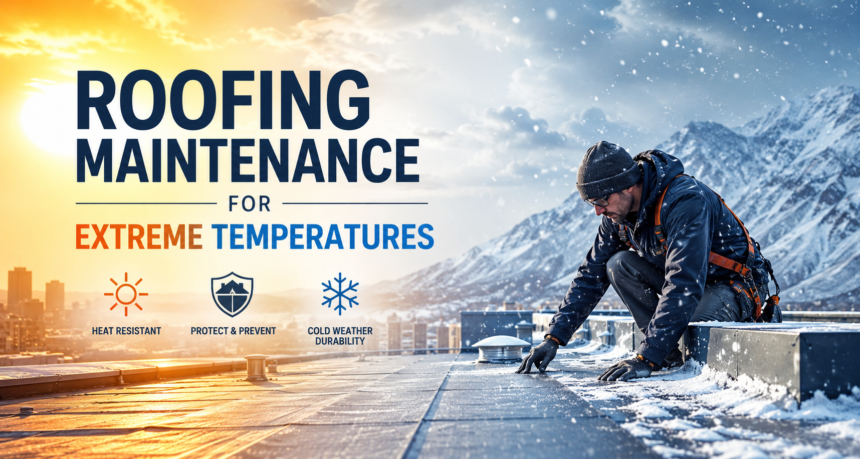
Your roof is the first line of defense between your home and the sky — and when temperatures push to the extreme, that defense gets tested every single day. Whether it is the scorching heat of a Pakistani summer or freezing winter conditions, roofing maintenance for extreme temperatures is not a seasonal chore; it is a year-round responsibility.
Roofs that are left unattended under intense thermal stress develop cracks, lose waterproofing ability, and transfer heat directly into living spaces, making homes uncomfortable and energy bills unbearable.
This guide breaks down the three most important pillars of roof protection in extreme weather: preventive cleaning, timely sealing, and thermal mitigation.
Together, these strategies work to extend the lifespan of your roof, reduce energy consumption, and protect the structural integrity of your property — whether you live in a hot, dry climate or an area with dramatic seasonal temperature swings.
How Extreme Temperatures Damage Your Roof
Extreme temperatures do not just make your home uncomfortable — they cause physical damage to roofing materials at a structural level. Understanding this damage is the first step toward effective maintenance.
The Science Behind Thermal Expansion and Contraction
Roofing materials — whether concrete, asphalt, clay tiles, or metal — all respond to heat by expanding and to cold by contracting. This daily cycle of expansion and contraction creates stress on the material at a microscopic level.
Over time, this stress accumulates, leading to cracks along the surface, gaps between shingles or tiles, and weakened joints around chimneys, vents, and skylights. Once cracks begin to form, they allow moisture to enter, which then accelerates deterioration at an even faster pace.
For homeowners in cities like Karachi, Lahore, Multan, or Hyderabad — where temperatures routinely exceed 40°C for months — this cycle repeats itself intensely every single day of summer.
By the time monsoon season arrives, a roof that has not been maintained is already compromised and far more vulnerable to water penetration.
UV Radiation and Material Degradation
Direct sunlight carries ultraviolet radiation that chemically breaks down roofing materials over time. Asphalt shingles lose their protective granules. Concrete surfaces fade and become brittle. Waterproofing membranes lose elasticity. The result is a roof surface that absorbs more heat, reflects less sunlight, and performs worse year after year — unless actively maintained.
| Damage Type | Cause | Long-Term Effect |
| Surface cracking | Thermal expansion/contraction | Water penetration, structural weakening |
| Granule loss | UV radiation on asphalt | Exposed underlayer, faster aging |
| Flashing gaps | Metal expansion near vents | Leak entry points |
| Membrane brittleness | Prolonged heat exposure | Waterproofing failure |
| Concrete spalling | Moisture entering cracks and freezing or heating | Structural deterioration |
Preventive Cleaning: The Foundation of Roofing Maintenance for Extreme Temperatures
Preventive cleaning is the most underrated aspect of roof care. Most homeowners only think about cleaning when visible moss, stains, or debris build up — but by that point, the damage is already progressing beneath the surface.
A consistent cleaning routine removes heat-trapping materials, stops moisture from sitting on the roof, and allows protective coatings to work as intended.
Why Debris Accumulates Faster in Extreme Climates
In hot climates, dust storms, dry leaves, and windblown particles settle into gaps and joints across the roof surface.
This debris layer acts like insulation in reverse; instead of keeping heat out, it absorbs and retains solar heat, raising roof surface temperatures even further. In areas with monsoon seasons, wet debris traps moisture against roofing material for extended periods, which leads to mold growth, algae formation, and accelerated surface decay.
Regular sweeping and flushing of the roof surface — at minimum before and after monsoon season — prevents this accumulation.
Particular attention should be given to gutters and downspouts, which, when clogged, cause water to pool and back up onto the roof surface. Standing water is one of the most destructive forces a roof can face, softening membranes and seeping into any available crack.
Cleaning Schedule by Season
Preventive cleaning is not a one-time task. The right cleaning frequency depends on seasonal conditions and local environment.
| Season | Cleaning Priority | Action Required |
| Pre-summer (March–April) | High | Remove winter debris, inspect surface for existing cracks |
| Mid-summer | Moderate | Clear dust accumulation, check drainage paths |
| Pre-monsoon (June) | Critical | Full sweep, clear gutters, check all seals |
| Post-monsoon (October) | High | Remove wet debris, dry joints, inspect for water damage |
| Winter | Low–Moderate | Monitor for frost damage in colder regions |
A clean roof is a cooler roof. Removing even a thin layer of settled dust can reduce surface temperature by several degrees, which directly translates to a cooler interior and lower air conditioning usage.
Timely Sealing: Stopping Damage Before It Spreads
Once the roof surface is clean and inspected, timely sealing becomes the most critical protective action a homeowner can take. Cracks and gaps — however small — are entry points for water, wind, and heat.
Sealing them promptly prevents minor surface issues from escalating into costly structural repairs.
Why Sealing Cannot Be Delayed in Extreme Temperatures
In extreme heat, small cracks expand rapidly. A hairline crack visible in spring can become a wide gap by peak summer because the surrounding material keeps expanding and pulling the crack open further. Once water enters through that gap during the monsoon, it does not just sit at the surface — it works its way down through the roof structure, damaging insulation, ceiling plaster, and eventually the building’s internal framing.
The same principle applies to flashing — the metal strips installed around chimneys, roof vents, air conditioning units, and skylights. Flashing expands and contracts more aggressively than surrounding roofing material because metal responds more dramatically to temperature changes. Loose or corroded flashing should be resealed or replaced at the first sign of movement, not left until the next rainy season reveals the problem through a ceiling stain.
Types of Sealants for Extreme Temperature Conditions
Not all sealants perform equally under thermal stress. Choosing the right product for the specific roofing material and climate condition is essential.
- Polyurethane sealants offer excellent flexibility and bond well to concrete and metal surfaces. They remain effective across a wide temperature range and resist UV breakdown better than standard caulk products.
- Silicone-based sealants perform exceptionally in high-heat conditions and resist water penetration reliably. They are particularly well-suited for joints around flashing and roof penetrations.
- Elastomeric coatings function as both sealants and surface treatments. Applied across a wider area, they fill micro-cracks and create a flexible membrane that moves with the roof during thermal expansion rather than cracking under the stress.
- Bituminous sealants are commonly used on flat or low-slope roofs in Pakistan and similar climates. They provide strong waterproofing but require periodic reapplication as heat eventually causes them to soften and shift.
Whichever product is selected, application must happen on a clean, dry surface. Sealing over damp or dirty material traps moisture beneath the coating and accelerates the very damage it is meant to prevent.
Thermal Mitigation: Reducing Heat Absorption at the Source
Preventive cleaning and sealing protect the roof from damage — but thermal mitigation strategies go a step further by actively reducing the amount of heat the roof absorbs in the first place. This is the area that most directly impacts indoor comfort and electricity consumption during peak summer months.
Heat-Reflective Coatings
Heat-reflective roof coatings are among the most effective thermal mitigation tools available for roofing maintenance in extreme temperatures. These products contain reflective pigments — often white or light-colored compounds — that bounce a significant percentage of solar radiation away from the roof surface before it can be converted to heat.
When applied correctly, reflective coatings can reduce roof surface temperatures by a substantial margin. This drop in surface temperature leads directly to a cooler attic or ceiling slab, which reduces the amount of heat transferred into living spaces. Air conditioning units work less to compensate, and electricity bills drop accordingly. In Pakistan’s climate, where air conditioning can account for a majority of residential electricity usage during summer, this is a meaningful financial benefit in addition to the comfort improvement.
Roof Insulation Systems
Insulation placed beneath the roof surface creates a thermal barrier that slows heat transfer regardless of how hot the exterior surface becomes. While reflective coatings work by reducing heat absorption, insulation works by slowing the rate at which absorbed heat moves through the roof structure into the rooms below.
Common insulation materials used in South Asian climates include rigid foam boards, spray foam insulation, and reflective foil insulation. Each has specific strengths depending on roof type and construction. Rigid foam boards are particularly effective under flat concrete roof slabs — the dominant roof construction style across urban Pakistan — because they can be installed above the structural slab, between the slab and the finishing layer, to create a continuous thermal break.
Ventilation as Thermal Mitigation
Proper ventilation is a thermal mitigation strategy that is often overlooked in climates where the focus is on blocking heat rather than moving it. When hot air is allowed to accumulate in attic or ceiling cavities, it creates a secondary heat source that warms interior spaces from above even after the sun has set. This is why rooms in poorly ventilated homes remain uncomfortably hot well into the night.
Ridge vents, soffit vents, and attic exhaust fans work together to create airflow that continuously removes hot air from the roof cavity and replaces it with cooler outside air — or at minimum, prevents the extreme heat buildup that occurs in sealed, static spaces. For buildings in cities like Karachi where nighttime temperatures remain high, even marginal ventilation improvements make a noticeable difference.
Combining Heat Proofing and Waterproofing
Pakistan’s climate presents a unique double challenge: extreme heat for several months, followed by intense monsoon rainfall. This means any comprehensive thermal mitigation approach must also address waterproofing simultaneously. Modern construction chemical products address both needs in a single application — reflective waterproofing membranes that protect against both solar heat gain and water infiltration.
Investing in products that offer dual protection is more cost-effective than treating heat and water as separate problems requiring separate solutions. The roof is protected continuously through the full seasonal cycle rather than only during specific weather conditions.
Signs That Your Roof Needs Immediate Attention
Knowing when to act is as important as knowing what to do. The following warning signs indicate that roofing maintenance for extreme temperatures should be addressed without delay:
- Visible surface cracking — any crack, however small, is an active failure point that will worsen under thermal stress.
- Rooms that remain hot after sunset — indicates that heat absorbed during the day is being retained and transferred into living spaces.
- Elevated electricity bills during summer — a roof performing poorly thermally forces air conditioning systems to work harder and longer.
- Water stains on interior ceilings or walls — a sign that water has already penetrated the roof structure.
- Sagging roof sections — indicate structural damage from prolonged heat or moisture exposure and require immediate professional evaluation.
- Warm ceilings to the touch at night — concrete slabs that are still radiating heat well after sunset have absorbed far more thermal energy than a properly maintained roof should.
Frequently Asked Questions
How often should I clean my roof in a hot climate?
At minimum, clean twice a year — before and after the monsoon season. In dusty environments like Karachi or Multan, a mid-summer inspection and light clearing of gutters is also advisable.
Can a reflective coating really lower my electricity bill?
Yes. By reducing roof surface temperatures, reflective coatings lower the heat transferred to interior spaces, allowing air conditioners to cycle less frequently.
The savings vary depending on roof size, existing insulation, and AC usage, but many homeowners report meaningful reductions in summer electricity costs after application.
How long do roof sealants last in extreme heat?
Quality sealants applied on properly prepared surfaces typically last three to five years before reapplication is needed. Lower-quality products in high-heat environments may need attention sooner, which is why professional-grade construction chemicals are recommended.
Is it necessary to combine heat proofing with waterproofing?
In climates with both intense summer heat and heavy monsoon rain — which describes most of Pakistan — yes. A roof that handles heat but not water will leak during the monsoon. A roof that handles water but not heat will remain unbearably warm through summer.
Dual-protection systems address both challenges together.
Conclusion
Roofing maintenance for extreme temperatures is a systematic, year-round commitment built on three interconnected practices: keeping the surface clean so heat and moisture cannot accumulate, sealing cracks and joints promptly so damage cannot spread, and applying thermal mitigation measures so the roof actively resists heat transfer into the building.
None of these strategies works in isolation ; ogether, they extend roof lifespan, reduce energy consumption, and make homes significantly more comfortable through the harshest seasons. Starting with a thorough inspection, building a seasonal maintenance schedule, and investing in quality materials and coatings are the practical steps that separate roofs that last from roofs that fail.
Related Articles
Dolomite Countertops: A Marble-Like Stone with Practical Strength
Can You Paint Roof Shingles? Pros, Cons, and Best Practices
How to Measure a Ceiling Fan: The Complete Size Guide for Every Room
How to Make Saltillo Floors Shine Again Expert Tips & Professional Solution