Homeowners searching for a countertop that delivers the soft, elegant look of marble without all of marble’s fussiness often land on dolomite. This natural stone has been quietly gaining attention for kitchens and bathrooms because it offers a similar visual character to marble while standing up better to everyday wear.
For anyone planning a remodel, understanding what dolomite countertops are, how they perform, and how to care for them can make the decision-making process much easier.
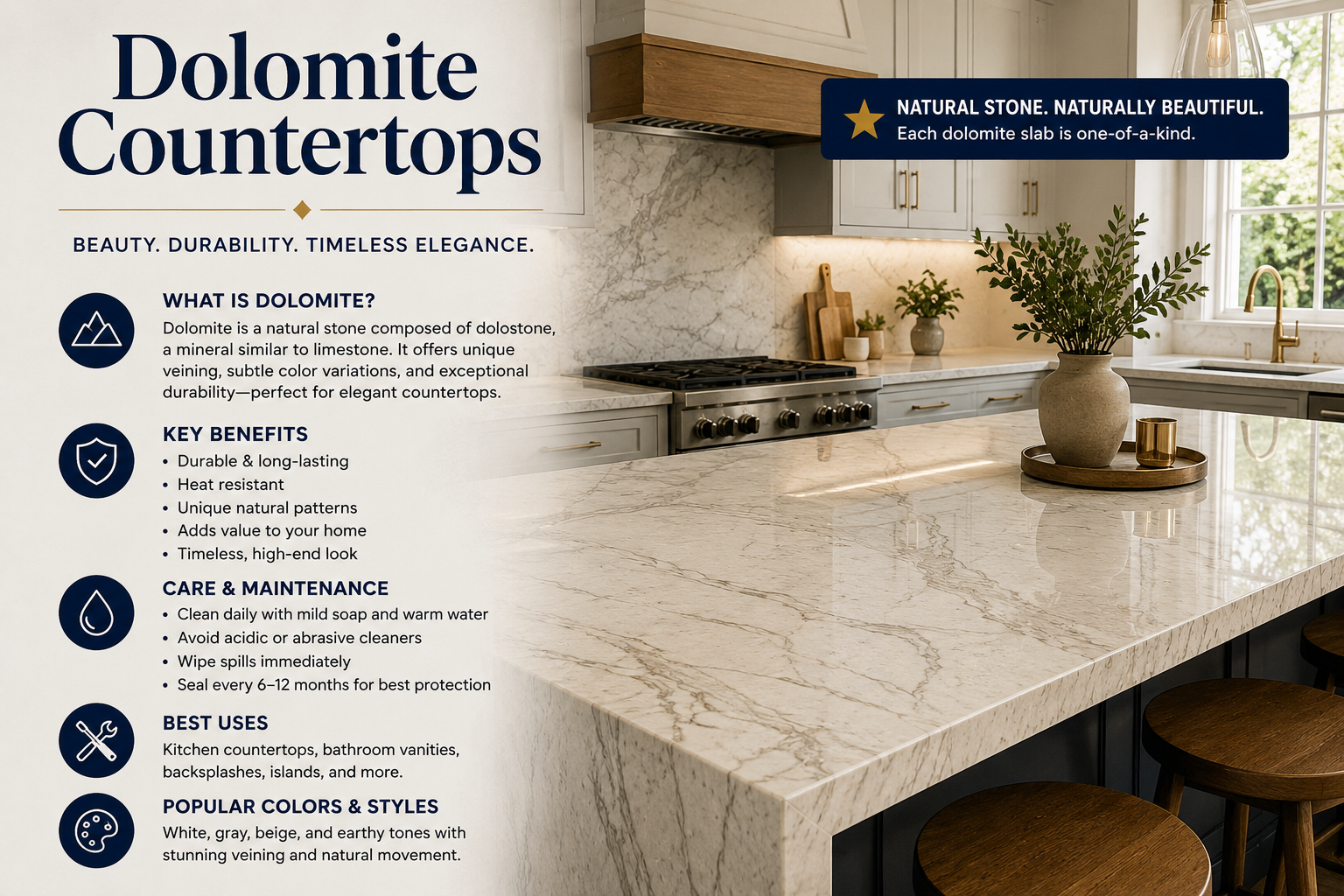
Dolomite is a sedimentary rock that forms when limestone interacts with magnesium-rich groundwater over long periods of time. This process gives the stone its dense structure and its signature soft palette of whites, grays, and creamy beiges, often accented with delicate veining.
What Makes Dolomite Different From Other Natural Stones
Dolomite occupies a middle ground in the world of natural stone, sitting between marble and granite in terms of hardness and performance. This positioning is what makes it appealing to homeowners who want beauty without constant worry.
Hardness and Durability Compared to Marble and Granite
On the Mohs hardness scale, dolomite typically falls in the range of 3.5 to 4, placing it above marble but below granite and quartzite. This means dolomite resists scratches and everyday wear better than marble, while still offering a softer, more natural appearance than the harder stones.
For households that want marble’s look but worry about marble’s tendency to scratch and etch easily, dolomite presents a practical middle path.
Heat Resistance and Everyday Performance
Like most natural stones, dolomite handles heat reasonably well, allowing hot pots, pans, and baking trays to be set down without immediate concern.
However, prolonged direct contact with high heat can still cause damage over time, so using trivets or heat pads is recommended. This balance of natural heat tolerance combined with sensible care habits makes dolomite a dependable surface for active kitchens.
Appearance, Colors, and Design Versatility
Dolomite’s visual appeal is one of its strongest selling points, offering a refined look that pairs well with a wide range of interior styles. The stone’s natural variation means every installation has its own personality.
Color Range and Veining Patterns
Most dolomite slabs feature light, neutral tones such as soft white, warm gray, and creamy beige, often with subtle gray or taupe veining running through the surface. Occasionally, slabs may show faint hints of pink, brown, or green depending on the mineral deposits present during formation.
This neutral palette makes dolomite a flexible backdrop that works whether the rest of the kitchen leans modern, traditional, or transitional.
Finish Options for Different Aesthetics
Dolomite can be finished in polished, honed, or brushed textures, each giving the stone a slightly different feel and appearance. A polished finish creates a glossy, light-reflecting surface that feels bright and formal, while a honed finish offers a matte, softer look that hides minor surface marks more easily.
Brushed finishes add subtle texture, giving the countertop a more rustic or lived-in character that some homeowners prefer for farmhouse-style kitchens.
Comparing Dolomite With Other Popular Countertop Materials
Choosing between dolomite, marble, granite, and quartz often comes down to balancing appearance, durability, maintenance, and budget. The table below offers a side-by-side look at how these materials compare across the factors that matter most to homeowners.
| Feature | Dolomite | Marble | Granite | Quartz |
| Appearance | Soft, marble-like with subtle veining | Classic veined elegance, more dramatic patterns | Speckled, varied patterns and bold colors | Uniform patterns, engineered consistency |
| Hardness | Moderate, between marble and granite | Softer, prone to scratching and etching | Very hard, highly scratch-resistant | Hard, engineered for consistency |
| Heat Resistance | Good, but avoid direct prolonged heat | Good, but sensitive to thermal shock | Excellent | Sensitive to high heat, can discolor |
| Porosity | Porous, requires sealing | Highly porous, needs frequent sealing | Low porosity | Non-porous |
| Maintenance | Moderate, periodic sealing required | High, frequent sealing and careful cleaning | Low, occasional sealing | Very low, no sealing needed |
| Cost | Mid-range, more affordable than quartzite | Often expensive depending on quality | Wide price range based on rarity | Generally consistent mid to high pricing |
| Best Suited For | Kitchens and bathrooms wanting marble look with better durability | Formal spaces prioritizing classic elegance | High-traffic kitchens needing toughness | Busy households wanting low upkeep |
Maintenance and Care for Long-Lasting Dolomite Surfaces
Because dolomite is a porous natural stone, proper care plays a major role in how well it performs over the years. Establishing a simple routine helps preserve both its appearance and structural integrity.
Sealing Schedule and Why It Matters
Dolomite countertops should be sealed periodically, typically once or twice a year depending on usage and the specific sealant product used. Sealing helps prevent liquids such as wine, coffee, and oils from soaking into the stone and causing stains.
Skipping this step can lead to discoloration over time, especially in areas around sinks and cooking stations.
Daily Cleaning Practices
For everyday cleaning, a soft cloth with warm water and a pH-neutral cleaner is sufficient to keep dolomite looking fresh without damaging the sealant layer. Acidic substances like lemon juice, vinegar, and certain cleaning products should be avoided, as they can etch the surface over time.
Wiping up spills promptly, especially from acidic foods, helps prevent permanent marks from forming.
Avoiding Scratches and Physical Damage
Although dolomite is more scratch-resistant than marble, it is not immune to damage from sharp objects or abrasive materials.
Using cutting boards, trivets, and coasters protects the surface from everyday hazards while preserving its polished or honed finish. Simple habits like these go a long way in maintaining the countertop’s original appearance for years.
Cost Considerations and Installation Factors
Budget often plays a deciding role when choosing between natural stone options, and dolomite tends to offer a reasonable middle ground in terms of pricing.
Pricing Compared to Marble and Quartzite
Dolomite is generally priced lower than high-end marble and significantly more affordable than quartzite, while still delivering a premium natural stone appearance. This makes it an attractive option for homeowners who want the look of luxury stone without the higher price tag associated with rarer materials. Pricing can vary based on slab availability, thickness, and the complexity of the fabrication required.
Slab Availability and Seam Considerations
Since dolomite is not produced in the same volume as granite or quartz, slab selection may be more limited and can change frequently based on supply. For larger countertops or kitchen islands, seams may be necessary, though experienced fabricators can position them to minimize visibility.
Viewing slabs in person before purchase is often recommended to ensure the veining and color match the homeowner’s vision.
Ideal Applications for Dolomite Countertops
Dolomite’s combination of beauty and moderate durability makes it suitable for a variety of spaces within the home, each benefiting from its unique characteristics.
Kitchen Countertops and Islands
In kitchens, dolomite works well for both perimeter countertops and statement islands, offering a bright, airy feel that pairs nicely with both light and dark cabinetry.
Its cool surface temperature also makes it a favorite among those who enjoy baking, as it helps keep dough and pastry at workable temperatures.
Bathroom Vanities and Accent Surfaces
In bathrooms, dolomite brings a spa-like elegance to vanity tops, where exposure to heavy impact and acidic spills is generally lower than in kitchens. This makes bathrooms an ideal lower-maintenance environment for dolomite to shine without the same level of daily wear seen in kitchens.
Frequently Asked Questions
Is dolomite more durable than marble?
Yes, dolomite is generally harder and more resistant to scratching and etching compared to marble, though it still requires similar care.
Do dolomite countertops need to be sealed?
Yes, because dolomite is porous, sealing once or twice a year helps protect it from stains and moisture damage.
Can dolomite be used in high-traffic kitchens?
Yes, with proper sealing and care, dolomite performs well in busy kitchens, though it is slightly less durable than granite.
How does dolomite compare to quartz in terms of maintenance?
Quartz requires less maintenance overall since it is non-porous, while dolomite needs periodic sealing to maintain its durability.
Conclusion
Dolomite countertops offer a compelling balance of marble-like beauty and improved durability, making them a smart choice for kitchens and bathrooms alike. With proper sealing, careful cleaning, and thoughtful design pairing, dolomite can provide long-lasting elegance and practical performance for years to come.
Related Articles
How to Measure Windows for Curtains (Step-by-Step Guide)
Interior Basement Waterproofing: Complete Guide to a Dry & Safe Basement
How Long Do Vinyl Windows Last? A Complete Guide
Why Does My Bathroom Smell Like Sewage? Causes, Fixes & Prevention Tips
How to Make Saltillo Floors Shine Again Expert Tips & Professional Solution