
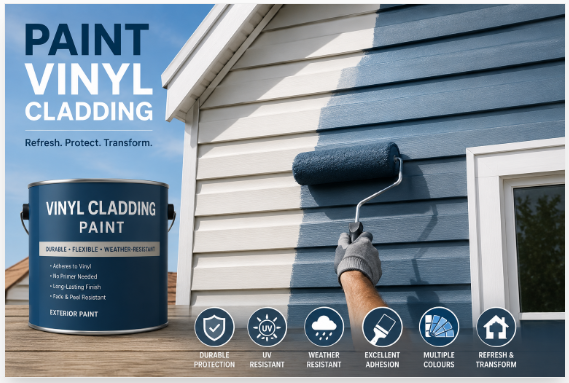
Yes, vinyl cladding can be painted — but only when it is properly cleaned, primed, and coated with the correct exterior acrylic paint. Painting vinyl siding is one of the most cost-effective ways to refresh a home’s exterior, restore faded colour, and extend the life of the cladding without the enormous expense of a full replacement.
However, getting long-lasting results means following the right process from start to finish.
Can You Paint Vinyl Cladding? What You Need to Know First
Vinyl siding was once considered a permanent colour solution, but UV exposure and weathering eventually cause even the best-quality panels to fade and chalk. The good news is that modern paint technology has made it entirely feasible to repaint your vinyl cladding and achieve a result that looks almost factory-fresh — provided two non-negotiable rules are respected:
always use 100% acrylic exterior paint, and never choose a colour significantly darker than the original without a vinyl-safe formula.
When Painting Vinyl Cladding Works Well?
Painting is an excellent investment when the siding is structurally intact but has lost its visual appeal. If the surface is showing signs of fading, chalking, or simply looks outdated, a well-executed paint job can transform the look of a property for a fraction of the cost of replacement.
Homeowners who have relied on professionals for general exterior maintenance — including roof repairs Worcester specialists who also assess cladding as part of their survey — regularly recommend painting as a viable, durable option for sound panels.
When Painting Vinyl Cladding Is Not Recommended?
There are specific conditions where painting will not solve the problem and may actually waste money. The table below outlines the most common scenarios where replacement is the smarter choice:
| Condition | Why Painting Won’t Help |
| Severely warped or buckled panels | Paint highlights imperfections; underlying moisture issues remain |
| Panels cracking or shattering | The vinyl has become brittle and is past the end of its serviceable life |
| Standard dark colour over light vinyl | Excess heat absorption causes permanent warping without vinyl-safe paint |
| Panels pulling away from the structure | Points to installation failure or structural movement underneath |
If any of these conditions are present, a qualified contractor — such as those offering roof repairs Worcester homeowners trust for full exterior assessments — should be consulted before any decorating work begins.
Why Homeowners Choose to Paint Vinyl Cladding?
There are several compelling, practical reasons why property owners decide to paint rather than replace their vinyl siding. Understanding these reasons helps clarify whether painting is the right decision for a specific home.
Refreshing faded and chalky surfaces is the number one motivation. Prolonged exposure to the sun breaks down the PVC resins in vinyl, leaving behind a dull, powdery residue known as “chalking.” A fresh coat of high-quality acrylic paint restores the saturated, vibrant tone the siding once had.
Updating the exterior colour is equally popular. Design tastes evolve, and what looked appealing a decade ago may feel very dated now. Painting allows homeowners to move toward contemporary palettes — such as warm greys, sage greens, or deep navy — without replacing the siding entirely.
Extending the serviceable life of the cladding is another major benefit. A quality acrylic coating forms a protective barrier against rain, UV rays, and pollutants, slowing down the oxidation process and effectively adding years to the siding’s lifespan.
When paired with routine maintenance such as professional roof repairs Worcester contractors provide as part of a wider exterior care schedule, this approach keeps a home well-protected for the long term.
Prep Steps Before Painting Vinyl Cladding
Preparation is, without question, the most important phase of any vinyl painting project. Even the most expensive paint will fail within a year if it is applied to a dirty, damp, or compromised surface. The steps below must be completed in full and in order.
Step 1 — Wash the Siding Thoroughly
Every trace of chalking, dirt, algae, and loose surface debris must be removed before a brush or sprayer goes anywhere near the siding. A low-pressure power wash or careful hand scrubbing with a soft-bristle brush will lift the chalky layer that forms on ageing vinyl. If the chalk is not fully removed, the new paint will bond to the dust rather than the panel itself — and it will peel.
Step 2 — Remove Mildew and Organic Growth
A solution of oxygen bleach and water, or a purpose-made exterior house wash, should be applied to any areas showing mould, mildew, or algae staining. Organic matter left beneath the paint will continue to grow, causing blistering and discolouration within months. This step is especially important in shaded or damp-facing elevations.
Step 3 — Repair Cracks and Secure Loose Panels
Any cracked sections should be replaced, and any panels that have worked loose must be re-fastened before painting begins. Applying paint over a panel that flexes or moves independently will result in cracking along the edges of the damage.
This is also the ideal moment to have a professional assess the broader condition of the property — many who offer roof repairs Worcester-wide will include a cladding check as part of a full exterior inspection.
Step 4 — Allow Complete Drying Time
Vinyl is non-porous, but water can become trapped in the laps and seams between panels. After washing, the siding should be left to dry for a minimum of 24 to 48 hours before any paint product is applied. Painting over even slightly damp joints is a common cause of early adhesion failure.
Do You Need to Prime Vinyl Cladding Before Painting?
The answer depends on the condition of the surface after cleaning. If the siding is heavily oxidised, pitted, or shows areas of previous paint failure, a dedicated adhesion primer is strongly recommended. It acts as a chemical bridge between the old vinyl surface and the new topcoat, dramatically improving bond strength and longevity.
However, if the vinyl is in reasonable condition after thorough preparation, many premium “paint and primer in one” exterior products can be applied directly.
The key requirement in both cases is the same: the primer or base coat must be 100% acrylic. Oil-based primers should never be used on vinyl because they do not flex as the panels expand and contract with temperature changes, and they will crack.
Best Paint for Vinyl Cladding
Choosing the correct paint is as important as the preparation work. Using the wrong product — regardless of how well the surface was cleaned — will result in peeling, cracking, or warping within a short period.
100% acrylic exterior paint is the correct choice every time. Acrylic polymers remain flexible once cured, allowing the paint film to move with the vinyl as it naturally expands in heat and contracts in the cold. This is a physical property that no other paint type replicates reliably on PVC-based materials.
Vinyl-safe exterior coatings are specifically formulated to allow the use of darker colours without the heat-absorption problems that cause warping. Leading manufacturers such as Sherwin-Williams and Benjamin Moore both produce product lines — including Resilience and Regal Select Exterior Revive, respectively — that carry a “VinylSafe” certification, meaning they have been tested to remain stable on vinyl surfaces even in direct sun exposure.
| Paint Type | Suitable for Vinyl? | Flexibility | UV Resistance |
| 100% Acrylic Exterior | Yes | High | High |
| VinylSafe Acrylic | Yes (dark colours) | High | Very High |
| Oil-Based / Alkyd | No | Low | Moderate |
| Interior Latex | No | Low | None |
Best Colours for Painting Vinyl Cladding
Colour selection is not purely an aesthetic decision when it comes to vinyl — it has a direct impact on the long-term performance of the paint job. Dark pigments absorb UV radiation and retain heat, and because vinyl is a thermoplastic, excessive heat can push the panels beyond their designed expansion limits, causing permanent buckling.
The safest approach is to choose a colour with a Light Reflectance Value (LRV) equal to or higher than the original siding. Pale greys, warm tans, sage greens, and soft blues are all practical choices that tend to resist fading well because they rely on inorganic pigments.
For homeowners who prefer a bolder, darker palette, using a certified VinylSafe formula removes most of the risk, opening up the full colour range without the heat-warping concern.
Spray vs Brush: The Best Way to Apply Paint to Vinyl Cladding
Professional painters use a combination of both methods, and the reason is practical rather than stylistic.
Airless spray application delivers the smoothest, most even finish and is the fastest method for covering large areas of siding. Spray also forces paint into the overlapping joints between panels, ensuring full coverage in areas a roller or brush might miss. The finish is clean, uniform, and closest to the factory-applied coating of new siding.
Brush application is essential for detailed work — cutting in around windows, doors, corner trims, and fascia boards. Brushing is also used in a technique called “back-brushing,” where a sprayed section is immediately worked over with a brush to push the paint into the grain and maximise adhesion. This two-step approach is what separates a professional result from a basic DIY finish.
Rolling is generally avoided on vinyl siding because the texture it leaves — a faint stipple pattern — looks visually out of place on the naturally smooth surface of the panels.
How Long Does Painted Vinyl Cladding Last?
A professionally applied job using premium materials and proper surface preparation typically lasts between 10 and 15 years. This is comparable to the expected lifespan of paint applied to wood or fibre cement cladding, making it a genuinely competitive long-term option.
Several factors influence where within that range a specific job will land:
- Climate and temperature swings — Homes in regions with extreme seasonal variation may experience slightly shorter lifespans due to the repeated expansion and contraction of the panels.
- Sun exposure — South-facing elevations receive the highest UV load and tend to show wear before shaded walls.
- Quality of preparation — The cleaner and drier the surface before painting, the longer the bond will hold.
- Annual maintenance — A simple low-pressure rinse once a year to remove salt, dirt, and biological matter will extend the finish significantly.
Pairing this maintenance routine with a broader exterior check — similar to the annual surveys conducted by professionals offering roof repairs Worcester homeowners rely on — helps catch any early signs of wear before they become costly problems.
Common Mistakes When Painting Vinyl Siding
Even experienced DIY enthusiasts make errors that reduce the lifespan of a vinyl paint job. The most common mistakes are:
- Painting over dirty or chalky siding — Adhesion failure is almost always traced back to inadequate surface cleaning. The chalk acts as a release layer between the vinyl and the paint film.
- Using interior paint outdoors — Interior paints are not formulated with UV inhibitors or the flexibility compounds required for outdoor exposure. They will fail quickly.
- Choosing very dark colours without vinyl-safe paint — Without the specific thermal management built into VinylSafe formulas, dark pigments can generate enough heat to permanently warp lightweight panels.
- Rushing the drying phase — Applying paint to siding that has not fully dried after washing traps moisture in the laps and causes early blistering and delamination.
- Skipping primer on a heavily oxidised surface — On siding that shows significant chalking even after washing, skipping the adhesion primer step nearly guarantees premature failure.
FAQs
Is it better to paint or replace vinyl siding?
If the siding is structurally sound and under twenty years old, painting is far more cost-effective. Replacement is only necessary when panels are cracked, brittle, warped, or allowing moisture to penetrate the structure.
Does paint stick properly to vinyl siding?
Yes, provided the surface is thoroughly cleaned and 100% acrylic exterior paint is used. Acrylic paint forms a flexible, chemical bond with the PVC surface that holds up well through seasonal expansion and contraction.
Can dark paint damage vinyl siding?
Standard dark pigments can cause heat-related warping if applied without a VinylSafe formula. With the correct certified product, darker colours can be used safely.
How much does painting vinyl cladding cost compared to replacement?
Painting typically costs between 25% and 40% of the price of a full siding replacement, making it a significantly more affordable option when the underlying panels are in good condition.
Conclusion
Painting vinyl cladding is a smart, proven method to restore your home’s exterior when the panels are structurally sound. With thorough preparation, 100% acrylic or VinylSafe paint, and the right application technique, results can last over a decade. Always pair this work with a full exterior review — much like the complete property checks offered by trusted roof repairs Worcester professionals.
Related Articles
Steel vs Fiberglass Door: Which One Should You Choose?
Window with J-Channel: A Complete Homeowner’s Guide
How Long Do Vinyl Windows Last? A Complete Guide
Best Primer for Painting Kitchen Cabinets – Complete Easy Guide for Smooth & Durable Cabinets