

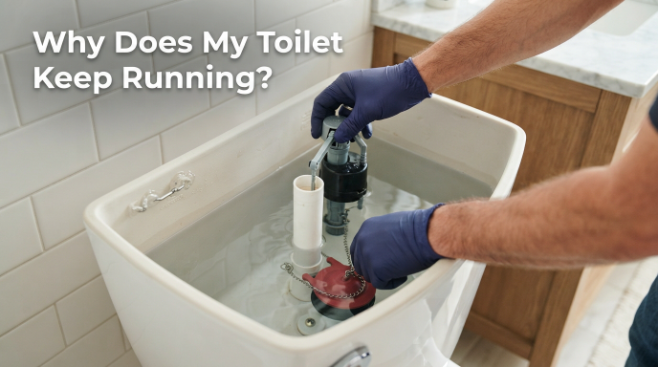
A running toilet is one of the most common household plumbing issues, and most homeowners ask the same question: why does my toilet keep running even after flushing? The honest answer is that a running toilet almost always points to a small internal part failing to do its job properly.
It could be a worn flapper, a faulty fill valve, a misaligned float, or mineral buildup inside the tank. The good news is that most of these problems are easy to identify and even easier to fix without calling a professional plumber right away.
How a Toilet Tank Works (Basics)
Before fixing anything, it helps to understand what is actually happening inside the tank. A toilet tank works through a simple cycle of filling, holding, and releasing water using a few connected parts.
The Flapper
The flapper is a rubber seal at the bottom of the tank that lifts when you flush and drops back down to seal the tank. If it does not seal properly, water keeps leaking into the bowl, which is one of the most frequent reasons behind a running toilet.
The Fill Valve
The fill valve controls how much water enters the tank after a flush. Once the water reaches a set level, the fill valve should shut off completely, and if it fails to do so, water keeps flowing endlessly.
The Float and Overflow Tube
The float rises with the water level and tells the fill valve when to stop. The overflow tube acts as a safety exit, and if the float is set too high, water constantly drains into this tube instead of stopping.
Signs Your Toilet Is Running
Recognizing the signs early can save water and money before the problem becomes bigger. A running toilet usually announces itself through sound, movement, or unexpected bills.
Constant Hissing or Trickling Sound
If you hear a soft hissing or trickling noise coming from the tank even when no one has used the toilet recently, it strongly suggests water is continuously flowing somewhere it should not be.
Phantom Flushing
Sometimes the toilet refills on its own without anyone touching it, a phenomenon commonly called phantom flushing. This happens when water slowly leaks out of the tank, causing the fill valve to top it up automatically every few minutes.
Sudden Increase in Water Bill
A noticeable jump in your monthly water bill without any change in usage habits is often the clearest financial sign that your toilet has been running quietly in the background for days or even weeks.
Common Causes Behind a Running Toilet
There are several mechanical reasons why does my toilet keep running, and identifying the exact cause is the first step toward a lasting repair. Below is a quick comparison table to help you understand each cause at a glance.
| Cause | What Happens | Typical Fix |
| Worn or warped flapper | Water leaks past the seal into the bowl | Replace the flapper |
| Flapper chain misaligned | Chain too tight or too loose affects sealing | Adjust chain length |
| Faulty fill valve | Valve doesn’t shut off after tank fills | Replace fill valve |
| Float set too high | Water overflows into the overflow tube | Lower the float |
| Cracked overflow tube | Water drains continuously through the crack | Replace overflow tube |
| Mineral or sediment buildup | Debris prevents a tight flapper seal | Clean tank and flapper seat |
Worn or Warped Flapper
Over time, the rubber flapper loses its flexibility due to constant exposure to water and chemical cleaners, causing it to warp or crack. Once this happens, it can no longer form a tight seal, allowing water to slowly escape into the bowl around the clock.
Flapper Chain Problems
The small chain connecting the flush handle to the flapper needs just the right amount of slack to work correctly. If the chain is too tight, it may hold the flapper slightly open, and if it is too loose, the flapper may not lift or seal properly during a flush.
Faulty Fill Valve
The fill valve is a mechanical part, and like any mechanical component, it can wear out or get stuck internally after years of use. When this happens, it fails to stop water flow once the tank reaches the correct level, leading to continuous running.
Float Set Too High
If the float sits higher than it should, the tank keeps filling past its intended limit, forcing excess water into the overflow tube. This creates a constant flow of water that mimics the sound of a toilet running nonstop.
Cracked or Short Overflow Tube
A damaged or improperly sized overflow tube cannot handle water correctly, allowing it to drain continuously even when the fill valve is otherwise functioning normally. This is a less common cause but still worth checking during an inspection.
Mineral and Sediment Buildup
Hard water often leaves mineral deposits on the flapper seat, creating a rough surface that prevents a smooth, tight seal. Over time, this buildup becomes thick enough that even a healthy flapper cannot close the tank properly.
DIY Diagnostic Test You Can Try at Home
Before replacing any parts, it is worth confirming the exact source of the leak using a simple test that takes only a few minutes and requires no special tools.
The Food Coloring Test
Add a few drops of food coloring into the tank without flushing, then wait about fifteen to twenty minutes without using the toilet. If colored water appears in the bowl during that time, it confirms that the flapper is leaking and needs attention.
Step-by-Step Fixes for a Running Toilet
Once you know the cause, fixing a running toilet is usually a straightforward task that most people can complete on their own with basic tools and a little patience.
Fixing or Replacing the Flapper
Turn off the water supply, drain the tank, and unhook the old flapper from its mounting pegs. Install a new flapper of the matching size, reconnect the chain with a small amount of slack, and turn the water back on to test the seal.
Adjusting the Chain Length
If the flapper itself is fine, simply adjusting the chain can solve the issue entirely. Leave about half an inch of slack so the flapper can close fully without the chain interfering with the seal.
Replacing the Fill Valve
Shut off the water supply, remove the old valve by unscrewing its base, and install a new one following the manufacturer’s height and alignment instructions. This fix usually resolves both running toilets and weak flushing power at the same time.
Adjusting the Float
For adjustable float toilets, simply turning a screw or sliding a clip lowers the water level to the correct point. This prevents water from reaching the overflow tube and stops the constant draining sound.
Tools and Parts You’ll Need
Having the right materials on hand before starting the repair makes the entire process faster and less frustrating.
| Tool/Part | Purpose |
| Replacement flapper | Fixes sealing issues |
| New fill valve | Fixes water shut-off problems |
| Adjustable wrench | Removing and tightening tank bolts |
| Sponge or towel | Draining and cleaning the tank |
| Food coloring | Diagnostic leak test |
When to Replace vs Repair
Deciding between a quick repair and a full replacement depends on the toilet’s age, condition, and how often problems keep occurring.
Signs You Should Repair
If the toilet is relatively new and the issue is limited to a single part like the flapper or fill valve, a simple replacement part is usually enough to solve the problem permanently.
Signs You Should Replace
If the toilet is older than fifteen years and keeps developing multiple issues despite repeated repairs, replacing the entire unit may save more money and effort in the long run.
When to Call a Plumber
While most causes of a running toilet are simple to fix at home, certain situations require professional help to avoid further damage.
Persistent Issues After DIY Fixes
If the toilet continues running even after replacing the flapper, chain, and fill valve, there may be a deeper issue with the tank or supply line that needs professional diagnosis.
Visible Cracks or Water Damage
Cracks in the tank or bowl, along with water damage on the floor or ceiling below, are signs of a more serious plumbing problem that should not be handled without expert assistance.
Preventive Maintenance Tips
Taking a few simple precautions regularly can prevent most running toilet issues before they even start.
Routine Inspections
Checking the flapper, chain, and fill valve every few months helps catch early signs of wear before they turn into a constant leak.
Avoiding Harsh Chemical Cleaners
Chemical tank tablets can speed up the deterioration of rubber parts like the flapper, so using milder cleaning methods helps extend the lifespan of internal components.
Cost Impact of a Running Toilet
A running toilet is not just noisy, it can also waste a surprising amount of water and money if left unaddressed for even a short period.
| Duration Running | Estimated Water Wasted |
| One day | Up to 200 gallons |
| One week | Up to 1,400 gallons |
| One month | Up to 6,000 gallons |
This kind of waste can add a noticeable amount to your monthly water bill, making it financially worthwhile to fix the issue as soon as it is noticed.
FAQs
Is it safe to leave a running toilet overnight?
It is not dangerous, but it wastes a large amount of water and increases your bill, so it is best fixed as soon as possible.
Can a running toilet fix itself?
No, mechanical wear does not reverse on its own, and the part causing the issue will need to be adjusted or replaced.
How much does it cost to fix a running toilet?
Most repairs cost very little since flappers and fill valves are inexpensive parts, usually requiring no more than a small hardware purchase.
Conclusion
A running toilet is almost always caused by a small, identifiable part failure rather than a major plumbing disaster. By understanding why does my toilet keep running and checking the flapper, chain, fill valve, and float, most homeowners can solve the issue quickly and affordably.
Compared to many generic guides online that only list causes without clear fixes, this guide combines diagnosis, repair steps, and prevention in one place for a complete solution.
Related Articles
How Do You Hang Wall Cabinets? A Complete Step-by-Step Guide
Cathedral Ceiling Support Box Installation Supervent: Full Guide
Is It Ok to Flush Hair Down the Toilet? Here’s Why You Shouldn’t