

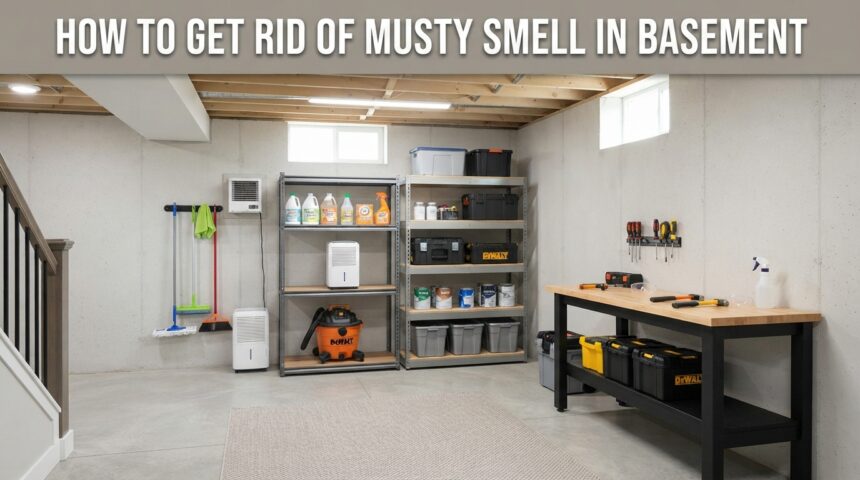
A musty smell in the basement is more than an unpleasant odor. It is a warning that moisture, mold, or mildew is growing somewhere out of sight. If you want to know how to get rid of musty smell in basement spaces for good, you must treat the cause and not only the scent.
This guide explains what creates the odor, how to trace it, and which cleaning, drying, and waterproofing steps work best. Follow the sections in order, and your basement can smell fresh again without wasting money on air fresheners that only mask the problem.
What Causes a Musty Smell in the Basement?
Basement odor almost always comes from moisture and the microbes that feed on it. The causes below explain why the smell appears and why it returns.
Mold and Mildew
Mold and mildew release gases as they grow, and these gases create the sharp, earthy smell most people call musty. Growth starts on damp walls, wood, and fabric. It often begins long before you can see any patches.
High Humidity and Poor Airflow
Basements sit below ground, so they stay cooler and hold more moisture than upper floors. Still air lets humidity settle on surfaces and feed mold. When relative humidity stays above 60 percent, odor often develops quickly.
Leaks, Seepage, and Poor Drainage
Water enters through foundation cracks, leaking pipes, clogged gutters, and soil that slopes toward the house. Even a slow seep keeps walls and flooring damp. This hidden moisture is the most common reason a smell keeps returning after cleaning.
Condensation and Damp Stored Items
Cold water pipes and concrete walls collect condensation in warm weather. Cardboard boxes, old carpet, and fabrics then absorb that moisture and hold the smell. Sometimes these stored items are the main source of the odor.
Is the Musty Smell Dangerous?
The odor itself is harmless, but the mold behind it can affect both your health and your house. Take it seriously even when the smell seems mild.
Health Effects
Mold spores can trigger sneezing, coughing, itchy eyes, and asthma flare-ups. Children, older adults, and people with breathing problems are affected most. If symptoms improve when you leave the house, the basement air may be the cause.
Damage to Your Home
Long-term dampness rots wood, corrodes metal, and peels paint and drywall. It also ruins stored belongings and can lower the resale value of a home. Fixing a small problem early costs far less than repairing structural damage later.
How to Find the Source of the Smell
You cannot remove an odor you cannot locate. Use these simple checks to trace the moisture behind it.
Follow Your Nose and Eyes
Walk the basement slowly and note where the smell is strongest. Look for water stains, peeling paint, white powdery deposits, and black, green, or white patches. Check corners, the spaces behind furniture, and the bottom edges of walls.
Measure Humidity
A hygrometer costs little and shows the humidity level in seconds. Readings above 50 percent mean the air is too damp, and readings above 60 percent invite mold. Take readings on several days, since levels change with the weather.
Foil Test and Outside Check
Tape a square of aluminum foil to a damp wall and leave it for 24 hours. Moisture on the outer side means condensation, while moisture underneath points to water coming through the wall. Then inspect gutters, downspouts, and the soil slope outside.
Step-by-Step: How to Get Rid of Musty Smell in Basement
Work through these steps in order, because cleaning before fixing the moisture only brings the smell back. Wear gloves, goggles, and an N95 mask throughout.
Step 1: Stop the Moisture
Repair leaks, clear gutters, and remove any source of standing water first. Nothing else you do will last if the basement stays wet. Mop up puddles and use a wet vacuum on soaked areas.
Step 2: Remove Wet and Moldy Items
Throw away moldy cardboard, soaked carpet padding, and mildewed fabric that cannot be fully dried. Move salvageable items outside to dry in sunlight. Seal discarded items in bags before carrying them through the house.
Step 3: Clean Hard Surfaces
Scrub walls, floors, and shelves with detergent and water, or with one cup of white vinegar per gallon of water. Rinse and wipe dry. Warning: never mix bleach with vinegar or ammonia, because the fumes are toxic.
Step 4: Dry and Deodorize
Run a dehumidifier and fans until every surface feels completely dry, which can take several days. Then place odor absorbers around the room. Air the space on dry, low-humidity days to clear any leftover smell.
Natural Ways to Remove Basement Odor
Natural absorbers are cheap and safe for most homes. They reduce odor but work best after the moisture source is fixed.
White Vinegar
Vinegar can kill many common molds and neutralizes odor at the same time. Spray it on hard surfaces, leave it for an hour, then wipe clean. The vinegar smell fades within hours as the surface dries.
Baking Soda and Activated Charcoal
Both materials absorb odor molecules from the air. Place open containers on shelves, in corners, and inside closets. Replace baking soda about once a month, and follow the label for charcoal.
Cat Litter and Coffee Grounds
Unscented clay cat litter soaks up moisture as well as odor, which makes it useful in a damp corner. Dried coffee grounds mostly mask smell and do little for moisture. Treat them as a short-term helper only.
Natural Remedies vs. Commercial Products
Each option has a place depending on how severe the problem is. This table shows where each one fits best.
| Option | Best For | Main Limitation |
| White vinegar | Light mold on hard surfaces | Can damage natural stone |
| Baking soda | Mild odor in the air | Does not stop moisture |
| Activated charcoal | Ongoing odor in closets | Needs regular replacement |
| Hydrogen peroxide (3%) | Stains and light mold on nonporous surfaces | Can bleach fabric |
| Enzyme or mold cleaner | Visible mold stains | Costs more, must follow label |
| Dehumidifier | Root humidity problem | Uses power, needs upkeep |
Bleach works only on nonporous surfaces and is rarely necessary for household mold. Most basements are handled well with detergent, vinegar, or peroxide.
Choosing and Using a Dehumidifier
A dehumidifier is the single most useful tool for a damp basement. Correct size and placement decide how well it performs.
Size and Humidity Target
Pick a unit rated for your basement’s square footage and dampness, since larger, wetter spaces need higher pint capacity. Set the humidity between 30 and 50 percent. A built-in humidistat holds that level automatically.
Placement and Draining
Place the unit in an open area away from walls, with doors and windows closed. A bucket suits small spaces, but a hose connected to a floor drain saves daily emptying. Running it continuously during humid months works best.
Maintenance
Empty and rinse the bucket, and clean the air filter every two weeks. Wipe the coils once or twice a season. A dirty unit loses power and can develop a musty smell of its own.
Long-Term Moisture Control
Once the basement is clean, prevention keeps the smell from returning. These upgrades cut off water at its source.
Fix Gutters and Grading
Clean gutters twice a year and extend downspouts five to six feet from the foundation. Soil should slope away from the house. These low-cost jobs often stop much of the seepage.
Seal Cracks and Walls
Fill foundation cracks with hydraulic cement or polyurethane sealant, then apply waterproof masonry paint. Never paint over active mold or damp surfaces. Clean and dry the wall first so the coating bonds properly.
Pipes, Pumps, and Drains
Insulate cold water pipes to stop condensation. If water collects on the floor, a sump pump or interior drain system can remove it. Window well covers also keep rain out.
Special Situations
Some basements need extra care beyond the standard steps. These cases come up most often.
After a Flood
Remove standing water and wet materials within 24 to 48 hours, before mold takes hold. Floodwater may carry sewage, so wear protective gear and discard porous items. Dry the space fully before rebuilding or storing anything.
Finished Basements
Odor often hides behind drywall, under carpet, or inside insulation. Lift a corner of the carpet to check the padding, and open small access holes if needed. If moisture is inside the walls, a professional inspection is wise.
When to Call a Professional
Some jobs are unsafe or too large to handle alone. Getting help early protects both your health and your budget.
Large or Hidden Mold
Call a mold remediation specialist if the affected area is larger than about 10 square feet, or if you smell mold but cannot find it. They use moisture meters and containment methods to remove it safely. Ongoing symptoms in family members are another good reason.
Structural or Sewage Problems
Wide or growing foundation cracks need a structural or waterproofing expert. A sewer-like smell suggests a dry drain trap or a damaged line, so call a plumber. Sewage contamination should be handled by trained professionals.
FAQs
How long does it take to remove basement odor?
Light odors fade within a few days once the area is clean and dry. Stronger smells tied to hidden moisture can take weeks, depending on how quickly you fix the source.
Can a dehumidifier alone fix the smell?
It helps a great deal, but it will not clean existing mold or stop leaks. Combine it with cleaning and repairs for lasting results.
Why does my basement smell worse in summer?
Warm, humid outdoor air enters and condenses on cool surfaces, which raises indoor moisture. Keep windows closed on muggy days and run the dehumidifier.
Is it safe to stay in a basement with a musty smell?
Short visits to a mildly musty basement are usually fine. Avoid sleeping there until the source is fixed, especially if anyone has asthma or allergies.
Conclusion
Learning how to get rid of musty smell in basement areas comes down to one rule: fix the moisture first, then clean, dry, and deodorize. Air fresheners and absorbers only help once the source is under control.
Keep humidity between 30 and 50 percent, and check gutters, pipes, and walls each season. Act early, and call a professional when mold is widespread or the source stays hidden.
Related Articles
Why Does My Bathroom Smell Like Sewage? Causes, Fixes & Prevention Tips
How to Cut Ceiling Tiles: A Step-by-Step Guide for Mineral Fiber and Fiberglass Panels
How Do You Wash Bathroom Rugs? A Complete Step-by-Step Guide
How Long Do Garage Door Springs Last? Full Lifespan Guide
Cracks in Garage Floor: Causes, Types & Complete Repair Guide