
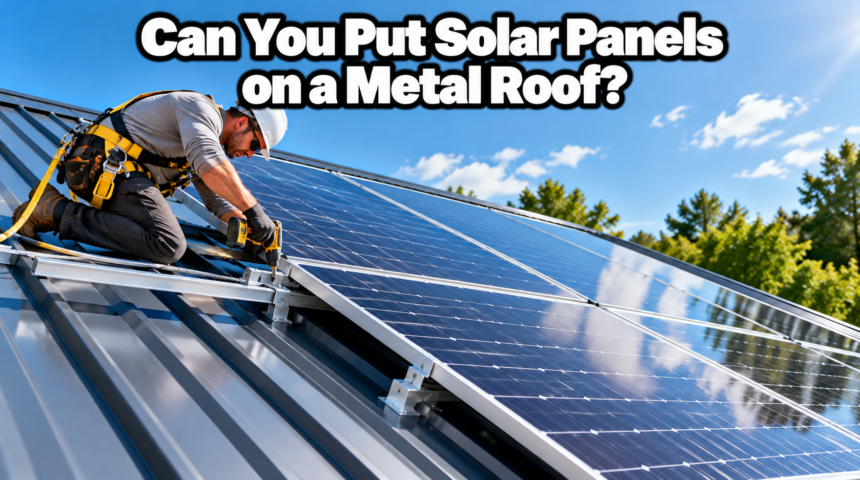
Yes, you can put solar panels on a metal roof, and in many cases a metal roof is the best roof you can have for solar. On the most common type of metal roof, panels attach with clamps that grip the roof, so the installer never drills a hole. That means no new leak points and a roof that can outlast the panels on top of it.
The real question is not whether solar works on metal. It is which kind of metal roof you have, because that decides how the panels attach and how much the job costs. Here is everything that matters, in plain terms.
Why a metal roof is good for solar
A metal roof brings three things solar installers love: a long life, a strong surface to attach to, and in one case, a way to mount panels without putting any holes in the roof.
Start with life span. A metal roof lasts about 40 to 70 years. Most solar panels are built to run for 25 to 30 years and carry warranties to match. So the roof will almost always outlast the panels, and you avoid the costly job of taking the whole system off to replace the roof underneath it partway through.
Metal also reflects more sunlight than a dark asphalt roof, which keeps the roof cooler. Panels run a little better when they are not baking, and a cooler roof eases the load on your air conditioning. The U.S. Environmental Protection Agency says cool roofs can cut peak summer air conditioning demand in homes by 11 to 27 percent. The effect for any one house varies, but the direction is helpful.
There is a green angle too. Metal roofs are made largely from recycled material and can be recycled again at the end of their life, and pairing one with solar can count toward green building credits like LEED and ENERGY STAR. For a lot of owners the bigger draw is simpler: a long-lasting roof plus a visible solar system tends to help a home hold its value at resale.
Quick take: if your metal roof is newer and in good shape, it is one of the best possible surfaces for solar, and often the simplest to install on.
Which metal roof do you have?
This is the fork in the road. The profile of your roof, meaning its shape and how the panels fit, decides whether the panels clamp on or screw down. There are four common types.
Standing seam roofs are the raised, vertical ribs that run from the ridge down to the gutter, with no screws showing on the surface. This is the dream setup for solar. A clamp grips each seam and the mounting rail bolts onto the clamp, so nothing is drilled into the roof. It installs fast and keeps the roof fully watertight.
Corrugated and ribbed roofs have a repeating wavy or ribbed pattern, usually screwed down with the fasteners visible. Panels can go on these, but it takes brackets fixed to the high points of the ribs, and those brackets are screwed in and then sealed. It is a solid approach on a new build, and still doable on an existing home, as long as the person doing it knows how to seal a metal roof properly.
Trapezoidal roofs have a boxy, flat-topped rib shape common on barns, workshops, and modern homes. Like corrugated, they usually need brackets screwed into the roof, matched to the exact rib shape, which varies by maker. Sealing matters just as much here.
Metal tile roofs look like clay or slate tiles but are made of metal. Here the installer swaps a tile for a special mounting bracket that takes the tile’s place, which keeps the roof sealed without open holes.
If you are not sure which you have, look at the roof from the ground. Tall, clean vertical lines with no visible screws usually mean standing seam. A busier pattern of waves or boxy ribs with screw heads showing is corrugated or trapezoidal.
How solar panels attach to a metal roof
There are two ways to hold panels to a metal roof: clamp them on, or screw them down. Which one you get depends entirely on the roof type above.
The clamp method is used on standing seam roofs. The clamp tightens onto the raised seam with a set screw and grips it, a bit like a strong clip. No part of the roof is pierced. S-5! is the long-running name in this space, and its clamps are a common sight on standing seam solar jobs. Because there are no holes, this method is quick, clean, and carries almost no leak risk. You can see how these seam clamps work on the S-5! metal roof attachment page.
The screw-down method is used on corrugated, trapezoidal, and most other metal roofs. The installer drills into the high points of the ribs, away from where water runs, fits a bracket, and seals the hole with the right flashing and sealant. Done well, it holds for decades and stays dry. Done poorly, it is where leaks start, which is why this work belongs to someone who installs on metal roofs often.
One more option fits standing seam roofs: thin, flexible panels that stick to the flat sections between the seams. They sit low and are easy to put on, but they make less power per square foot than standard rigid panels, so most homeowners chasing real energy savings still choose regular panels on clamps.
Whichever method your roof calls for, where the panels point still matters more than the roof material. In most of the United States, panels make the most power facing south, with east or west a fair second choice if nothing shades them for much of the day. A good installer looks at your roof slope, direction, and any trees or chimneys casting shade before deciding exactly where each panel sits.
When to hold off, and when to go ahead
The one time to pause is when the metal roof is old or in poor shape. If your roof is near the end of its life, it makes sense to replace it before the panels go on, so you are not paying to take the system down a few years later. A newer metal roof in good condition is the opposite case: it is ready now, and it will easily see the panels through their full run.
It is also worth checking that your installer has real experience with metal roofs. Not every solar crew does. The mounting hardware, the sealing, and the clamp fit all differ from a standard shingle job, and a crew that knows metal is the difference between a clean install and a future leak. Ask how many metal roofs they have done, and what mounting system they plan to use for your exact profile.
Will it leak or void the roof warranty?
On a standing seam roof with clamps, leaks are close to a non-issue, because nothing gets drilled. On roofs that need screws, leaks are preventable but not automatic. They come down to the installer sealing every hole correctly, so the quality of the crew matters more than the roof itself.
Warranties work much the same way. Putting solar on a metal roof usually will not void the roof warranty, as long as you use a qualified installer and approved mounting hardware. Clamp-on systems that never touch the roof surface are the safest on this front. Drilling can put the roof warranty at risk if it is done the wrong way. Before signing, it is worth a quick check with both your installer and the roof maker, and asking who covers the roof if a leak ever shows up around a mount.
Rule of thumb: clamps keep both the roof and its warranty untouched. Screws are fine too, but only with a crew that seals metal roofs for a living.
How long will the roof and panels last together?
This pairing ages well, which is a big part of why it is a smart match. Here is how the two line up.
| Item | Typical life span | What it means for you |
| Metal roof | 40 to 70 years | Almost always outlasts the panels, so no mid-life roof swap |
| Solar panels | 25 to 30 years | Run for decades, then get replaced on the same roof |
| Asphalt roof (for contrast) | 12 to 30 years | May need replacing while panels are still working, which is costly |
The takeaway is simple. On a metal roof, you install the panels once and they live out their full life without the roof forcing an early, expensive teardown. On an older asphalt roof, there is a real chance the roof gives out first, and taking panels down and putting them back up again adds cost you could have skipped.
What it costs
The panels themselves cost the same on any roof. What changes with metal is the mounting hardware and the labor, and the direction of that change depends on your roof type.
A typical home solar system of around 6 kilowatts runs roughly $16,000 to $21,000 before any tax credits, which is in the same range as other roof types. On a standing seam roof, clamp-on mounting often trims the labor, because the crew is not drilling and sealing dozens of points. On corrugated and trapezoidal roofs, the special brackets and the careful sealing work can nudge the price up a little. Across metal roofs, installation tends to land somewhere near $2,700 to $3,500 per kilowatt of system size.
Two things soften the overall number. Federal and local incentives can cut a large slice off the upfront cost, and the long roof life means you are unlikely to pay to remove and reinstall the system for a roof replacement during the panels’ lifetime. Over 25 years, many homeowners save tens of thousands of dollars on power bills, which is the figure that actually matters.
The payback math is worth running before you commit. Add up the system cost after incentives, then divide it by what you now spend on power each year, adjusted for how much of that the panels will cover. Many homes reach the break-even point somewhere around year seven to twelve, after which the power is close to free for the rest of the panels’ life.
A metal roof helps this math, because it removes the risk of a roof replacement eating into those later savings. If your area offers net metering, where the grid credits you for extra power your panels send back, the payback usually comes sooner still.
Conclusion
Yes, you can put solar panels on a metal roof, and it is one of the best choices you can make. The one thing that shapes your whole project is the roof profile. A standing seam roof lets clamps hold the panels with zero holes, no leak risk, and a roof that outlives the system.
Corrugated and trapezoidal roofs work well too, they just need a skilled crew to drill and seal properly. Match the mounting to your roof, use an installer who knows metal, and you get decades of clean power on a roof built to last.
Frequently asked questions
Do solar panels damage a metal roof?
No, not when installed correctly. On standing seam roofs, clamps grip the seams and never pierce the metal, so there is no damage at all. On roofs that need screws, proper flashing and sealing keep the roof sound for decades.
Is a standing seam roof really better for solar than corrugated?
Yes, for most homes. Standing seam allows clamp-on mounting with no drilling, which is faster, cleaner, and leak-free. Corrugated roofs work fine but need drilled, sealed brackets, so they ask more of the installer.
Does adding solar void my metal roof warranty?
Usually no, if you use a qualified installer and approved mounts. Clamp-on systems that never touch the roof surface are safest. Drilling can risk the warranty if done poorly, so confirm the details with your installer and roof maker first.
How many solar panels fit on a metal roof?
It depends on roof size and your energy use, not the metal itself. A typical home needs about 15 to 25 standard panels for a 6 kilowatt system. An installer measures your usable roof area to give an exact count.
Can I install solar panels on a metal roof myself?
For a grid-tied home system, it is best left to a pro. Mounting, sealing, and wiring must meet code and keep the roof watertight. DIY makes more sense for small off-grid setups on sheds or cabins.
Related Articles
How to Remove Rust from a Stainless Steel Sink
How to Regrout Tile Floor: A Complete Step-by-Step Guide
How Long Does It Take to Build a Home?
How to Sharpen Japanese Kitchen Knives: A Complete Beginner’s Guide