
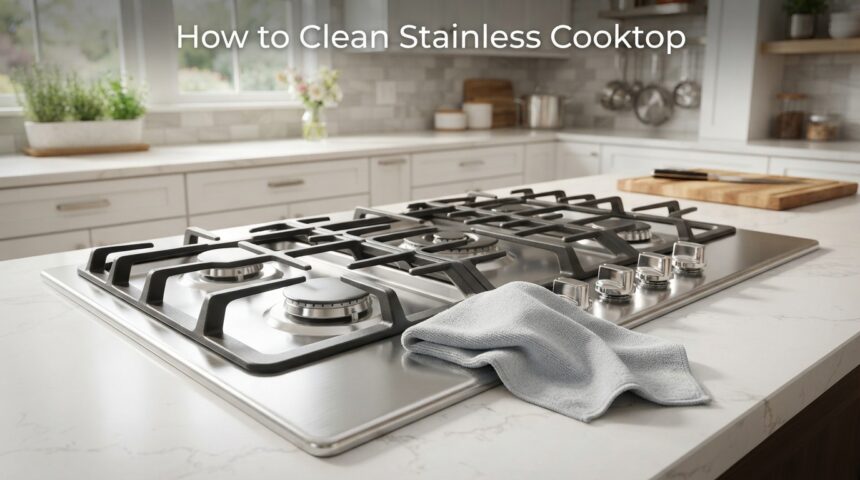
To clean a stainless steel cooktop, start by letting it cool completely so you never work on a hot surface. Remove the grates, burner caps, and loose crumbs before you begin wiping. Wash the surface with warm soapy water, moving your cloth in the direction of the grain. Break down grease with a vinegar spray and lift burnt-on spots with a baking soda paste. Rinse with a clean damp cloth and dry right away with microfiber to stop water spots. Finish with a tiny amount of oil for a streak-free shine.
A stainless steel cooktop is one of the most eye-catching parts of a kitchen, but it shows grease, fingerprints, and water marks faster than most surfaces. Many people are unsure how to clean stainless cooktop finishes without scratching or dulling them. The good news is that you do not need expensive products or special skills. This guide walks you through safe daily care, deep cleaning, stain removal, and simple habits that keep the surface looking new.
Know Your Stainless Steel Cooktop
Stainless steel looks tough, but its surface reacts to heat, acids, and rough tools. Understanding the basics makes every cleaning step safer and faster.
Why Stainless Steel Still Stains
Stainless steel resists rust because of a thin protective layer on its surface. Grease, hard water, and high heat can still leave marks on that layer. Regular cleaning keeps it intact and looking fresh.
Why the Grain Matters
Most cooktops have fine lines running in one direction, known as the grain. Wiping along these lines lifts dirt without scratching, while circles or cross-strokes leave visible marks. Check the direction in good light before you start.
Check Your Finish
Brushed, polished, and smudge-proof finishes respond differently to cleaners. Your manufacturer’s manual lists approved products and warnings for your exact model. Test any new cleaner on a hidden corner first.
What You Need Before You Start
Gathering supplies first saves time and stops you from grabbing something harsh halfway through. Everything below is inexpensive and easy to find.
| Item | Purpose |
| Microfiber cloths (two) | Wiping, drying, and buffing without lint |
| Non-scratch sponge | Loosening dirt and light grease |
| Plastic scraper | Lifting burnt-on food safely |
| Dish soap | Everyday grease removal |
| White vinegar and spray bottle | Cutting grease and water spots |
| Baking soda | Gentle scrubbing paste |
| Soft toothbrush | Reaching around burners and edges |
| Olive or mineral oil | Polishing and fingerprint control |
Safety and Preparation
Good preparation protects both you and your cooktop. A few minutes here prevents burns, damage, and wasted effort.
Cool Down and Power Off
Turn off every burner and wait until the surface feels cool to the touch. Cleaning a hot cooktop can cause burns, and cold liquid on hot steel may leave stains. If you have a gas model, shut off the gas supply, and unplug electric units where possible.
Remove Parts and Debris
Lift off grates, knobs, and burner caps so you can reach every corner. Sweep loose crumbs away with a dry cloth to avoid dragging grit across the steel. Set the removable parts aside for soaking later.
How to Clean Stainless Cooktop Every Day
A quick wipe after cooking stops small messes from turning into stubborn baked-on stains. This routine takes about five minutes and is the easiest way to keep the surface looking good.
- Wipe away crumbs. Use a dry microfiber cloth to collect loose debris.
- Mix a gentle solution. Add a few drops of dish soap to a bowl of warm water.
- Wash with the grain. Dampen a cloth or sponge and wipe in long, even strokes.
- Rinse. Go over the surface with a clean, damp cloth to remove soap.
- Dry immediately. Buff with a dry microfiber cloth so no water spots form.
Deep Cleaning a Stainless Steel Cooktop
When grease has built up over several weeks, daily wiping is not enough. A deeper clean restores the original look and takes about thirty minutes.
Soak Grates and Caps
Fill a sink with hot water and a generous squeeze of dish soap, then submerge the removed parts. Let them sit for 15 to 20 minutes so grease softens. Scrub gently, rinse, and dry them fully before putting them back.
Degrease the Surface
Spray equal parts white vinegar and water across the cooktop and let it rest for a few minutes. For sticky patches, spread a baking soda paste and rub softly along the grain. Wipe clean with a damp cloth afterward.
Detail Edges and Reassemble
Use a soft toothbrush around burner bases, knobs, and seams where grime hides. Keep moisture away from igniters and electrical openings. Once everything is dry, place the parts back in position.
Removing Tough Stains
Some marks need a targeted approach rather than extra scrubbing. Patience and the right product work better than force, so give each treatment a few minutes to work before wiping.
| Problem | Best Fix |
| Burnt-on food | Cover with baking soda paste and a warm damp cloth for 15 to 20 minutes, then use a plastic scraper |
| Baked-on grease | Vinegar spray, then warm soapy water |
| Water spots | Wipe with white vinegar and dry at once |
| Rainbow or bluish heat tint | Vinegar wipe or a stainless steel cleaner |
| Fingerprints | Glass cleaner or a drop of oil on a cloth |
| Light rust spots | Baking soda paste or a cleaner made for stainless steel |
| Sticky residue | Soapy water with a little rubbing alcohol |
Cleaning by Cooktop Type
The basic method stays the same, but each type has parts that need special attention. Adjust your routine to suit yours.
Gas Cooktops
Burner ports can clog with food and grease, which affects the flame. Clear them with a soft brush or a toothpick, and keep water out of the ports. Wash grates and caps separately.
Electric Cooktops
Coil and radiant models have heating elements that must stay dry. Wipe the surrounding steel with a lightly dampened cloth instead of spraying directly. Confirm the unit is unplugged and cool first.
Induction Cooktops
Stainless induction surfaces stay cooler, so spills bake on less, but sugar spills should be removed promptly. Use a soft cloth and mild soap only. Avoid anything abrasive near the smooth cooking zones.
Best Cleaners for Stainless Steel
Both homemade and commercial options can work well. Your choice depends on the type of mess and how much time you have.
Homemade Cleaners
Dish soap with warm water handles daily grime, and vinegar with water cuts grease and spots. Baking soda paste gives gentle scrubbing power, while club soda softens light streaks. These options are cheap, low-odor, and easy to mix in small batches.
Store-Bought Cleaners
Choose a product labeled for stainless steel that is non-abrasive and free of chlorine. Sprays, wipes, and polish creams save time on heavy buildup. Follow the label directions and wipe with the grain.
Polishing for a Streak-Free Shine
Polishing is the final step that makes a clean cooktop look professional. Place a very small amount of olive oil, mineral oil, or stainless polish on a microfiber cloth and buff along the grain. Too much product attracts dust and grease, so a thin, even layer is enough. Polish once every week or two, or whenever fingerprints start to show.
Mistakes to Avoid When Cleaning
Small habits can quietly damage stainless steel over time. This table shows what goes wrong and what to do instead.
| Mistake | What Happens | Better Approach |
| Steel wool or abrasive powder | Deep scratches | Non-scratch sponge or soft cloth |
| Bleach or chlorine cleaners | Pitting and stains | Mild soap or vinegar |
| Scrubbing against the grain | Visible marks | Wipe along the lines |
| Letting vinegar sit too long | Dull spots | Rinse within minutes |
| Air-drying | Water spots and streaks | Dry with microfiber |
| Using too much oil | Cloudy, sticky film | Apply a thin layer only |
Prevent Buildup With a Simple Schedule
Prevention takes less effort than repair. Use a splatter guard while cooking, match pan size to the burner, and wipe spills once the surface cools. A regular routine keeps each cleaning session short.
| Frequency | Task |
| Daily | Quick wipe with soapy water and dry |
| Weekly | Remove grates and caps, wipe underneath, polish |
| Monthly | Full deep clean with vinegar and baking soda |
Frequently Asked Questions
Can I use vinegar on a stainless steel cooktop every day?
Diluted vinegar is safe for regular use if you rinse and dry the surface afterward. Leaving it to sit for long periods can dull the finish.
How do I remove burnt-on food without scratching?
Soften it with baking soda paste and a warm damp cloth, then lift it with a plastic scraper. Never use metal blades or steel wool.
Why does my cooktop turn blue or rainbow colored?
This is usually heat discoloration caused by high temperatures. A vinegar wipe or stainless steel cleaner often restores the original color.
How often should I clean it?
Wipe it after each use and do a deeper clean weekly or monthly, depending on how much you cook. Heavy frying may need more frequent attention.
Conclusion
Knowing how to clean stainless cooktop surfaces comes down to gentle tools, the right cleaners, and wiping with the grain. A quick daily wipe, a weekly refresh, and a monthly deep clean will keep it looking new for years. Start with the simple soap and vinegar methods above and build a routine that suits your kitchen.
Related Articles
Cost to Tank a Basement: Complete Guide 2026
How Much Does It Cost to Install a Ceiling Fan? Price Guide
How Often Should You Clean Your Bathroom? A Complete Guide
Can a Nest Thermostat Replace Heating and AC?
Roofing Maintenance for Extreme Temperatures : Complete Guide