
Many homeowners wonder does plumbing use electricity when they picture the pipes, faucets, and drains running through their house. The short answer is that plumbing itself relies mainly on water pressure and gravity rather than electric current to move water in and out of a home.
However, several devices connected to your plumbing system, such as pumps, heaters, and modern smart fixtures, do depend on power to work correctly. Understanding this difference helps you plan better during power outages, repairs, and renovations.
This guide breaks down exactly which parts of your home plumbing need electricity and which ones do not, so you always know what to expect when the lights go out.
What Does “Plumbing” Actually Mean?
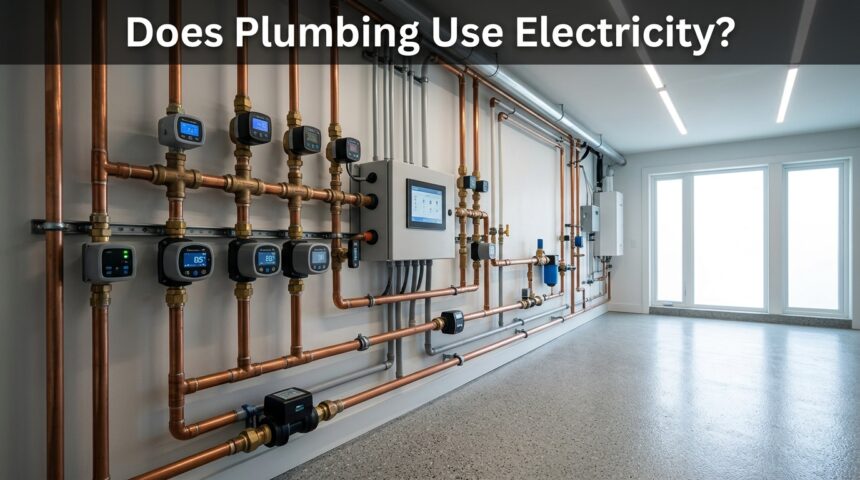
Plumbing refers to the network of pipes, valves, drains, and fixtures that carry water into and out of your home. On its own, this network is a mechanical system rather than an electrical one.
Core Components of a Plumbing System
A typical plumbing system includes supply pipes, drain lines, shut-off valves, faucets, and fixtures like sinks, tubs, and toilets.
These parts are built from materials such as copper, PVC, or PEX, and none of them require a power source to function. They simply guide water where it needs to go using pressure differences created by your city’s water main or a private well.
How Water Moves Without Electricity
Water entering a typical city-supplied home is already pressurized before it reaches your property, so it pushes through pipes on its own.
Once used, wastewater leaves the home through sloped drain pipes that rely purely on gravity to carry it toward the sewer line. This natural flow is why so much of plumbing can keep working even without any electrical input.
The Core Answer: Plumbing Works Without Electricity
At its foundation, a home plumbing system is designed to function through gravity and existing water pressure, not electric power. This is the clearest answer to whether plumbing uses electricity in its basic form.
Gravity-Fed Drainage Explained
Every drain in your house is angled slightly downward so that used water and waste flow naturally toward the main sewer line or septic tank. No motor or electrical component is needed to push this water along, since gravity alone does the work reliably and consistently, day after day.
Municipal Water Pressure Systems
In most cities, water treatment plants use large mechanical pumps to pressurize the entire distribution network before it ever reaches individual homes. Because that pressure already exists in the underground pipes, your household plumbing simply taps into it, meaning your faucets and showers can run even during a local power cut.
Manual Fixtures That Need No Power
Basic fixtures such as traditional faucets, standard bathtubs, and older gravity-flush toilets operate entirely through manual handles, valves, and water pressure. You can turn a tap, fill a tub, or flush a conventional toilet with zero electrical involvement, which is exactly why plumbing continues working during most blackouts.
Where Electricity Enters Your Plumbing System
While core plumbing avoids electricity, many modern conveniences attached to that system genuinely need power to operate. This section covers the most common electrical components found in homes today.
Well Water Pumps
Homes that rely on private wells instead of city water use submersible or jet pumps to draw water up and push it into the household pipes. These pumps run on electricity, and a pressure switch or tank works alongside them to maintain steady water flow throughout the home.
Electric Water Heaters
Electric water heaters use heating elements and a thermostat to warm water stored in a tank, and this entire process depends on a continuous power supply. Tankless electric models work similarly, heating water instantly as it passes through, but they too shut down completely without electricity.
Sump Pumps and Flood Prevention
Sump pumps sit in a basement pit and automatically remove excess groundwater to prevent flooding, and they run on standard household electricity. Because flooding risks often increase during storms, many homeowners install battery backup systems so the pump keeps working even if the main power fails.
Garbage Disposals
A garbage disposal unit is mounted beneath a kitchen sink and connects directly to the drain line, but it functions using an electric motor to grind food waste. Without power, the disposal simply will not spin, though water can still drain past it normally.
Smart and Touchless Fixtures
Touchless faucets use motion sensors, while smart toilets may include heated seats, bidet functions, or digital displays, and all of these features require electricity to operate. If power is lost, these fixtures often default to manual operation or stop working until electricity returns.
Sewage Ejector Pumps
In basements or rooms located below the main sewer line, gravity alone cannot move wastewater uphill to the sewer system. A sewage ejector pump uses an electric motor to push this wastewater upward, making it essential in below-grade bathrooms and laundry rooms.
Water Softeners and Filtration Systems
Many modern water softeners and filtration units include electronic control valves and programmable timers that manage the regeneration cycle automatically. These small computerized components require a steady electrical connection to function correctly and track water usage over time.
Boilers and Circulator Pumps
Homes with hydronic heating systems use boilers and circulator pumps to move hot water through radiators or underfloor pipes. While the boiler itself may run on gas or electricity for heating, the circulator pump almost always relies on an electric motor to keep water moving.
City Water vs Well Water: Electricity Dependency Compared
City water systems and private well systems differ significantly in how much they depend on electricity to deliver water into your home. The table below summarizes these key differences clearly.
| Feature | City Water System | Private Well System |
|---|---|---|
| Water pressure source | Municipal treatment plant | Electric well pump |
| Works during power outage | Usually yes | Usually no, unless backup power is used |
| Maintenance responsibility | City or utility company | Homeowner |
| Hot water availability | Depends on water heater type | Depends on water heater type |
| Risk during blackout | Low | High without generator |
What Happens to Your Plumbing During a Power Outage?
A power outage affects different parts of your plumbing system in very different ways, depending on how each component gets its water or power. Knowing this in advance can help you prepare properly for storms or unexpected outages.
Gravity Systems Keep Working
Basic drainage and city-supplied water pressure generally continue functioning normally during a power cut, since neither depends on electricity directly. You can usually still flush toilets, run cold water, and drain sinks without any noticeable interruption.
Well Systems Stop Without Backup Power
If your home relies on a well, losing electricity means your pump cannot draw water at all, leaving you without any running water. This is why many rural homeowners invest in generators or battery backup systems specifically for their well pumps.
No Hot Water From Electric Heaters
An electric water heater cannot heat new water once the power goes out, though you may still have some warm water left in the tank temporarily. Gas water heaters with electric ignition can also fail during outages, depending on their specific design.
Sump Pump Failure Risks
Without electricity, a standard sump pump stops removing groundwater from your basement, which can quickly lead to flooding during heavy rain. This risk is exactly why battery backup sump pumps have become a popular safety upgrade for many households.
Common Myths About Plumbing and Electricity
Several misconceptions exist about how plumbing and electricity relate to one another, and clearing these up helps homeowners make better decisions.
Myth: All Plumbing Needs Electricity
Some people assume every part of their water system depends on power, but as shown throughout this guide, most core plumbing relies on gravity and pressure instead. Only specific attached devices, not the pipes themselves, require an electrical connection.
Myth: Water and Electricity Never Mix in Home Systems
While water and electricity are dangerous together, modern homes safely combine both through insulated wiring, grounded outlets, and protective devices near wet areas. Proper installation by licensed professionals makes this coexistence both common and safe.
Safety Tips When Plumbing Meets Electricity
Because certain plumbing components do use electricity, following basic safety practices around these areas protects both your home and your family.
Risk of Shock Near Heaters and Pumps
Electric water heaters, well pumps, and sump pumps carry a real shock risk if their wiring becomes damaged or exposed to moisture over time. Regular inspection of cords, connections, and grounding wires helps prevent dangerous electrical faults near water.
Why GFCI Outlets Matter
Ground Fault Circuit Interrupter outlets automatically cut power the moment they detect an imbalance in current, which is critical near sinks, tubs, and basement pumps. Building codes in most areas now require GFCI protection in these exact locations for good reason.
When to Call an Electrician vs a Plumber
If an issue involves water flow, leaks, or clogged pipes, a licensed plumber is the right professional to contact for repairs. However, if the problem involves wiring, sparking, or a device that will not power on at all, an electrician should handle that portion of the work instead.
Quick Reference Table: Electric vs Non-Electric Plumbing Components
| Uses Electricity | Does Not Use Electricity |
|---|---|
| Well water pumps | Gravity drain pipes |
| Electric water heaters | Standard manual faucets |
| Sump pumps | Traditional flush toilets |
| Garbage disposals | Municipal-pressure water lines |
| Smart or touchless fixtures | Manual shut-off valves |
| Sewage ejector pumps | Basic bathtubs and sinks |
| Water softener control valves | Copper and PVC piping |
| Boiler circulator pumps | Standard shower heads |
Conclusion
So does plumbing use electricity? Core plumbing, including pipes, drains, and manual fixtures, does not need power to function, since it relies on gravity and existing water pressure.
However, many attached systems like well pumps, water heaters, sump pumps, and smart fixtures absolutely depend on electricity to work. Knowing which parts fall into each category helps you prepare for outages, plan renovations, and stay safe around water and wiring throughout your home.
Frequently Asked Questions
Does a toilet need electricity?
A standard gravity-flush toilet does not need electricity, since flushing relies entirely on water pressure and gravity. Only smart toilets with digital features require a power connection.
Can I take a shower during a power outage?
Yes, if you have city water and a gas water heater, showers usually still work. Electric water heaters and well pumps, however, will stop functioning once power is lost.
Do all water heaters need electricity?
No, gas water heaters typically use a pilot light and do not need continuous electricity, while electric water heaters rely entirely on power to heat water.
Is well water always electric-dependent?
Yes, virtually all private well systems use an electric pump to draw and pressurize water, so they stop working during a power outage unless backup power is available.