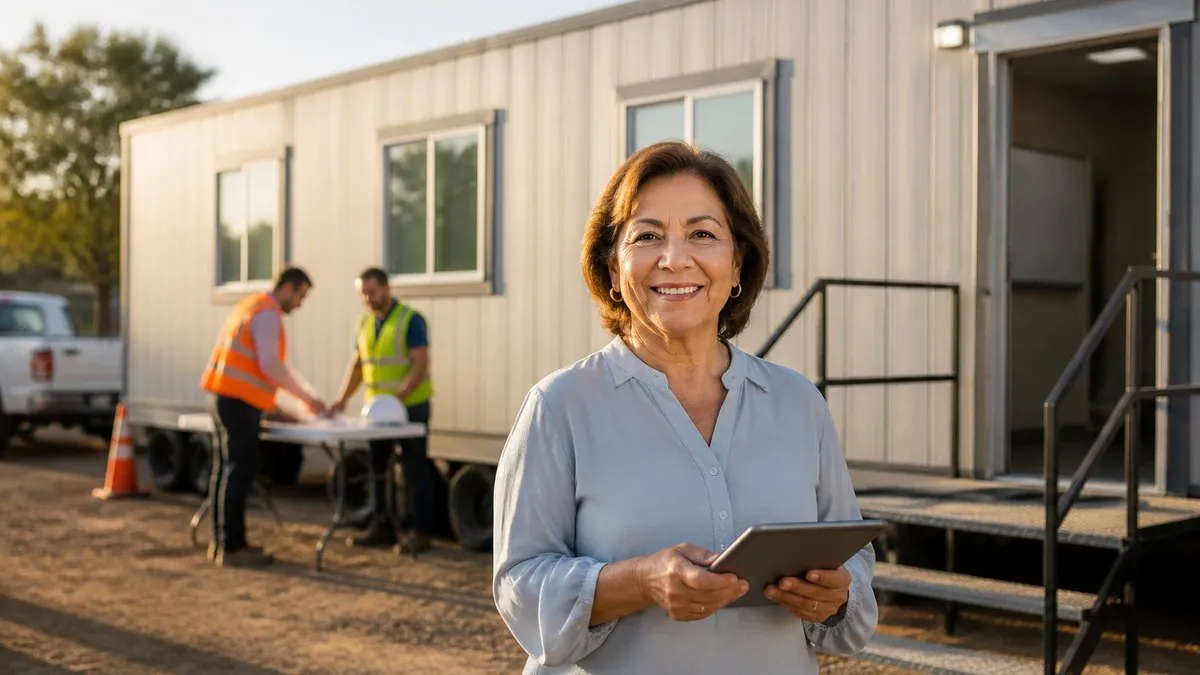
Businesses in construction, education, and healthcare sometimes require workspace beyond their permanent buildings to accommodate more staff. When renovations affect existing facilities, additional offices are needed to support daily administrative activities. Mobile offices provide relocatable workspaces that businesses use across different project locations. Here are a few of the advantages of a mobile office for businesses:
Position Teams Onsite
Construction companies benefit from placing administrative offices near active project locations. Site managers need workspace to review drawings and coordinate contractors. A mobile office provides a designated setting for these responsibilities, while construction work continues on site. Visiting stakeholders also have a location for scheduled project discussions.
Industrial operations have administrative requirements near production and extraction areas. Mining and energy operators use modular office buildings to provide designated workspaces for supervisors and site personnel; larger modular configurations include meeting areas for cross-departmental discussions. These facilities place administrative functions near day-to-day operations.
Relocate Between Sites
Businesses managing several locations need facilities that can keep pace with changing project schedules. Relocatable offices provide workspace when construction teams move between sites or temporary operations shift. A unit used for one project is able to serve another after its original assignment ends.
Expand Available Space
Additional workspace supports organizations when existing buildings no longer accommodate their activities. Government departments use temporary buildings for programs requiring dedicated work areas, and larger modular buildings provide space for integrated functions within a single facility. Different building configurations support functions beyond everyday administration, including:
- Training rooms: Provide designated areas for staff instruction and scheduled learning sessions.
- Conference areas: Accommodate meetings involving teams from different departments or project locations.
- Medical spaces: Provide dedicated spaces for healthcare services within workforce accommodation and remote operational camps.
- Dining facilities: Provide meal service areas for personnel living at remote work sites.
- Restroom buildings: Provide additional restroom facilities at sites with limited or insufficient existing amenities.
These modular buildings accommodate projects that require more than individual workspaces. Workforce facilities combine offices and living quarters, while separate modular structures support other operational functions. For larger sites, facility layouts reflect workforce needs and daily operations.
Maintain Business Operations
Building renovations sometimes require departments to move before permanent offices become available again. Mobile offices provide temporary workspaces when there is ongoing construction in a main building. Modular office buildings provide administrative teams with separate workspaces while renovations take place in existing facilities.
Temporary modular offices serve commercial properties during renovations, building upgrades, and relocations. Installed separately from active construction zones, these units house administrative staff and records associated with ongoing business operations. Office layouts include workstations, desks, and document storage, with configurations based on the number of employees and the duration of the project.
During commercial property development, modular sales offices provide a designated location for leasing activities. Leasing agents use the space to review floor plans, discuss available units, and meet prospective tenants. Positioned near the development entrance or property access point, the office gives visitors a direct location for inquiries and scheduled appointments. Its placement follows the site’s access arrangements and construction phasing.
Create Functional Workspaces
Mobile office layouts differ depending on the activities carried out inside each building. A school district may require separate rooms for administration, while a construction company needs space for project documentation. Interior configurations also influence visitor access and meeting arrangements. Depending on your situation, the following features support different workplace functions:
- Private rooms give administrators and department heads space to work and focus on upcoming tasks.
- Reception areas serve as an entry point for visitors and contractors.
- Dedicated storage keeps project records and office supplies organized.
- Restrooms within selected layouts support daily workplace use.
Rent Your Mobile Offices Today
Businesses require additional workspace during renovations, facility expansions, and changes in staffing levels. When construction affects occupied buildings, departments often relocate to separate modular offices. Staff growth also places pressure on existing floor space, particularly when additional desks, meeting areas, and storage are required. Modular office buildings provide dedicated work areas without requiring permanent changes to the existing property. Before selecting a unit, assess your workforce size, required layout, site conditions, and expected occupancy period. Contact a provider today to discuss modular office configurations that meet your project requirements and operational needs.