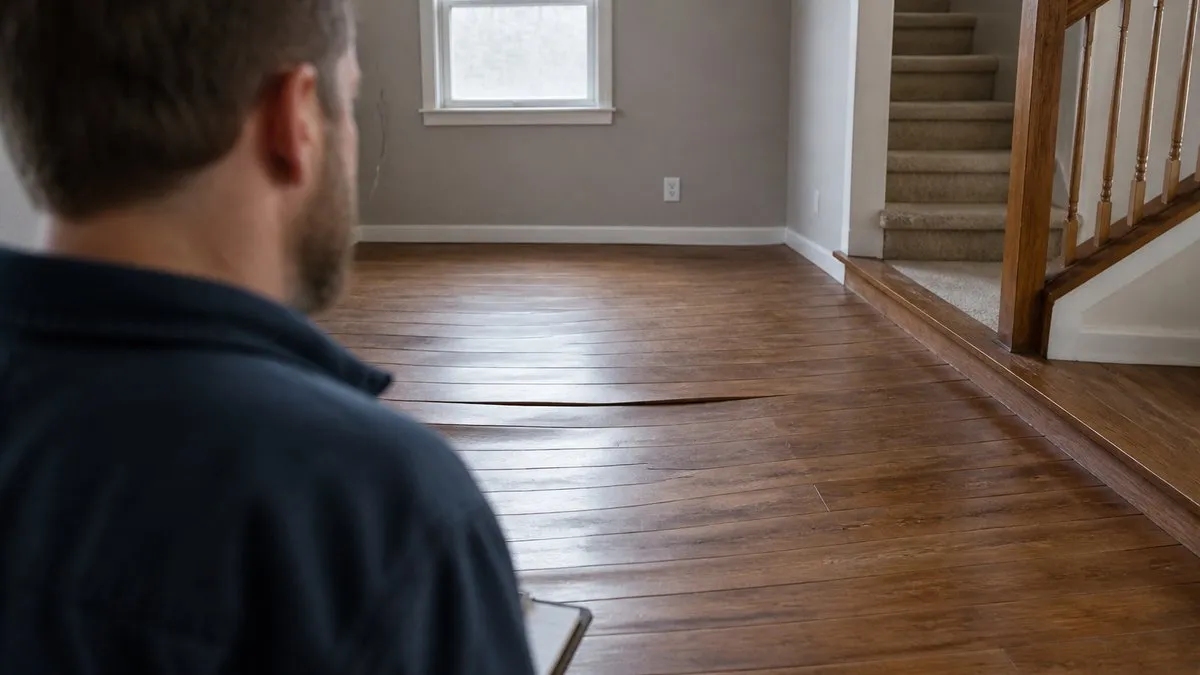
Sagging floors pose safety risks because they could potentially indicate failing structural support beneath a home. When subfloor framing elements can no longer support normal household loads, they can compromise your home’s stability and create structural and physical hazards. Here are some ways uneven floors affect home safety:
Structural Degradation
When a home’s foundation settles unevenly, it distorts the even distribution of weight across structural elements. This reduces load capacity as structural elements are pushed beyond their serviceability limits, jeopardizing their ability to safely support weight. Because unequal weight distribution on load-bearing walls, wooden joists, and headers exerts high stress on these elements, it can result in sagging floors. If structural elements are under undue stress, diagonal cracks that radiate outward from the corners of window or door frames can appear across the drywall.
Warped joints and beam framing can also cause door frames and windows to shift out of alignment. This causes doors and windows to stick or fail to open smoothly. This creates an emergency safety hazard if occupants try to evacuate quickly during a fire or flood. Jamming doors can also swing unexpectedly, increasing the likelihood of throwing a person off-balance or causing injuries.
In compromised structures, subfloors pull away from walls, creating gaps along baseboards and causing drywall to crack. This weakens the structural rigidity of the home. Professional foundation specialists are well-versed in inspecting the subfloor framing to identify and correct underlying issues.
Plumbing Failures
When floors and drywall shift, it might create hazards to plumbing and utilities, as these elements do not bend when a house shifts. Because shifting structures pull on pipes, the intense mechanical tension causes joints to separate, main lines to rupture, and seals to break. This leads to hidden gas or water leaks that create other hazards, including:
- Water damage
- Fires
With water damage, moisture compromises wooden structural elements, causing them to rot. It also erodes supporting soil, and this exacerbates foundation shifts. Fire hazards from gas leaks lead to property destruction and risk to life.
Falling Hazards
Sagging floors can have sudden dips, soft spots, or slants, creating a hazardous walking environment for the home’s occupants. For vulnerable occupants, such as young children and elderly family members, the issues present a significant hazard due to the expected elevation changes. Inclines and dips also make heavy furniture, such as large dressers or bookcases, unstable. This increases the risk of toppling and injuring the home’s occupants.
Pest Infestations
Because uneven settling pulls structural elements apart, it results in unsealed gaps and entry points around brickwork and baseboards. This facilitates the entry of spiders, mice, or larger rodents. Gaps also allow moisture into the basement, creating a damp environment that attracts termites or ants.
Some pests leave allergens such as dander and droppings. When HVAC systems distribute these allergens in the indoor environment, they trigger allergic reactions in the home’s occupants. With ants and termites, these pests can degrade wooden supports in the home, enhancing structural weaknesses.
Biological Growth
As sagging floors arise from underlying issues such as foundation settlement or water intrusion, they can lead to moisture problems and biological growth. When moisture affects wooden insulation and subflooring, it creates a damp environment. This increases humidity levels, creating a suitable breeding ground for mold and mildew. When biological growth infiltrates interior living spaces, it degrades air quality and can cause respiratory health issues. It also causes damage to:
- Flooring
- Drywall
- Furniture and fittings
Schedule Inspection for Sagging Floors
When floors sag, it points to a shift in the home’s weight distribution, resulting in undue strain on some joints and beams. Professional foundation repair specialists use specialized equipment and safety procedures to remedy structural issues. Partner with specialists to assess your home’s foundation and take corrective measures.