
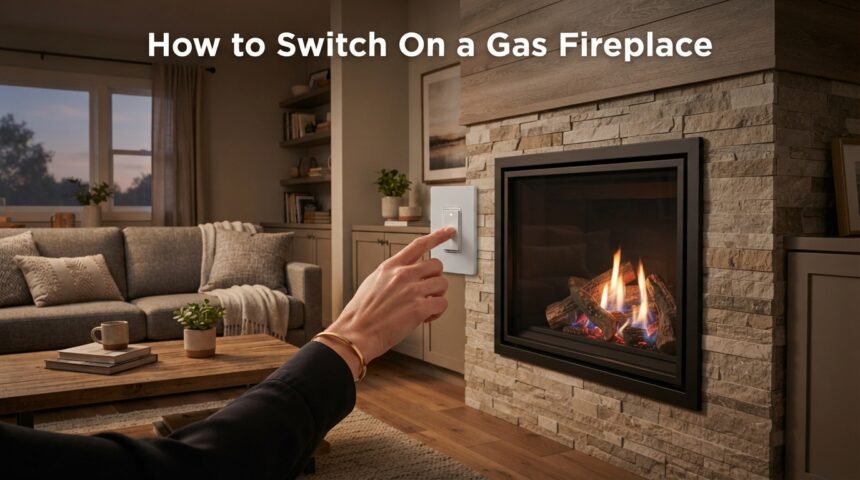
Knowing how to switch on gas fireplace units correctly depends on the type you own.Models with a standing pilot need a small flame lit by hand before the main burner starts.Electronic ignition models create their own spark when you press a switch, button, or remote.
In both cases, the gas valve must be open and the room should have fresh air.Never try to light the unit if you can smell gas anywhere near it.If the flame will not stay on after a few careful attempts, stop and call a licensed technician.
Know Your Gas Fireplace Type Before You Start
Every lighting method begins with identifying your system. The label inside the unit or the manual will tell you which one you have.
Standing Pilot Models
These units keep a tiny flame burning all the time. That flame heats a safety sensor called a thermocouple and lights the main burner when you ask for heat. You usually light the pilot yourself after the fireplace has been off for a long period.
Electronic Ignition Models
These units have no constant flame, so they use less gas. A spark or heated element lights the burner only when needed. They depend on batteries or household power to work.
Vented and Vent-Free Units
Vented fireplaces send exhaust outside through a flue or pipe, while vent-free units release it into the room. Vented models often require an open damper or door before lighting. Vent-free units have an oxygen sensor that shuts them off if air quality drops.
| Type | How It Lights | Power Needed | Manual Effort |
| Standing pilot | Hand-lit pilot flame | Usually none | Higher |
| Electronic ignition | Automatic spark | Batteries or mains | Low |
| Gas log set | Match, key valve, or pilot | Depends on model | Medium |
Safety Checks Before Lighting
A few quick checks take under two minutes and prevent most gas fireplace accidents. Do them every time, especially after a long break.
Check the Room and Surroundings
Move curtains, rugs, paper, and furniture away from the fireplace. Look at the glass, screen, and logs for cracks or heavy soot. Keep children and pets out of the area until the flame is steady.
Check Gas and Airflow
Confirm the gas supply valve, usually a small lever near the unit, is open. For vented models, open the damper or flue fully. Make sure your carbon monoxide and smoke alarms have working batteries.
How to Switch On a Gas Fireplace with a Standing Pilot Light
This is the most hands-on method, so follow the order carefully. Skipping the waiting time is the most common mistake.
Prepare the Control Valve
Open the glass door if your model requires it, then find the control panel, often behind a small cover near the floor. Turn the knob to OFF and wait about five minutes so any leftover gas can clear. This pause protects you from a sudden flare-up.
Light the Pilot Flame
Turn the knob to PILOT and press it in firmly. While holding it down, click the built-in igniter or bring a long lighter to the pilot opening. Keep the knob pressed for 30 to 60 seconds so the thermocouple warms up, then release slowly.
Turn On the Burner
Once the pilot stays lit, move the knob to ON. Then use the wall switch, remote, thermostat, or main control to bring up the main flame. If the pilot goes out at any point, return to OFF, wait five minutes, and start again.
How to Switch On an Electronic Ignition Fireplace, Wall Switch, or Remote
Modern controls remove most of the manual work. Even so, the gas valve and power source still need to be ready.
Electronic Ignition Steps
Turn the gas valve to ON, then press the power button or flip the control switch. You should hear a soft clicking sound, followed by a flame within a few seconds. If nothing happens, check the batteries first.
Wall Switch and Thermostat
A wall switch works like a light switch and sends the start signal to the fireplace. A thermostat does the same automatically once the room drops below your chosen temperature. Set the thermostat a few degrees above room temperature to see the flame start.
Remote Control Use
Most remotes offer buttons for power, flame height, fan speed, and a timer. If the remote stops responding, replace the batteries in both the remote and the receiver box. Many units also have a manual button on the control panel as a backup.
Lighting a Gas Log Set
Gas logs are lit slightly differently from a built-in fireplace insert. On vented sets, open the damper completely before you begin, because exhaust must escape safely. Many sets use a key valve, which you turn slowly while holding a lit match near the burner.
Vent-free logs follow the pilot or ignition steps described above, but check the room size against the manufacturer’s rating first. An oversized unit in a small room can trigger the oxygen sensor and shut the flame off repeatedly.
How to Adjust the Flame After Lighting
Once the fireplace is on, use the flame height knob or remote to set a comfortable heat level. A low flame suits mild evenings, while a higher setting warms a larger space faster. Turn on the blower, if your model has one, to spread heat across the room.
Watching the flame colour helps you spot problems early. A healthy flame is mostly blue at the base with yellow tips.
| Flame Look | What It Means | What to Do |
| Blue with yellow tips | Normal burning | Nothing needed |
| Mostly yellow or orange | Dirty burner or poor air mix | Schedule a cleaning |
| Lazy, weak, or flickering | Low gas pressure or draft | Check supply and vents |
| Sooty or smoky | Incomplete burning | Turn off and call a technician |
Troubleshooting: When Your Gas Fireplace Won’t Light
Most lighting problems come from a short list of causes. Try the simple fixes below before calling for service.
Pilot Light Will Not Stay On
A dirty or weak thermocouple is the usual reason, since it fails to prove the flame is present. Drafts and low gas pressure can also blow the pilot out. Hold the knob longer, and if it still fails, the part likely needs replacing.
No Spark or Clicking Sound
Dead batteries are the most frequent cause on electronic ignition models. Loose wiring or a worn igniter can also stop the spark. Replace batteries first, then inspect the connections if you are comfortable doing so.
Burner Will Not Start Although the Pilot Is Lit
This can point to a faulty wall switch, remote receiver, or gas valve. Test the manual control on the unit to see whether the fault is in the remote system. If the manual control fails too, contact a technician.
What to Do If You Smell Gas
A gas smell means you should stop everything and act quickly. Follow these steps in order:
- Do not light a match, flip switches, or use a phone near the smell.
- Turn off the gas supply if you can reach it safely.
- Open nearby doors and windows.
- Leave the house with everyone inside.
- Call your gas provider or emergency services from outside.
- Stay out until a professional confirms the home is safe.
Maintenance Tips for Reliable Lighting
Regular care keeps the pilot steady and the ignition quick. A yearly inspection by a qualified technician is the best habit, because they can test the thermocouple, valves, vents, and seals. Wipe the glass with a fireplace-safe cleaner only when it is fully cool.
Before the first use each season, check batteries, clear dust from the burner area, and look for spider webs near the pilot opening, since these can block gas flow. Keep the space around the unit free of clutter all year.
Frequently Asked Questions
How long does it take to light a gas fireplace?
A pilot model usually needs about five minutes of waiting plus up to a minute of holding the button. Electronic ignition units light within seconds of pressing the switch.
Can I light a gas fireplace without electricity?
Standing pilot models often can be lit with a long lighter, since they do not rely on power. Many electronic ignition models need batteries or mains power, though some have a manual match-light option.
Why does my fireplace smell the first time I turn it on?
Dust and protective coatings burn off after a long break, which causes a temporary odour. It should fade within a short time, but a strong gas smell is different and needs immediate action.
Is it safe to leave a gas fireplace on overnight?
Most manufacturers advise against it. Turn the fireplace off before sleeping or leaving the house, and follow the timer or thermostat guidance in your manual.
Conclusion
Learning how to switch on gas fireplace controls comes down to knowing your system, checking safety points, and following the steps in order.
Pilot models reward patience, while electronic and remote systems reward good battery habits. Yearly servicing and a firm rule to stop when you smell gas will keep your fireplace both warm and safe.
Related Articles
What Length of Fencing Is Needed to Surround This Yard?
How to Choose a Contractor for Renovations?
Laundry Room Cabinets: The Complete Guide to Storage, Style, and Smart Organization