

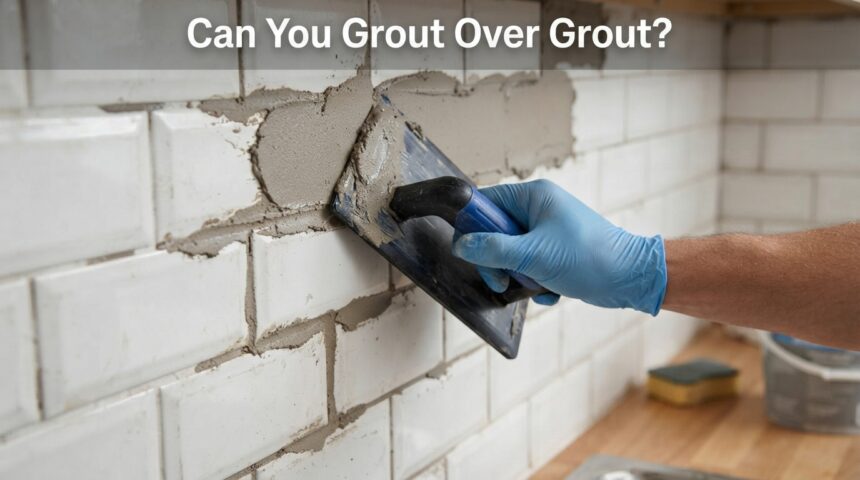
Yes, you can grout over grout, but only under specific conditions. This works best as a thin cosmetic refresh when the existing grout is clean, dry, and structurally sound with no cracks or crumbling.
It is not a permanent repair method because new grout struggles to bond properly with old, cured grout underneath it. If the old grout is damaged, moldy, or holding moisture, applying a new layer will only hide the problem temporarily. For a lasting result, most professionals recommend removing the top layer of old grout before regrouting.
Many homeowners ask this question when their tile grout starts looking dull, stained, or slightly uneven, and a full regrouting job feels like too much work. This guide breaks down exactly when grouting over grout makes sense, when it does not, how to do it correctly, and what alternatives exist so you can make the right decision for your bathroom, kitchen, or shower tiles.
What Does Grouting Over Grout Mean
Grouting over grout simply means applying a new, thin layer of grout directly on top of existing grout lines instead of removing the old material first. It is usually done for appearance rather than structural repair.
Skim Coating Explained
A skim coat is a very thin layer of fresh grout spread over the old grout lines to refresh their color and texture. It does not add strength or fill deep gaps, and it works only when the surface underneath is already stable and even.
Re-Grouting vs Grouting Over
Re-grouting involves removing old grout completely and replacing it with new material, giving a fresh and durable bond. Grouting over skips removal entirely, which saves time but sacrifices long-term reliability and bonding strength.
When This Method Is Used
This technique is typically chosen when grout looks faded or slightly discolored but is otherwise intact. It suits people wanting a quick cosmetic update rather than a full tile renovation project.
Can You Really Grout Over Existing Grout
Technically yes, you can layer new grout over old grout, but success depends heavily on the condition of the surface beneath. Bonding is the biggest obstacle since old grout is already cured and less porous.
The Bonding Challenge
Cured grout has a hardened surface that does not absorb new grout well, so the fresh layer sits on top rather than fusing with it. Over time, this weak bond often leads to peeling, cracking, or flaking away from the tile edges.
Situations Where It Works
This method tends to succeed when the old grout is thin, flat, and free of major imperfections. A light scuffing and thorough cleaning beforehand also significantly improves how well the new layer holds.
Situations Where It Fails
It usually fails when the existing grout is thick, uneven, or already separating from the tile. Moisture trapped underneath is another major reason the new grout layer fails within a short period.
When It’s Okay to Grout Over Grout
Grouting over existing grout is a reasonable choice mainly for cosmetic touch-ups rather than functional repairs. It works best when the underlying grout still performs its job correctly.
Grout Is Discolored But Sound
If grout has simply faded or stained from cleaning products or age but remains firm and intact, a new thin layer can restore its appearance effectively without major risk.
No Cracks or Crumbling
When there are no visible cracks, chips, or crumbling sections, the surface provides a stable enough base for new grout to sit on without immediate failure.
Minor Cosmetic Refresh
This approach suits small touch-up projects, such as refreshing grout color in one section of a kitchen backsplash, rather than tackling an entire bathroom floor.
When You Should Not Grout Over Grout
There are clear situations where grouting over old grout is not advisable and can actually make problems worse instead of solving them.
Cracked or Crumbling Grout
Damaged grout lines need to be removed rather than covered, since new grout applied over cracks will crack again in the same spots within a short time.
Mold or Mildew Underneath
If mold or mildew has developed beneath the surface, sealing it under a new grout layer traps moisture and allows the growth to continue spreading unseen.
Water Damage or Trapped Moisture
Areas with signs of water damage, such as soft or discolored tiles nearby, require full removal and repair rather than a cosmetic grout-over fix.
Why Bonding Issues Happen
Understanding why bonding fails helps explain why grouting over grout is considered a temporary fix rather than a permanent solution in most cases.
Porous But Cured Surface
Old grout is porous when first applied, but once fully cured, it loses much of that absorbency, making it harder for new grout to soak in and bond firmly.
No Mechanical Key
Without roughening the surface first, there is no physical texture or “key” for the new grout to grip onto, which leads to a weaker surface-level attachment.
Long-Term Durability Risk
Because the bond is mostly superficial, the new layer is more prone to lifting, chipping, or wearing away faster than grout applied to a properly prepared surface.
Alternative: Grout Refresh Products
Instead of applying new grout, many people use grout colorants or grout paint, which are specifically designed to sit on top of existing grout lines.
What Grout Colorants Are
Grout colorants are epoxy-based or acrylic coatings that restore color and add a protective seal without adding bulk or requiring the same bonding grout does.
Pros and Cons
These products are easier to apply and dry faster than regrouting, but they only refresh appearance and offer no structural repair for cracks or gaps.
Proper Way to Grout Over Old Grout
If you decide to move forward with this method, following the correct process improves durability, even though it remains a temporary solution overall.
| Step | Action | Purpose |
| 1 | Clean grout lines thoroughly | Removes dirt, grease, and soap residue |
| 2 | Lightly scuff the surface | Creates a rough texture for better grip |
| 3 | Apply a bonding agent (optional) | Improves adhesion between old and new grout |
| 4 | Apply a thin, even grout layer | Prevents cracking from excess thickness |
| 5 | Wipe excess and let it cure | Ensures a clean, finished appearance |
Best Practice: Removing Old Grout First
Most professionals agree that removing old grout before applying new grout produces far better and longer-lasting results than layering over it.
Why Professionals Recommend It
Removing old grout exposes a clean, porous surface that new grout can bond with properly, avoiding the peeling and cracking issues common with grouting over.
Tools Needed
A grout saw, oscillating multi-tool with a grout blade, or a manual grout rake are commonly used to remove old material without damaging surrounding tiles.
How Deep to Rake Out
Removing at least two to three millimeters of old grout, or the full depth in damaged areas, ensures enough space for new grout to properly adhere and cure.
Common Mistakes to Avoid
| Mistake | Why It’s a Problem |
| Skipping cleaning before applying new grout | Dirt and residue block proper bonding |
| Applying grout too thick | Increases risk of cracking and uneven drying |
| Ignoring cracks or moisture underneath | Traps damage instead of fixing it |
| Using mismatched grout type or color | Creates visible seams and inconsistent texture |
How Long Does the Fix Last
A grout-over-grout fix typically lasts anywhere from a few months to about a year, depending on foot traffic, moisture exposure, and how well it was applied.
In comparison, a full regrouting job done correctly can last several years before needing attention again, making it the more reliable long-term choice for heavily used areas like showers and kitchen floors.
Cost Comparison
| Method | Average Cost Range | Time Required |
| Grouting over old grout | Low (materials only) | A few hours |
| Full grout removal and re-grout (DIY) | Moderate | One to two days |
| Professional re-grouting | Higher | Half a day to two days |
Frequently Asked Questions
Can you grout over grout in a shower?
It is not recommended in showers due to constant moisture exposure, which increases the risk of mold forming beneath the new layer.
Does grouting over grout look different?
Yes, it can appear slightly raised or uneven compared to a full regrouting job, especially if the original lines were not perfectly flat.
Can you use sanded grout over unsanded grout?
No, mixing grout types is not advisable since they have different textures and drying behaviors that can affect bonding and appearance.
How long should you wait before sealing new grout?
Most manufacturers recommend waiting at least 48 to 72 hours before applying a sealer to allow the grout to cure fully.
Conclusion
So, can you grout over grout? Yes, but only as a short-term cosmetic fix when the existing grout is clean, stable, and free of cracks or moisture issues. For any signs of damage, mold, or crumbling, removing the old grout and starting fresh remains the safest and most durable long-term solution.
Related Articles
Do Ceiling Tiles Have Asbestos? Full Safety Guide
How Long Do Garage Door Springs Last? Full Lifespan Guide
How to Choose a Contractor for Renovations?