

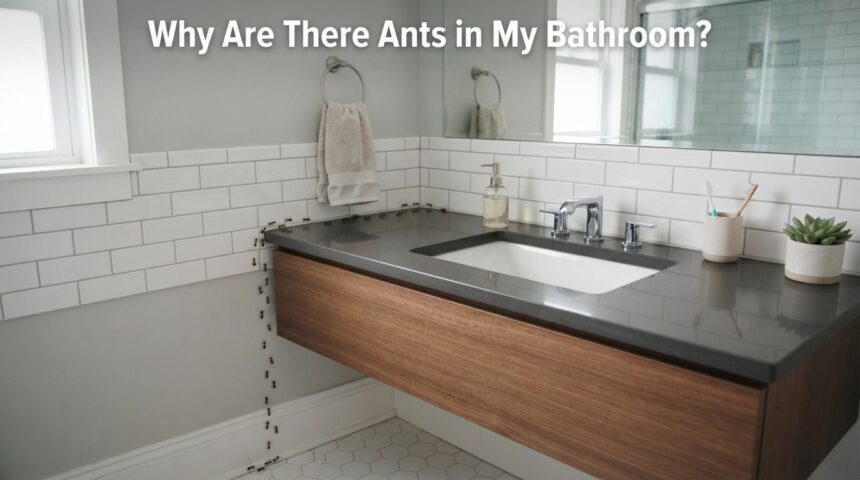
Finding ants in your bathroom can be confusing, especially when the room looks spotless. The truth is, bathrooms offer something ants need more than food: moisture. Leaky pipes, condensation, and standing water create the perfect environment for ants to search for a drink, even in a clean space.
Once they find a reliable water source, they leave a scent trail so more ants keep coming back. Understanding this behavior is the first step toward solving the problem for good.
Common Types of Ants Found in Bathrooms
Different ant species behave differently, so identifying the type in your bathroom helps you choose the right solution. Most bathroom ants fall into a few well-known categories that are drawn to water and shelter rather than food alone.
| Ant Type | Appearance | Main Attraction |
| Odorous House Ants | Small, brown to black, musty smell when crushed | Moisture and sugary residue |
| Pharaoh Ants | Tiny, pale yellow to light brown | Warmth, moisture, protein |
| Carpenter Ants | Large, black or reddish-black | Damp or decaying wood |
| Moisture (Acrobat) Ants | Small, dark, heart-shaped abdomen | Consistently wet areas |
Odorous House Ants
These ants are among the most common invaders in homes with damp bathrooms. They are attracted to leaking pipes and often nest close to the water source itself. When crushed, they release a distinct smell, which makes them easy to identify.
Pharaoh Ants
Pharaoh ants are extremely small and often go unnoticed until their numbers grow. They thrive in warm, moist areas like bathrooms and can form multiple nests, making them harder to eliminate with simple cleaning alone.
Carpenter Ants
Carpenter ants are a bigger concern because they tunnel through damp or water-damaged wood to build nests. Their presence in a bathroom often signals a hidden moisture problem inside walls or flooring that needs urgent attention.
Moisture Ants
As the name suggests, these ants are entirely driven by water. They rarely wander far from a consistent moisture source, which is why bathrooms with poor ventilation or slow leaks are their preferred nesting ground.
Why Ants Are Attracted to Bathrooms
Bathrooms combine everything ants look for: water, warmth, and hidden shelter. This section explains the four main reasons ants keep finding their way into this specific room of the house.
Moisture and Humidity
Water is the biggest reason ants enter bathrooms. Dripping faucets, leaking pipes under sinks, and condensation from showers create small puddles or damp surfaces that ants can access easily. Even a tiny, consistent leak is enough to sustain an entire ant trail over time.
Food and Residue
While water is the main draw, some ants are also attracted to leftover residue from soap, toothpaste, and skincare products. Dead skin cells and hair products that collect around drains can add just enough organic matter to interest certain species.
Shelter and Nesting Opportunities
Bathrooms often have wall voids near plumbing, damp subfloors, and gaps behind tiles that make excellent nesting spots. These hidden, humid areas protect ant colonies from temperature changes and give them close access to water at all times.
Easy Entry Points
Ants are skilled at squeezing through the smallest openings. Gaps around pipes, unsealed drains, loose window frames, and small foundation cracks all give them a direct path from outside into your bathroom.
Signs You Have an Ant Problem, Not Just a One-Off Visitor
A single ant might just be an explorer, but recurring sightings usually point to a nearby nest. Watch for these indicators:
- Ants appearing in the same spot at the same time each day
- Visible trails leading toward a drain, pipe, or baseboard
- Small piles of dirt or debris (frass) near cracks or wood
- Increasing numbers over just a few days
If you notice more than one of these signs, it’s likely an active colony rather than a random ant passing through.
Are Bathroom Ants Dangerous or Just a Nuisance?
For most households, bathroom ants are more of an annoyance than a serious threat, but there are exceptions worth understanding.
Health and Hygiene Concerns
Ants can contaminate surfaces they crawl across, which is unhygienic even if they don’t carry serious disease. In bathrooms, this mostly affects cleanliness rather than posing a major health risk.
Structural Concerns
Carpenter ants are the exception, since their tunneling can worsen existing water damage in walls, floors, or wooden fixtures. If you spot large black ants regularly, it’s worth investigating for hidden moisture damage before it spreads further.
How to Get Rid of Ants in the Bathroom
Once you understand why ants are present, removing them becomes much easier. A combination of cleaning, targeted treatment, and sealing is usually required for lasting results.
Immediate Cleanup Steps
Start by wiping down all surfaces, drying any standing water, and emptying trash bins regularly. Removing the immediate water and residue cuts off what’s currently attracting the ants.
Natural and DIY Remedies
Simple household items can disrupt ant trails effectively. A mixture of vinegar and water wiped along entry points removes their scent trail, while peppermint or tea tree oil placed near cracks acts as a natural deterrent. Baking soda combined with sugar can also be used as a basic homemade bait.
Ant Baits and Traps
Baits work by allowing worker ants to carry poison back to the colony, eliminating the nest rather than just the ants you can see. Place bait stations along known trails or near suspected entry points for the best results.
Sealing Entry Points
Caulking gaps around pipes, sealing baseboards, and repairing small cracks in walls or flooring prevents new ants from entering, even after the current colony is dealt with.
When to Call a Professional
If ants keep returning despite cleaning and sealing, or if you suspect carpenter ants near wooden structures, a pest control professional can locate the nest and apply treatment that DIY methods often miss.
Preventing Ants From Coming Back
Long-term prevention focuses on removing the conditions that attract ants in the first place. Fix leaking pipes and faucets as soon as they’re noticed, and consider running a dehumidifier or exhaust fan to reduce bathroom humidity. Stick to a regular cleaning schedule that includes drains and tile grout, and keep checking the bathroom’s perimeter for new gaps or cracks. Outside the home, trimming plants and clearing debris near the foundation reduces the chances of ants finding their way in from the garden.
Frequently Asked Questions
Why do ants only appear at night?
Many ant species are more active during cooler, quieter hours, which is when bathrooms are also less disturbed by movement and noise.
Do ants come from the drain?
Yes, drains can be an entry point if there’s organic buildup inside, though most ants enter through wall gaps or pipe openings near the drain rather than the drain itself.
Will ants go away on their own?
Rarely. Without removing the water source or sealing entry points, ants usually keep returning even if numbers temporarily drop.
What ant species nests in bathroom walls?
Odorous house ants and moisture ants are the most common species found nesting inside damp bathroom walls.
Conclusion
The answer to why are there ants in my bathroom almost always comes back to moisture. Fixing leaks, reducing humidity, and sealing small entry points solve the problem at its source rather than just treating the symptoms. Start with a thorough cleanup and leak check today, and follow up with sealing and prevention to keep your bathroom ant-free long term.
Related Articles
How Big Is a Toilet Paper Roll?
What Is a Vault Toilet? Complete Guide to Design, Use & Maintenance
How to Add Crown Molding to Kitchen Cabinets: A Complete DIY Guide