

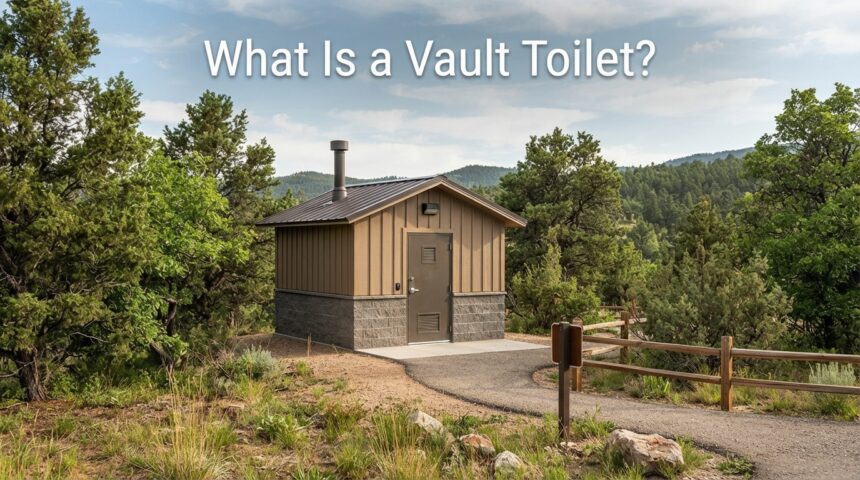
A vault toilet is a simple, non-flush restroom structure commonly found in parks, campgrounds, and remote outdoor areas where running water is not available. It works without plumbing, using a sealed underground tank called a vault to collect and store waste until it is professionally pumped out.
These toilets are low-cost, low-maintenance, and widely used across national forests, hiking trails, and rural recreation spots. Understanding what is a vault toilet helps visitors know what to expect and how to use these facilities properly.
How Vault Toilets Work
At its core, a vault toilet is built on a very simple idea: no water, no plumbing, just a sealed container beneath the structure. The design allows it to function reliably in remote locations for years with minimal upkeep, which is exactly why land management agencies rely on it so heavily.
Basic Structure and Design
The above-ground portion of a vault toilet usually looks like a small outhouse made of concrete, wood, or metal panels. Inside, there is a toilet seat positioned directly over an opening that leads down into the vault below.
The simplicity of this structure is intentional, since it needs to withstand weather, heavy use, and long gaps between maintenance visits.
The Underground Vault Explained
The vault itself is a large, sealed, watertight container buried beneath the toilet structure, typically made of concrete or fiberglass.
It is engineered to hold waste safely without leaking into surrounding soil or groundwater. Depending on usage levels, a vault can hold waste for weeks or even months before it needs servicing.
No Water, No Plumbing
Unlike a standard bathroom, a vault toilet does not use water to flush waste away, which makes it ideal for locations without utility access.
Waste simply drops directly into the vault below through gravity, with no pipes, tanks, or water lines involved anywhere in the system. This absence of plumbing is also what makes vault toilets so much cheaper to install compared to traditional restrooms.
Ventilation Systems
Most vault toilets include a vertical pipe extending from the vault up through the roof, which helps control odor and airflow.
This vent pulls gases up and out of the structure instead of letting them linger inside the toilet area. A well-designed ventilation system is one of the biggest factors in how tolerable the smell is for visitors.
Vault Toilets vs. Other Toilet Types
People often confuse vault toilets with similar-looking alternatives like pit toilets or portable units. While they may look alike from the outside, the internal systems and maintenance needs are quite different.
Vault Toilet vs. Pit Toilet
A pit toilet is simply a hole dug into the ground with no sealed container, while a vault toilet uses an engineered, sealed tank.
This difference matters because pit toilets pose a higher risk of groundwater contamination over time. Vault toilets are generally considered the safer, more regulated upgrade to traditional pit toilets.
Vault Toilet vs. Portable Toilet
Portable toilets, often called porta-potties, are temporary plastic units that get moved and serviced frequently by rental companies.
Vault toilets, in contrast, are permanent fixtures built into the ground with a much larger waste capacity. This makes vault toilets better suited for long-term placement in parks rather than short-term events.
Vault Toilet vs. Composting Toilet
Composting toilets are designed to break down waste biologically using aerobic decomposition, often producing usable compost material.
Vault toilets do not decompose waste at all; they simply store it until a pump truck removes it. Composting toilets typically need more active management, while vault toilets are more hands-off between service visits.
Vault Toilet vs. Flush Toilet
Flush toilets rely on running water and connected sewage or septic systems to carry waste away instantly. Vault toilets skip this entirely, relying on gravity and storage instead of water-based removal. This is precisely why vault toilets are the preferred choice in areas where water infrastructure simply isn’t practical.
Where Vault Toilets Are Commonly Found
Vault toilets tend to appear in specific types of locations where convenience infrastructure is limited but visitor traffic still needs to be managed. Knowing where to expect them can help travelers plan bathroom stops more effectively.
National Parks and Forests
Many national parks and forest service lands install vault toilets at scenic overlooks, trailheads, and dispersed camping zones.
These areas often sit far from water and sewer lines, making vault toilets the most practical restroom option available. Visitors to remote federal lands should expect a vault toilet rather than a modern flush restroom.
State Parks and Local Recreation Areas
State-run parks frequently use vault toilets in less-developed sections of their property, especially near hiking trails or fishing spots.
These installations balance visitor comfort with the practical limitations of rural infrastructure. It’s common to see a mix of flush restrooms near main entrances and vault toilets deeper into the park.
Campgrounds and Trailheads
Campgrounds without full hookups almost always rely on vault toilets to serve campers overnight. Trailheads leading into backcountry areas also commonly feature a single vault toilet near the parking lot.
This placement ensures hikers have access to a restroom before heading into areas with no facilities at all.
Boat Launches and Rest Areas
Boat ramps and rural highway rest areas sometimes use vault toilets when connecting to municipal sewer systems isn’t feasible.
These locations still need to serve dozens or hundreds of visitors daily, so a well-maintained vault system becomes essential. It’s a practical solution that balances cost with public need.
Construction and Materials
The physical build of a vault toilet is designed for durability rather than aesthetics, since these units often sit in harsh, exposed environments. Agencies typically choose materials based on cost, weather resistance, and expected lifespan.
Typical Building Materials
Concrete is the most common material for both the vault and the structure walls due to its strength and resistance to weather damage.
Wood and metal are sometimes used for the above-ground building, especially in areas prone to wildlife interference. The vault itself is almost always precast concrete or reinforced fiberglass to prevent leaks.
ADA-Accessible Designs
Modern vault toilets are frequently built to meet accessibility standards, including wider doorways, grab bars, and appropriately sized interior space.
This ensures visitors with mobility challenges can use public lands comfortably. Agencies updating older facilities often prioritize ADA compliance during renovations.
Single vs. Double-Vault Structures
Some locations use a single-vault design with one toilet stall, while busier sites install double-vault structures with two separate stalls.
The choice depends largely on expected visitor volume and how often maintenance crews can realistically service the site. Higher-traffic parks generally lean toward double-vault setups to reduce wait times and pumping frequency.
Maintenance and Pumping
Because vault toilets rely on storage rather than removal, regular maintenance is critical to keeping them functional and sanitary. Neglected vaults can quickly become unusable or environmentally risky.
How Often Vaults Are Pumped
Pumping frequency depends heavily on visitor traffic, ranging from a few times a year in quiet areas to monthly in busy parks.
Agencies typically schedule pumping based on historical usage data and vault capacity. Peak seasons like summer often require more frequent service visits than off-season months.
The Pumping Process
A specialized vacuum truck arrives on-site, connects a hose to an access point in the vault, and extracts the waste for proper disposal. The process is quick, usually taking less than an hour per site with the right equipment. Waste is then transported to an approved treatment or disposal facility.
Who Handles Upkeep
Maintenance responsibility typically falls on the managing agency, such as the National Park Service, state park departments, or private contractors hired for the job.
Some remote sites rely on seasonal maintenance crews who service multiple locations on a rotating schedule. Budget constraints can sometimes affect how quickly a site gets serviced.
Using a Vault Toilet: Tips and Etiquette
Knowing a few practical tips before using a vault toilet can make the experience much more comfortable, especially for first-time visitors.
What to Bring
Since most vault toilets lack running water, it’s smart to carry hand sanitizer, tissues, and sometimes your own toilet paper. A small flashlight can also help in facilities without interior lighting. Being prepared avoids unpleasant surprises in more remote locations.
What Not to Flush or Drop In
The following items should never go into a vault toilet, since they can damage the system or complicate pumping.
| Item | Why to Avoid |
| Wet wipes | Do not break down and clog the vault |
| Diapers | Take up space and don’t decompose |
| Trash or food waste | Attracts pests and causes odor |
| Chemicals | Can harm the vault material or disposal process |
Odor and Hygiene Expectations
Some smell is normal in vault toilets, especially during hot weather or between maintenance visits. Proper ventilation helps, but visitors should still expect a stronger odor than a standard flush restroom. Carrying hand sanitizer is the best way to manage hygiene since sinks are rarely available.
Environmental Impact and Benefits
Vault toilets play an important role in protecting natural areas from improper waste disposal, especially where infrastructure is limited.
Groundwater Protection
Because the vault is fully sealed, waste does not leach into surrounding soil the way it would with an open pit toilet. This makes vault toilets a much safer option for protecting local water sources. Agencies favor them specifically because of this environmental safeguard.
Why Vault Toilets Replace Plumbing in Remote Areas
Installing full plumbing in remote regions is expensive and often physically impractical due to terrain. Vault toilets offer a middle ground, providing sanitation without requiring water lines or septic connections. This keeps costs manageable while still protecting public health.
Common Misconceptions
A few misunderstandings tend to follow vault toilets, often because people confuse them with similar-looking alternatives.
Vault Toilet vs. Pit Toilet Confusion
Many visitors assume vault and pit toilets are the same thing, but the sealed vault design makes a major difference in safety and cleanliness. This mix-up is common simply because both types look similar from the outside. Knowing the distinction helps set realistic expectations before use.
Myths About Smell and Cleanliness
While vault toilets can have an odor, modern ventilation systems have significantly improved compared to older designs. Well-maintained vault toilets are far cleaner than their reputation suggests. Regular pumping schedules play a big role in keeping conditions manageable.
Pros and Cons of Vault Toilets
Weighing the advantages and drawbacks helps explain why this system remains so widely used despite its limitations.
| Pros | Cons |
| Low installation cost | Can develop odor between services |
| No water or plumbing required | Limited waste capacity |
| Environmentally safer than pit toilets | No handwashing station |
| Durable and long-lasting | Requires scheduled pumping |
Frequently Asked Questions
What is a vault toilet used for?
It provides basic sanitation in remote areas without water or sewer access.
Is a vault toilet the same as an outhouse?
Not exactly; an outhouse may use an open pit, while a vault toilet uses a sealed tank.
How often are vault toilets cleaned?
Cleaning frequency varies but typically ranges from weekly to monthly depending on traffic.
Are vault toilets safe for the environment?
Yes, their sealed design prevents waste from contaminating soil or groundwater.
Conclusion
Understanding what is a vault toilet makes outdoor trips more predictable and comfortable, especially in parks and remote recreation areas.
These simple, sealed-tank systems offer a practical, low-cost sanitation solution where plumbing isn’t possible. With proper maintenance and visitor awareness, vault toilets continue to serve as reliable infrastructure across countless public lands.
Related Articles
How to Strip Paint From Tiles: A Complete Guide 2026
How Do You Remove Tile From a Bathroom Wall? Step-by-Step Guide
How Deep Is a Base Kitchen Cabinet? Complete Depth Guide