
Garage door springs are the hidden workhorses that lift and lower a heavy door hundreds of times a year, and most homeowners never think about them until something goes wrong. On average, garage door springs last between 7 to 12 years, or roughly 10,000 to 15,000 open-close cycles, though this number changes based on usage, spring quality, and maintenance habits.
Understanding how long do garage door springs last helps you plan ahead, avoid sudden breakdowns, and keep your garage door system safe for your family and vehicles. This guide walks through everything that affects spring life, the warning signs of failure, and how to get the most years out of your springs.
What Are Garage Door Springs?
Garage door springs are tightly wound metal coils that carry the full weight of the door, allowing it to open and close smoothly instead of dropping like dead weight. Without them, even a small motor would struggle to lift a door that can weigh well over a hundred kilograms.
Definition and Basic Function
A garage door spring stores mechanical energy when the door closes and releases that energy when the door opens, effectively balancing the door’s weight.
This is why a properly working spring makes a heavy door feel almost weightless when lifted manually. The spring, not the opener motor, does most of the heavy lifting.
Types: Torsion Springs vs Extension Springs
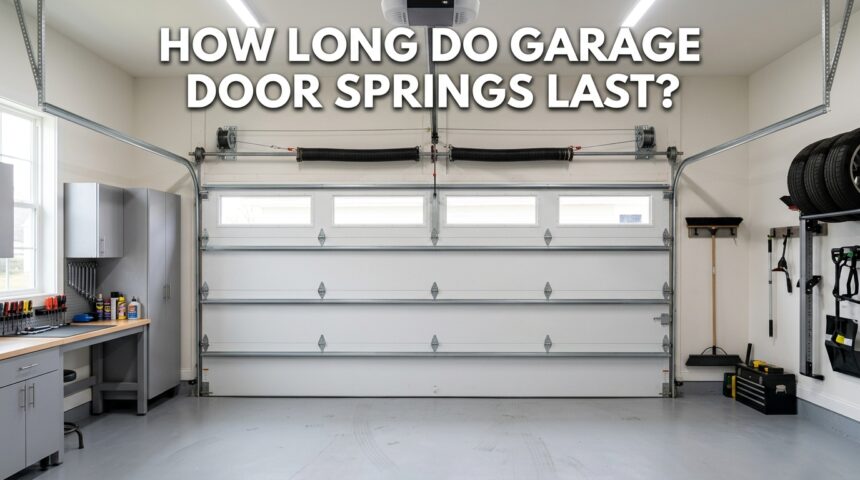
Torsion springs sit horizontally above the door on a metal shaft and twist to create lifting force, while extension springs run along the tracks on either side of the door and stretch to provide the same effect.
Torsion springs are generally considered more durable and safer, while extension springs are often cheaper but wear out faster. Most modern garages, especially those with double doors, use torsion springs for better balance and control.
How Springs Support Door Weight and Balance
Every garage door spring is rated for a specific weight range, and using the wrong size spring puts extra strain on the system, shortening its life.
Proper balance also protects the opener motor from overworking, which indirectly extends the life of the entire door mechanism. A well-matched spring keeps the door moving evenly without jerking or sagging on one side.
Average Lifespan of Garage Door Springs
Most standard garage door springs are built to handle around 10,000 cycles, which translates to roughly 7 to 12 years for the average household. This lifespan is measured in cycles rather than calendar years because usage frequency matters more than age alone.
Cycle-Based Lifespan Explained
A single cycle means one full open-and-close movement of the garage door, and manufacturers rate springs based on how many cycles they can handle before metal fatigue sets in.
A household opening the garage door four times a day will reach 10,000 cycles in about seven years. Understanding this cycle count is the clearest way to estimate how long do garage door springs last for your specific home.
Standard Lifespan Ranges
Standard-duty springs are typically rated for 10,000 cycles, which suits an average family using the garage two to three times daily. Mid-duty springs stretch closer to 15,000 cycles, offering a few extra years of service. These numbers assume normal weather conditions and reasonably consistent maintenance.
High-Cycle Springs for Heavy Use
Homes with frequent garage traffic, such as those running a home business or using the garage as a main entry point, benefit from high-cycle springs rated between 20,000 and 50,000 cycles.
These springs cost more upfront but reduce the frequency of replacements over time. They are a smart investment for anyone who opens their garage door more than five or six times a day.
Factors That Affect Spring Lifespan
Several everyday factors quietly determine how quickly a spring wears down, and most of them are within a homeowner’s control. Recognizing these factors is key to getting the maximum years out of your investment.
Frequency of Use
The more often a garage door opens and closes, the faster the spring moves toward its cycle limit, regardless of its calendar age.
A door used ten times a day will wear out its spring roughly twice as fast as one used five times a day. This is the single biggest factor in determining actual lifespan.
Spring Quality and Material
Oil-tempered springs tend to offer smoother, quieter operation but may be more sensitive to humidity, while galvanized springs resist rust better and suit coastal or humid climates. Higher-quality steel with proper coating resists corrosion and metal fatigue for longer. Cheaper, thinner-gauge springs often fail well before reaching their advertised cycle count.
Door Weight and Size
Heavier doors, such as solid wood or insulated steel models, place more strain on springs than lightweight aluminum doors.
Double-car doors also demand stronger springs than single-car doors, and using an undersized spring for a heavy door accelerates wear dramatically. Matching spring strength to door weight is essential for reaching the expected lifespan.
Climate and Humidity Exposure
Springs exposed to high humidity, salty coastal air, or extreme temperature swings tend to rust and weaken faster than those in stable, dry climates.
Rust reduces the metal’s flexibility, making it more prone to snapping under tension. Homes in coastal or very humid regions should consider rust-resistant coatings or more frequent inspections.
Installation Quality
A spring installed with incorrect tension or the wrong size for the door will wear unevenly and fail sooner than expected. Poor installation can also cause one spring to bear more load than its pair, leading to premature breakage on one side. Professional installation ensures the spring operates within its intended tension range.
Maintenance and Lubrication Habits
Regular lubrication reduces friction between coils, which directly reduces wear during each cycle. Dust, dirt, and dried-out lubricant cause the coils to grind against each other, speeding up metal fatigue. A simple maintenance routine can add real years to a spring’s working life.
Torsion Springs vs Extension Springs: Lifespan Comparison
Choosing between torsion and extension springs affects not just cost but also how long the system lasts and how safely it operates. The table below breaks down the key differences.
| Feature | Torsion Springs | Extension Springs |
|---|---|---|
| Average Lifespan | 15,000–20,000 cycles | 8,000–10,000 cycles |
| Typical Years | 8–15 years | 5–9 years |
| Safety | Safer, contained on a shaft | Higher risk if unrestrained |
| Cost | Higher upfront cost | Lower upfront cost |
| Maintenance Needs | Lower | Moderate to high |
Durability Differences
Torsion springs distribute stress more evenly across the shaft, which reduces the fatigue that leads to sudden snapping. Extension springs stretch and contract more dramatically with each cycle, causing quicker wear on the coil structure. This structural difference is a major reason torsion springs typically outlast extension springs.
Cost vs Longevity Trade-Offs
While torsion springs cost more to purchase and install, their longer lifespan often makes them more economical over a ten-year period. Extension springs save money initially but may require replacement twice as often. Homeowners planning to stay long-term in a property often find torsion springs the better value.
Which Type Lasts Longer and Why
Torsion springs generally last longer because they operate under more controlled, consistent tension rather than repeated stretching. Their design also places less strain on individual coils during each cycle. This is why most professional installers now recommend torsion systems for both durability and safety.
Signs Your Garage Door Springs Are Wearing Out
Springs rarely fail without warning, and catching these signs early can prevent a dangerous sudden break. Paying attention to how the door behaves daily makes it easy to spot trouble before it becomes an emergency.
Loud Noises During Operation
Squeaking, popping, or grinding sounds during opening or closing often indicate that coils are rubbing together due to lack of lubrication or early metal fatigue. These noises typically get louder over a few weeks as wear progresses. Addressing the noise early can sometimes be solved with lubrication alone.
Uneven or Slow Movement
A door that jerks, moves unevenly, or takes noticeably longer to open usually signals that the spring is losing tension. One side of the door may appear to lift faster than the other when two springs are involved. This imbalance puts extra stress on the opener motor as well.
Visible Gaps in Spring Coils
Physically inspecting the spring for gaps between coils, rust spots, or stretched sections can reveal wear before it causes failure. A healthy spring should have tightly wound, evenly spaced coils without visible corrosion. Any visible separation or bending is a strong signal that replacement is approaching.
Door Feels Heavy When Lifted Manually
Disconnecting the opener and lifting the door by hand is a simple test; a door that feels unusually heavy or drops on its own indicates the spring can no longer support its weight properly. A well-functioning spring should hold the door steady at roughly waist height. This test is one of the most reliable ways to check spring health at home.
Door Won’t Stay Open
If the garage door slides back down after being opened partway, the spring has likely lost enough tension to fail at balancing the door’s weight. This is often one of the final warning signs before complete spring failure. It should be treated as an urgent repair need rather than a minor inconvenience.
How to Calculate Your Spring’s Remaining Life
Estimating remaining spring life is straightforward once you know your daily usage pattern and the spring’s rated cycle count. This calculation gives a realistic answer to how long do garage door springs last in your specific household.
Estimating Daily Cycles
Count how many times the garage door opens and closes in a typical day, keeping in mind that each open-and-close counts as one full cycle. A household with two cars using the garage twice each per day totals four cycles daily. Multiply this by 365 to estimate yearly cycle usage.
Simple Formula and Example
Divide the spring’s rated cycle count by your estimated yearly cycles to get an approximate lifespan in years. For example, a 10,000-cycle spring used four times daily (1,460 cycles per year) would last roughly 6.8 years. This formula gives a practical, personalized estimate rather than relying on generic averages alone.
When to Start Monitoring Closely
Once a spring passes roughly 80 percent of its rated cycle count, it’s wise to begin more frequent visual inspections and listen closely for unusual sounds. This is typically around year six or seven for standard-duty springs. Early monitoring at this stage helps catch failure before it becomes a safety hazard.
How to Extend Spring Lifespan
While every spring eventually wears out, a few consistent habits can meaningfully stretch its working years. These practices are simple enough for any homeowner to follow without professional tools.
Regular Lubrication Tips
Applying a silicone-based or garage-door-specific lubricant every three to six months reduces coil friction significantly. Avoid using thick grease, which attracts dust and dirt that can accelerate wear instead of preventing it. A light, even coating on the coils is all that’s needed.
Balancing the Door Properly
Periodically checking door balance, either through professional service or the manual lift test, ensures the spring isn’t working harder than necessary. An unbalanced door forces the spring to compensate constantly, wearing it down faster. Correcting balance issues early protects both the spring and the opener.
Avoiding Excessive Daily Use
Combining trips in and out of the garage, rather than opening and closing the door repeatedly within short periods, reduces unnecessary cycle count. This small habit change can meaningfully extend the number of years before replacement. It costs nothing and requires no tools.
Professional Inspections and Maintenance Schedule
Scheduling a professional inspection once a year allows a technician to catch early rust, tension issues, or coil damage that’s hard to spot without experience.
Many companies offer this as part of a broader garage door tune-up service. Consistent professional checks are one of the most effective ways to maximize spring life.
When to Replace Garage Door Springs
Recognizing the right time to replace springs prevents both inconvenience and injury. Waiting too long increases the risk of sudden, forceful failure.
Warning Signs Requiring Immediate Replacement
Visible rust, noticeable gaps in the coil, a door that won’t stay open, or a spring that has already snapped are all clear signals that replacement can’t wait.
Continuing to use the door in this condition risks damage to the opener or the door panels themselves. These signs should prompt action within days, not months.
Safety Risks of Delaying Replacement
A failing spring under tension can snap suddenly with enough force to cause serious injury or property damage. The door itself may also come crashing down if the spring gives way while the door is open. This is why spring replacement is never a task to postpone once warning signs appear.
DIY vs Professional Replacement
Garage door springs are under extremely high tension, and improper handling during replacement has caused serious injuries even among experienced DIYers.
Professional technicians use specialized winding bars and safety equipment designed specifically for this task. For nearly all homeowners, professional replacement is the safer and more practical choice.
Cost of Replacing Garage Door Springs
Replacement costs vary based on spring type, door size, and regional labor rates, but having a general price range helps with budgeting ahead of time.
| Spring Type | Average Parts Cost | Average Labor Cost | Total Estimated Cost |
|---|---|---|---|
| Single Torsion Spring | $50–$100 | $75–$150 | $125–$250 |
| Pair of Torsion Springs | $100–$200 | $100–$200 | $200–$400 |
| Extension Springs (pair) | $30–$80 | $75–$150 | $105–$230 |
Average Price Ranges
Torsion spring replacement typically costs more due to the specialized tools and expertise required for safe installation. Extension springs are generally cheaper but may need replacing more often, evening out the cost difference over time. Prices can shift based on door size and local market rates.
Labor vs Parts Cost
In most cases, labor makes up a significant portion of the total bill because of the safety precautions and skill involved in handling high-tension springs.
Parts alone are relatively inexpensive compared to the expertise needed to install them correctly. This is a major reason professional installation is recommended over DIY attempts.
Factors That Influence Pricing
Door size, spring type, local labor rates, and whether both springs are replaced together all affect final pricing. Replacing both springs at once, even if only one has failed, is often recommended since the second is usually close to failure too. This proactive approach can reduce the need for a second service call within a short time.
Frequently Asked Questions
Can I replace one spring instead of both?
Technically yes, but since both springs usually wear at a similar rate, replacing only one often means the second fails soon after, making a full pair replacement more practical.
How often should springs be inspected?
A visual inspection every few months, along with a professional check once a year, is generally enough to catch wear early.
Do high-cycle springs cost much more?
High-cycle springs typically cost 20 to 40 percent more than standard springs but often pay for themselves through fewer replacements over time.
Is it safe to adjust springs myself?
Adjusting spring tension without proper tools and training is dangerous due to the high stored energy, and this task is best left to trained professionals.
Conclusion
So, how long do garage door springs last? On average, homeowners can expect 7 to 12 years or 10,000 to 15,000 cycles, though usage habits, spring quality, and maintenance play a big role in the exact number.
Watching for warning signs like unusual noise, uneven movement, or visible coil damage helps avoid sudden failures. Simple habits like regular lubrication and yearly professional inspections go a long way toward maximizing spring life. When replacement time comes, choosing quality springs and professional installation ensures years of safe, reliable garage door performance.