

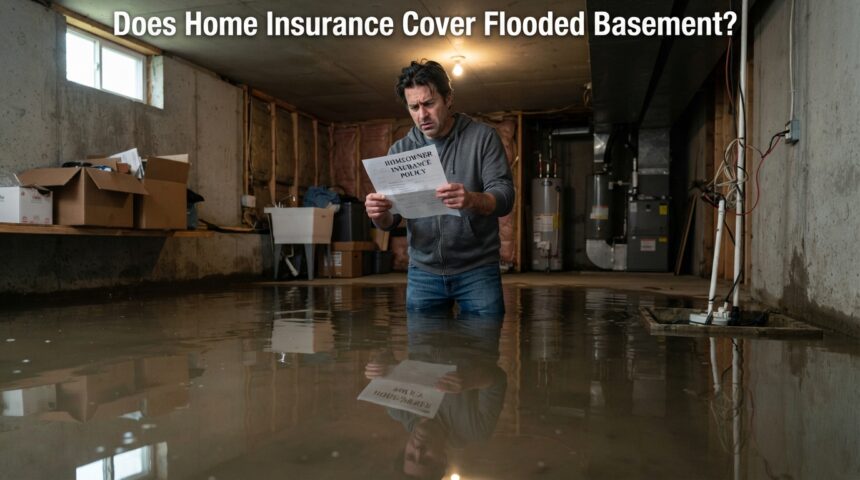
It depends on where the water came from. A standard policy usually pays when the water starts inside your home, such as from a burst pipe or a failed water heater.
It does not pay when water arrives from outside, such as heavy rain, an overflowing river, or groundwater. Sewer backup and sump pump failure are covered only if you have added an endorsement. Outside flooding needs a separate flood insurance policy. Check your policy’s exclusions before a problem appears.
Quick Answer: Coverage by Cause of Flooding
Insurers decide coverage by the source of the water. The table below shows how the most common causes are usually treated.
| Cause of water | Standard policy | What you may need |
| Burst pipe or failed water heater | Usually covered | Nothing extra |
| Appliance or fixture overflow | Usually covered | Nothing extra |
| Sewer or drain backup | Usually excluded | Water backup endorsement |
| Sump pump failure | Usually excluded | Sump pump endorsement |
| Heavy rain or river overflow | Excluded | Flood insurance |
| Groundwater seepage | Excluded | Flood policy or seepage endorsement |
| Neglected or slow leak | Excluded | None; maintenance is your duty |
Policies differ by insurer and location, so treat this table as a general guide. Your declarations page and endorsements decide the final answer.
Water Damage vs Flood Damage
Insurance language separates water that starts inside the house from water that comes from natural sources outside it. That difference explains most coverage decisions.
Water Damage in Policy Language
Water damage usually means sudden and accidental discharge from plumbing, heating systems, or appliances. Insurers treat it as a covered peril, which is a named cause of loss. The word “sudden” matters, because gradual leaks are handled differently.
Flood Damage in Policy Language
Flood means surface water from rain, rivers, tides, or overflowing bodies of water. Standard policies list it under exclusions, which are causes they refuse to pay for. Even a basement soaked by a nearby creek falls into this group.
Why Insurers Separate Them
Floods can hit thousands of homes at once, so the losses are huge and hard to predict. Insurers therefore price flood cover separately, often through government-backed programs. This is why a flood claim under a regular policy is typically denied.
When a Standard Policy Pays for a Flooded Basement
Coverage generally applies when the water source is internal and the event is sudden. The situations below are the most common paid claims.
Burst or Frozen Pipes
A pipe that splits in winter can release hundreds of litres within minutes. Insurers normally pay for the resulting repairs, provided you kept the home reasonably heated. Some policies also cover the cost of opening walls to reach the break.
Water Heater and Appliance Failures
A ruptured tank or a snapped washing machine hose counts as accidental discharge. The policy pays for flooring, walls, and damaged belongings, though the failed appliance itself is usually your expense. Age and wear can reduce the payout.
Accidental Overflow and Fire Response
An overflowing tub or toilet upstairs can send water into the basement, and this is generally covered. Water used by firefighters to put out a fire is treated as part of the fire loss. Both scenarios are paid under standard terms.
What Payouts Include
Payments can cover building repairs, replacement of personal property, and living costs if the home becomes unlivable. Your deductible is subtracted first, and limits apply to each category. Belongings may be paid at actual cash value unless you chose replacement cost.
When a Standard Policy Does Not Pay
Water that enters from outside, or damage that builds slowly, is excluded from most standard policies. Knowing these limits helps you decide what extra protection to buy.
Heavy Rain and Surface Water
Rain that runs across the ground and pours through basement windows or doors is classed as surface water. Insurers exclude it even when your roof and plumbing are in perfect shape. A storm may be covered for wind damage yet not for the water that follows.
Rivers, Storm Surge and Flash Floods
Overflowing rivers, coastal surge, and flash floods are the textbook flood events. A hurricane policy may cover wind, but the rising water is excluded. Only a flood policy responds to these losses.
Groundwater Seepage
When the water table rises, moisture can push through floors and foundation walls. Insurers regard this as a flood or maintenance issue, so standard claims are usually declined. Some insurers sell a seepage endorsement, so it is worth asking.
Neglect and Slow Leaks
Long-term leaks, rotted pipes, and ignored moisture problems are excluded because they are preventable. Mold that grows from such conditions is generally excluded too. Prompt repairs protect both your home and your claim.
Add-On Coverage That Fills the Gaps
Endorsements, also called riders, extend a standard policy for a modest extra premium. Two of them matter most for basements.
Water Backup Endorsement
This rider covers water that returns through sewers or drains into your home. Limits often start at a few thousand dollars and can usually be raised, so pick one that matches your finished space. For many basements it is the most valuable add-on available.
Sump Pump Failure Coverage
Some policies cover water that overflows when a sump pump breaks or loses power. Others limit it to mechanical failure or exclude poorly maintained pumps. Read the wording carefully, because storm-related power cuts are when pumps fail most often.
Is the Add-On Worth It
The rider often costs a small fraction of a single cleanup bill, which can run into many thousands. If your basement is finished or stores valuables, the extra premium is easy to justify. Ask your agent for a quote and compare limits before deciding.
Separate Flood Insurance for Basements
Flood insurance is a standalone policy for rising water from outside. Its basement coverage is narrower than many owners expect.
What a Flood Policy Covers
In the United States, the National Flood Insurance Program typically covers basement essentials such as the furnace, water heater, electrical panel, and sump pump. It may also cover unfinished drywall and cleanup costs. The focus is on structural elements and key systems.
What It Usually Excludes
Finished walls, paint, carpeting, and most belongings kept in the basement are typically not covered. Owners of finished basements can therefore face large uncovered losses. Private flood policies sometimes offer wider protection.
Where to Buy and Waiting Periods
You can buy through government programs or private insurers, often via your existing agent. Most policies impose a waiting period of about 30 days before coverage begins. Buy before storm season rather than after a forecast.
What to Do After Your Basement Floods
Quick, careful action protects your safety and your claim. Follow the steps below in order.
Safety First and Stop the Source
Switch off electricity to the area and stay out if water reaches outlets or appliances. Shut off the main water valve if a pipe is the cause. Do not enter standing water until an electrician confirms it is safe.
Document Everything
Photograph and film the damage before moving anything, and list each damaged item with its approximate value. Keep every receipt for emergency work. Clear evidence helps the adjuster reach a decision faster.
Notify Your Insurer and Limit Further Damage
Call your insurer promptly, since policies require timely notice. You must also take reasonable steps to prevent more harm, such as removing water and drying the space. Avoid throwing away damaged items until the adjuster has seen them.
Filing a Claim and Handling a Denial
A well-prepared claim moves faster and is harder to dispute. The process is simple once your evidence is organized.
Prepare Your Claim
Have your policy number, the date and cause of the loss, and a clear description of what happened ready when you call. Then gather supporting proof so nothing delays the review. The most useful items are:
- Photos and video of the damage
- An itemized list of damaged property
- Repair estimates and receipts
- A plumber’s or contractor’s report on the cause
How Adjusters Assess Damage
The adjuster inspects the basement, identifies the water source, and compares it with your policy terms. The cause decides whether the loss is covered, while measurements and estimates decide the payout. Timelines range from a few days to several weeks.
If Your Claim Is Denied
Read the denial letter to see the exact clause cited, and ask for a written explanation if it is unclear. You can appeal, obtain an independent repair estimate, or hire a public adjuster. State insurance regulators also accept complaints about unfair denials.
Preventing Basement Flooding
Prevention costs far less than repair and reduces the chance of a disputed claim. Focus on water outside the house, the equipment inside it, and early warnings.
Manage Water Outside the Home
Clean gutters and extend downspouts several feet away from the foundation. Grade the soil so it slopes away from the walls. Seal foundation cracks and window wells to keep surface water out.
Maintain the Pump and Backwater Valve
Test your sump pump each season and consider a battery backup for power outages. A backwater valve stops sewage from flowing back into the house. Together they address two of the most common causes of basement flooding.
Detect Leaks Early
Small water sensors placed near the water heater, washing machine, and sump pit send alerts before damage spreads. Replace old appliance hoses and insulate pipes against freezing. Store valuables on shelves rather than on the floor.
Frequently Asked Questions
Does home insurance cover a flooded finished basement?
Only when the cause is a covered event such as a burst pipe. Flooding from rain or rivers needs a separate flood policy, which pays limited amounts for finished areas.
Is mold from a flooded basement covered?
Mold is covered only when it results from a covered water loss and you report the loss quickly. Mold from ongoing moisture or neglect is generally excluded.
Will my premium rise after a water claim?
It can, because insurers consider claim history when setting rates. The effect depends on the insurer, claim size, and location, so ask your agent before filing a small claim.
Does renters insurance cover a flooded basement?
Renters policies protect your belongings from covered causes such as a burst pipe, but not from flood water. The building itself is insured by the landlord.
Conclusion
So, does home insurance cover flooded basement damage? Only when the water starts inside your home, while outside water, sewer backup, and seepage need extra protection. Review your policy, add the right endorsements, and consider flood insurance if your area is at risk. Acting before the next storm is the cheapest protection you can buy.