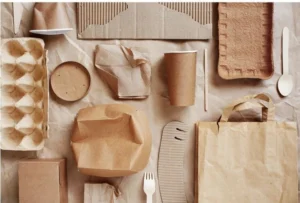
PappeDeckel is a German word that means cardboard lid in English. It is not one US brand or one store product. In German, Pappe means cardboard or paperboard. Deckel means a lid or cover.
People use the word for two related things. It can mean a paperboard lid for a cup or food tub, and it can also mean the thick cardboard mat placed under, or on top of, a beer glass.
What PappeDeckel Means in English
The clearest translation is cardboard lid. Some sellers in the US use the clearer English names paperboard lid, paper lid, or molded fiber lid.
That name difference matters when you shop. Searching only the German word in the US will find explainers, not many suppliers.
The word also overlaps with Bierdeckel. That German word means beer coaster or beer mat, made from the same thick, absorbent board.
So the context tells you the meaning. On a coffee cup, it is a lid. In a pub, it is usually the coaster.
Neither use is a tight seal like a jar lid. A paperboard lid rests or snaps lightly over a rim and helps stop spills, dust, and heat loss.
From Felt Mats to Cardboard: PappeDeckel in German Beer Pubs
Early drink covers in Germany were often made of felt. Bartenders placed them on top of a glass to keep out bugs and dust.
Felt had a real problem. It held moisture, was rarely washed well, and could start to smell after repeated use.
According to Tales of the Cocktail Foundation, the German printing firm Friedrich Horn began making cardboard beer mats around 1880. They were cheap, disposable, and cleaner than felt.
A few years later, Robert Sputh patented a stronger mat made from wood pulp. His process, from the early 1890s, helped make thick pulp mats widely usable.
Breweries soon printed names and logos on the mats. A cheap table item became a small ad that every drinker saw.
In some German pubs, staff also marked a tally on the mat. Each mark stood for one beer, so the mat helped track the guest’s tab.
Collectors still seek old and rare mats. The hobby of collecting beer mats even has a name: tegestology.
PappeDeckel on Coffee Cups, Soup Bowls, and Food Tubs Today
The modern lid use is easy to see in cafés. A flat or lightly molded paper lid covers a paper coffee or tea cup for takeout.
It also fits soup bowls, noodle bowls, and salad tubs. Street vendors and food trucks use it because it is light and stacks well.
Ice cream shops use paperboard covers on tubs. The cover keeps dust out and gives space for a flavor label or shop logo.
At outdoor events, a coaster can still sit on top of a drink. It helps keep leaves and insects out between sips.
Packers also use plain cardboard discs inside boxes. There, the disc works as a separator or protective layer, not as a drink lid.
For hot drinks, most paper lids work best for short trips. They are made for carrying, not for holding hot liquid for hours.
What a PappeDeckel Is Made From and How It Is Pressed
Most versions start with paperboard or molded pulp. The pulp may come from recycled paper, virgin wood fiber, or a mix of both.
Makers form a wet pulp sheet, then press it in a mold. Heat and pressure dry it and give the lid or mat its shape.
Flat coasters are usually die-cut, which means cut out with a shaped blade. They are then printed, stacked, and packed.
Cup lids need a shaped rim edge. That edge helps the lid grip the cup and resist bending when you pick it up.
Some lids are left uncoated. These soak up moisture fast, so they suit dry use and coasters best.
Others have a thin plant-based, wax, or PLA coating. PLA is a plant-based plastic often used to slow leaks, but it changes how you must dispose of the lid.
Typical board thickness is about 0.5 mm to 1.5 mm, and a small lid or mat often weighs only 1 to 3 grams. Exact specs vary by supplier, so check the product sheet before you order.
PappeDeckel Sizes That Fit US Cups: 62 mm, 80 mm, and 90 mm
Size is measured by the cup rim diameter, not by how much drink the cup holds. You measure across the top rim, in millimeters.
This is the point most buyers get wrong. Two 12 oz cups from different brands can have different rims and need different lids.
| US cup size | Common rim size | Lid you usually need |
|---|---|---|
| 4 oz espresso | 62 mm | 62 mm lid |
| 8 oz small hot cup | 80 mm | 80 mm lid |
| 10 oz to 12 oz hot cup | 90 mm | 90 mm lid |
| 16 oz to 20 oz hot cup | 90 mm | 90 mm lid |
| 16 oz to 20 oz cold cup | 98 mm | 98 mm lid |
These are common industry sizes, not a guarantee for every brand. Always match the lid to your exact cup range.
A lid that is even slightly loose can leak. A lid that is too tight can crack the rim or slow staff during a rush.
For coasters, size works differently. Standard round beer mats are often about 4 inches across, with square printed mats also common for bars and events.
PappeDeckel vs. Plastic and Molded Fiber Lids
Plastic lids still win on tight seal and low price. They flex, snap on firmly, and usually handle long car rides better.
Paperboard wins on feel and waste goals. Many customers prefer paper because it avoids a plastic lid and can carry printed branding well.
Molded fiber sits between the two. It is thicker and stiffer than flat board, and it often has a better sip shape, but it usually costs more.
| Lid type | Best for | Main limit |
|---|---|---|
| Flat paperboard | Short trips, soup tubs, coasters | Weakest seal, softens with steam |
| Molded fiber | Hot coffee, cafés cutting plastic | Higher cost, rougher lip feel |
| Plastic (PP or PET) | Long delivery, tight seal needed | Plastic waste, local rule limits |
There is no best choice for every shop. A soup shop that delivers for 30 minutes needs a tighter seal than a café serving drinks to seated guests.
Heat is another real limit. A thin paper lid on a very hot drink will soften faster than plastic, especially if the cup tips in a bag.
How Much a PappeDeckel Costs a US Café, With a Worked Example
Plain paper lids and coasters in bulk often cost about $0.01 to $0.05 each. Printed, coated, or molded versions usually cost more.
Basic plastic sip lids often cost about $0.015 to $0.025 each. Compostable molded or plant-based lids often cost about $0.04 to $0.06 each.
These are typical supplier ranges, not fixed prices. Print colors, coating, order size, and shipping can move the price a lot.
Here is an illustrative example for a small US café. It sells 1,000 takeout coffees per week and compares two lid prices.
Extra cost per lid = paper lid price − plastic lid price
If paper costs $0.04 and plastic costs $0.02, the math is $0.04 − $0.02 = $0.02 extra per drink.
Then, 1,000 drinks × $0.02 = $20 extra per week. Over 52 weeks, that is $20 × 52 = $1,040 extra per year.
That number helps you decide honestly. You can offset part of it with printed branding, since the lid replaces some need for sleeves, stickers, or ads.
How to Choose and Test a PappeDeckel Before You Buy in Bulk
First, measure your cup rim with calipers. Write the size in millimeters and share that exact number with the supplier.
Second, order samples before a bulk order. Test the sample on your own cups, not on a cup the supplier sends you.
Third, do a simple hot fill test. Fill the cup, put the lid on, wait five minutes, then tilt and gently shake it over a sink.
Check for three things in that test. Look for drips at the rim, a lid that pops loose, and board that has gone soft.
Fourth, check food-contact papers for US sales. Food packaging sold in the US should meet FDA food-contact rules, often cited as FDA 21 CFR, so ask the supplier for its compliance proof.
Fifth, confirm the disposal claim in writing. If a supplier says compostable, ask which certification it holds and whether that claim covers the coating and ink too.
PappeDeckel Mistakes That Cause Leaks, Soggy Lids, and Wrong Bins
The most common mistake is ordering by cup ounces alone. A 12 oz label does not tell you the rim size, and the wrong rim will leak.
Another mistake is using an uncoated lid for hot soup. Steam and liquid soften plain board fast, so the lid can sag during delivery.
Storing lids in a damp back room is also a problem. Paperboard absorbs moisture from the air and can warp before you even use it.
Printing too much dark ink on a coaster can hurt use. A very slick, fully covered surface may absorb less condensation than plain absorbent board.
The last mistake is guessing the bin. A lid that was fine for paper recycling when clean may belong in trash once it is soaked with food.
Is a PappeDeckel Recyclable or Compostable in the United States?
It depends on the coating and on your local program. Clean, uncoated paperboard is the easiest type for paper recycling in many US cities.
Coated lids are harder to judge. A wax, plastic, or PLA layer can make a lid unwelcome in normal paper recycling, even if the base is paper.
Compostable does not always mean home compostable. Many certified lids need a commercial compost facility, where heat is high enough to break them down.
In the US, look for the BPI Compostable mark from the Biodegradable Products Institute. It signals a product was certified for commercial composting.
The US Environmental Protection Agency notes that only a small share of plastic waste gets recycled. That fact drives interest in paper lids, but it does not make every paper lid a perfect choice.
Your city rule is the final word. Check your local recycling and compost guide, because accepted items differ widely across the United States.
Frequently Asked Questions About PappeDeckel
Is PappeDeckel a brand I can buy in the US?
No, it is a general German word, not one brand. In the US, search for paperboard lids, molded fiber lids, or custom beer coasters instead.
Can a cardboard lid hold hot coffee without leaking?
It can hold hot coffee for a short trip if the fit is correct. It will not seal as tightly as plastic, and it softens faster if the cup tips or sits for a long time.
Why do German pubs put a coaster on top of a beer?
The top coaster helps keep bugs, leaves, and dust out of the glass outdoors. It can also signal to staff that the guest is not finished and the glass should not be cleared.
Are cardboard beer coasters reusable?
You can reuse a dry, clean coaster a few times at home. In bars they are treated as single-use, because they absorb moisture and lose stiffness fast.
What size lid do I need for a 12 oz coffee cup?
Most 12 oz hot cups use a 90 mm lid, but some brands use 80 mm. Measure your cup rim and test a sample before you order a full case.
Can I print my café logo on a paper lid or coaster?
Yes, most suppliers offer custom printing, often in full color. Custom print usually needs a larger minimum order, commonly 10,000 pieces or more, so confirm the minimum first.
Conclusion
PappeDeckel simply means a cardboard lid, and in pub use, a cardboard beer mat. Its long German history explains why one word covers both a coaster and a cup cover.
For US readers, the useful facts are practical ones. Fit is set by rim size in millimeters, paper softens faster than plastic, and recycling depends on the coating and your city.
It is a good choice when you want less plastic, simple branding, and short, careful use. It is a poor choice when you need a tight, long delivery seal.
Your next step is simple and cheap. Measure one cup rim, order a small sample pack, and run the hot fill and shake test before you spend on a full case.
Related Articles
What Is Crackstube? The Article Site, Its Guest Posts, and How to Stay Safe
Fentomagazine Com Tech: What the Tech Section Covers and How to Use It