

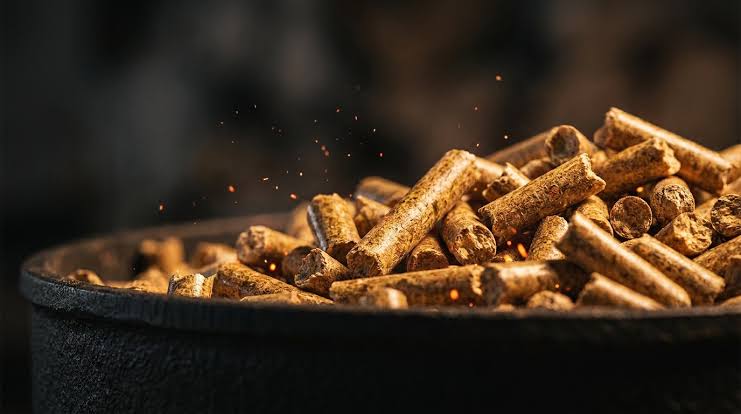
Importpellet is the name used by Mello Commodity for its guidance on importing wood pellets from Brazil. If you searched this word, you likely want to know what it is and whether it is trustworthy.
The quick answer is simple. ImportPellet centers on a researched guide to Brazilian pellet suppliers, plus free guides on price, quality, and import steps.
Its main product is the Brazilian Wood Pellet Suppliers Guide 2026. That guide covers 17 researched companies, not hundreds of random listings.
For readers in the United States, one point matters early. The United States already produces many wood pellets itself, so Brazil is a diversification option, not the default source.
What Is Importpellet?
Importpellet is a brand name, not a store that ships bags to your door. It also is not a quality certification.
The content appears on the Mello Commodity website, mellocommodity.com.br. Articles there are credited to the ImportPellet team and were updated in October 2026.
ImportPellet has two main parts. The first part is free education on pellet prices, ENplus A1 quality, and importing steps.
The second part is paid research. That is the suppliers guide, which helps foreign buyers build a shortlist in Brazil.
You do not buy pellets from ImportPellet itself, based on its pages. You use its research to contact producers, exporters, or trading companies directly.
That difference is important. A research guide can save you time, but it does not load a vessel or guarantee a shipment.
Who Is Behind Importpellet? Mello Commodity Explained
According to its own pages, Mello Commodity is an international business hub. It focuses on sourcing and commodity operations from Brazil.
Its site description says the business connects international buyers with Brazilian exporters. It also claims over 20 years of experience in global agribusiness.
Mello Commodity says the suppliers guide is original research. It is not a copied directory or an automatic marketplace list.
The research cross-checked supplier websites and industry associations. It also used certification information, trade records, and publicly available business contacts.
Companies were separated into clear groups. The guide distinguishes producers, exporters, and trading companies, because those roles are not the same.
The guide was listed at $19.90 on its suppliers page, sold through Hotmart. The research update shown there was September 2026.
Prices and payment pages can change. Check the current price on the official sales page before you buy.
What the ImportPellet Brazilian Wood Pellet Suppliers Guide 2026 Includes
The guide covers 17 Brazilian companies. Mello Commodity says it kept the list small on purpose.
It argues that 17 qualified companies are more useful than 100 unqualified names. That is a fair point for a buyer starting from zero.
For each company, the goal is practical contact and checking information. You are meant to move from research to a real supplier conversation.
The guide includes these items:
- Direct supplier contacts, including websites, emails, phone numbers, and WhatsApp where public
- Notes on why each company was included in the research
- Evidence of international-market activity, where it was found
- ENplus information, where it applies to a company
- A professional RFQ template you can adapt before contacting suppliers
- A supplier due diligence checklist to use before payment
RFQ means request for quotation. It is the structured request you send when you ask a supplier for a formal price.
The checklist matters because many Brazilian pellet makers sell only at home. A company can make good pellets and still have no export experience.
Why ImportPellet Focuses on Wood Pellets From Brazil
Brazil is becoming a more relevant pellet origin. That is the core reason ImportPellet exists.
According to the Brazilian Association of Mechanically Processed Wood Industry, called ABIMCI, Brazil exported 449,000 tonnes of pellets in 2025. Almost 70% of those exports went to Italy.
Italy imported 348,000 tonnes from Brazil in 2025. According to data cited from Eurostat, that was 11% more than in 2024.
Brazil also has a large raw-material base. ABIMCI figures cited by Mello Commodity note about 8.8 million hectares of eucalyptus and 1.9 million hectares of pine.
Southern Brazil has a large wood industry. Sawdust and shavings from that industry are the feedstock for many premium pellets.
Export ports also help. ImportPellet names Paranaguá, Itapoá, Santos, and Rio Grande as ports commonly used for pellet exports.
For a US buyer, Brazil offers supply diversity. It does not remove freight cost, which can be a large part of your final price.
The ENplus A1 Specs ImportPellet Tells Buyers to Demand
ENplus is a quality certification for wood pellets used in heating. Grade A1 is its premium tier for homes and small commercial boilers.
The system is built on the ISO 17225-2 standard. It also covers the supply chain, not only the pellet itself.
These are the key A1 limits ImportPellet tells buyers to demand:
| Parameter | ENplus A1 Requirement |
|---|---|
| Diameter | 6 mm (±1) or 8 mm (±1) |
| Moisture | ≤ 10% |
| Ash content | ≤ 0.7% |
| Net calorific value | ≥ 16.5 MJ/kg |
| Mechanical durability | ≥ 98.0% |
| Fines under 3.15 mm | ≤ 1.0% |
| Bulk density | ≥ 600 kg/m³ |
Fines are tiny broken pieces and dust. Too many fines can cause feeding problems in stoves and boilers.
Do not accept a certificate claim at face value. Ask for the certificate number and check it in the official ENplus database.
Confirm the scope and the validity date too. The certificate must cover that producer or trader, and it must not be expired.
Also request a recent lab report for your batch. For larger orders, plan an independent inspection at loading.
ImportPellet and Wood Pellet Price: How to Calculate Your Real Landed Cost
There is no single wood pellet price from Brazil. ImportPellet is clear about this on its price guide.
Price changes with grade, certification, and contract terms. It also changes with volume, packaging, and the freight market.
ENplus A1 pellets normally cost more than industrial grades. Their limits on ash, fines, and moisture are stricter.
Packaging changes the cost structure too. Bulk cargo, 1-tonne big bags, and 15 kg retail bags are priced differently.
Freight and exchange rates can swing the result. Winter demand in the Northern Hemisphere can also tighten the market.
For that reason, never compare a FOB price with a CIF price directly. FOB does not include the same costs as CIF.
Use the landed cost formula instead:
Landed cost = FOB price + ocean freight + insurance + port charges + import duties and taxes (if any) + inland transport + quality-control costs
Illustrative Landed Cost Example for One Container
This example is illustrative only. It is not a live quote, and you must request a dated quote before deciding.
ImportPellet notes that a 40-foot container typically holds around 25 tonnes of bagged pellets. One tonne is 1,000 kilograms, or about 2,205 pounds.
Say the FOB price is $175 per tonne for 25 tonnes. That part is $175 × 25 = $4,375.
Add $2,400 for ocean freight and $90 for insurance. Then add $650 for port and broker charges, $550 for inland delivery, and $300 for inspection.
Your total is $4,375 + $2,400 + $90 + $650 + $550 + $300 = $8,365. Divided by 25 tonnes, your landed cost is $334.60 per tonne.
The cheapest FOB offer can lose after freight. Run this math for every quote, on the same terms, before you choose.
How to Import Wood Pellets From Brazil, Step by Step
First, define your specification and volume. Decide the grade, diameter, packaging, and annual amount before you ask for prices.
Second, check your destination requirements early. For the United States, work with a licensed customs broker to confirm current import rules.
Third, shortlist suppliers and request documents. Ask for the ENplus certificate, recent lab analysis, production capacity, and export references.
Fourth, request quotes on the same basis. Every supplier should quote the same Incoterm, volume, packaging, and loading window.
Fifth, put the key terms in a contract. It should cover specifications, tolerances, delivery window, inspection method, and payment terms.
The contract should also include a claims process. Define what happens if the cargo arrives off-specification.
Sixth, arrange payment security for a first deal. Many importers use a letter of credit or staged payment tied to an inspection certificate.
Seventh, book freight and insurance early. Then appoint an independent inspector to check quality, weight, and condition at loading.
Eighth, review the shipping documents carefully. You will usually see a commercial invoice, packing list, bill of lading, and certificate of origin.
A phytosanitary certificate may also be required in some cases. Keep the pellets dry after arrival, with covered storage and fast unloading.
From first contact to a closed deal, allow several weeks. Supplier checks, samples, contracts, and freight booking all take time.
Is ImportPellet Legit? Safety Checks You Must Still Do Yourself
ImportPellet appears to be a real research product. It is published by an identifiable company and cites named sources like ABIMCI and Eurostat.
It also warns buyers to reconfirm key facts. Its own pages say contacts, certifications, and commercial terms can change.
That honesty is a good sign. Still, a guide is only a starting point, not a safety guarantee.
Inclusion in a list does not prove a supplier will ship your order correctly. You must complete your own due diligence before payment.
Check the legal company identity and its real role. Confirm if it is a producer, an exporter, or only a trader.
Check the bank beneficiary name before you pay. It should match the company you contracted with, and any mismatch needs a clear explanation.
ENplus also maintains a public blacklist for misuse of its trademark. Check both the certification database and that blacklist.
If a supplier refuses third-party inspection, treat that as useful information. Serious exporters usually expect inspection on larger deals.
ImportPellet Pros and Cons for a Buyer in the United States
| Pros | Cons |
|---|---|
| Saves weeks of supplier research | Focuses only on Brazil as an origin |
| Covers 17 researched firms, not random listings | Its market guides focus mainly on Europe, Japan, and Korea |
| Includes contacts, an RFQ template, and a checklist | Does not replace a US customs broker or inspector |
| Teaches ENplus verification and landed cost math | Guide information can go out of date |
The biggest value is speed at the start. You get a shortlist and a checking framework in one place.
The biggest limit is scope for US readers. You still need US-specific duty, port, and delivery costs for your own deal.
It also will not negotiate for you. You contact suppliers, compare quotes, and sign the contract yourself.
Common Importing Mistakes ImportPellet Warns About
The most common mistake is comparing unlike prices. A low FOB quote is not cheaper if freight and fees are higher.
Another mistake is trusting a certificate without checking it. Always verify the number, scope, and date in the official database.
Skipping inspection at loading is also risky. Photos from a supplier are not the same as an independent report.
Some buyers ignore destination rules until the cargo is booked. Check sustainability, labeling, and import needs before you sign.
Moisture risk is often underestimated. Wet pellets can break down, lose quality, and become hard to sell or burn.
Finally, do not buy on price alone. The cheapest offer often carries the highest hidden risk.
Frequently Asked Questions About Importpellet
Is Importpellet a company that sells wood pellets?
No. Importpellet is the brand Mello Commodity uses for its Brazil pellet sourcing content and research. You use it to find and check suppliers, then you buy from a supplier directly.
How much does the ImportPellet suppliers guide cost?
It was listed at $19.90 on the Mello Commodity suppliers page. That price can change, so confirm the current price on the official Hotmart sales page before buying.
What is the minimum order to import pellets from Brazil?
It varies by supplier, according to ImportPellet. A container of around 25 tonnes suits smaller buyers, while bulk vessel cargoes suit larger contracts and power buyers.
Can I buy ENplus A1 wood pellets from Brazil?
Yes, some Brazilian producers hold or are pursuing ENplus certification. Always verify the certificate number, scope, and validity date in the official ENplus database before you rely on it.
Does Importpellet cover shipping pellets to the United States?
Its free market guides focus mainly on Europe, Japan, and Korea. US buyers can use the supplier research and cost method, but they must confirm US import rules and freight separately.
How long does a first import deal from Brazil take?
Plan for several weeks to a few months. That time covers supplier verification, sample testing, contract talks, payment setup, and freight booking.
Conclusion
Importpellet is Mello Commodity’s brand for helping foreign buyers source wood pellets from Brazil. Its core offer is the 2026 guide to 17 researched suppliers.
Brazil is a growing origin, with 449,000 tonnes exported in 2025, according to ABIMCI. Italy is its largest buyer today, but the research is open to international buyers.
The main lesson from Importpellet is not a headline price. It is to verify certification, compare landed cost on equal terms, and inspect before you pay.
Your next step is practical. Write down your grade, packaging, and volume first, then build a landed cost sheet and verify one supplier’s ENplus certificate before contacting anyone for payment.